Why are climate activists calling for reparations? / Photo: Fida HUSSAIN - AFP

 Forex Expo Dubai to Take Place as Scheduled on 22–23 September 2026

 Russia pounds Kyiv, ending three-day halt for US talks
 Flights resume gradually in Indonesia after volcanic eruption

 French AI firm Mistral valued at 21 bn euros after latest funding
 Sweden heads to the polls in close election race
 Australia's Big Bash T20 teams face sale to private investors

 Russia resumes strikes on Kyiv after three-day halt

 Canada's counter-tariffs take effect on various US goods

 China's trade booms as focus turns to expected Trump-Xi summit

 Is Champions League three-peat really possible for PSG?
 Russia pummels Kyiv after three-day halt

 Mongolians wait hours for fuel as reliance on Russia bites
 Blockx first Belgian man to reach US Open quarter-finals
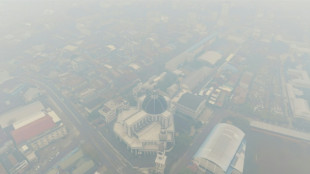 Praying for rain as fires, haze plague Indonesian Borneo

 Rybakina tops Osaka, sets US Open quarter-final clash with Zheng

 Apex Expands Trinity Zone with Step-out Hole Returning 197.5 m Interval of 2.12% REO at the Rift Rare Earth Project in SE Nebraska
 BioNxt Advances Sublingual Everolimus ODF for Organ Transplant Rejection with Initiation of Large-Animal Pharmacokinetic Study
 Genflow Biosciences PLC Announces Primary Endpoint in SLAB Clinical Trial Met

 Gaming Realms PLC Announces Interim Results

 Panama Canal considering more cuts in transits due to El Nino
 Maresca agrees with Haaland that players started season jaded

 Hurricane warning issued for westernmost Hawaiian islands

 UK PM denounces 'politics of poison' after anti-migrant protests

 Comeback queen Zheng strikes again for US Open quarter-final berth

 Third absence for injured Hadjar as Lawson fills in again in Spain

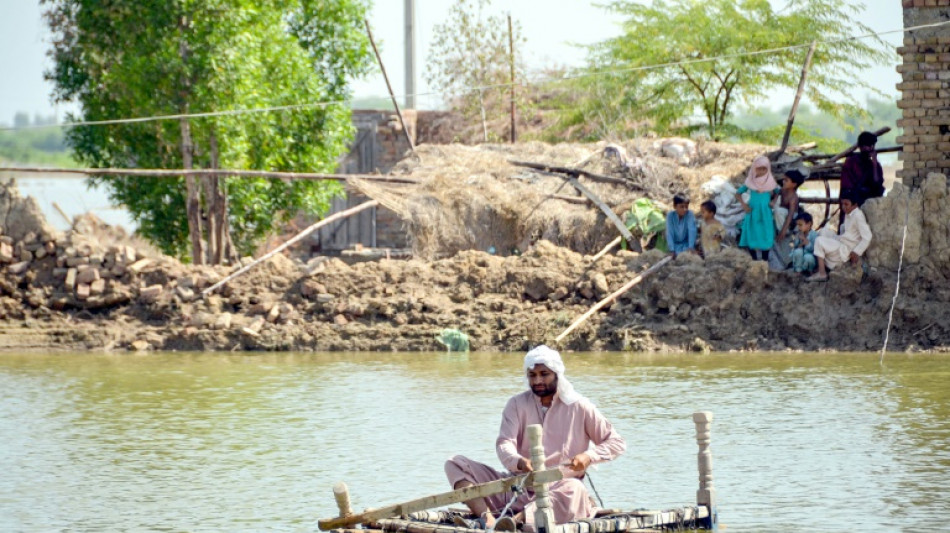
Pakistan's catastrophic floods have led to renewed calls for rich polluting nations, which grew their economies through heavy use of fossil fuels, to compensate developing countries for the devastating impacts caused by the climate crisis.
The currently favored term for this concept is "loss and damage" payments, but some campaigners want to go further and frame the issue as "climate reparations," just as racial justice activists call for compensation for the descendants of enslaved people.
Beyond the tougher vocabulary, green groups also call for debt cancellation for cash-strapped nations that spend huge portions of their budgets servicing external loans, rather than devoting the funds to increasing resilience to a rapidly changing planet.
"There's a historical precedent of not just the industrial revolution that led to increased emissions and carbon pollution, but also the history of colonialism and the history of extraction of resources, wealth and labor," Belgium-based climate activist Meera Ghani told AFP.
"The climate crisis is a manifestation of interlocking systems of oppression, and it's a form of colonialism," said Ghani, a former climate negotiator for Pakistan.
Such ideas stretch back decades and were first pushed by small island nations susceptible to rising sea levels -- but momentum is once more building on the back of this summer's catastrophic inundations in Pakistan, driven by unprecedented monsoon rains.
Nearly 1,600 were killed, several million displaced, and the cash-strapped government estimates losses in the region of $30 billion.
- Beyond mitigation and adaptation -
Campaigners point to the fact that the most climate-vulnerable countries in the Global South are least responsible -- Pakistan, for instance, produces less than one percent of global greenhouse emissions, as opposed to the G20 countries which account for 80 percent.
The international climate response currently involves a two-pronged approach: "mitigation" -- which means reducing heat-trapping greenhouse gases -- and "adaptation," which means steps to alter systems and improve infrastructure for changes that are already locked in.
Calls for "loss and damage" payments go further than adaptation financing, and seek compensation for multiplying severe weather impacts that countries cannot withstand.
At present, however, even the more modest goal of adaptation financing is languishing.
Advanced economies agreed to channel $100 billion to less developed countries by the year 2020 -- a promise that was broken -- even as much of the funding that was mobilized came in the form of loans.
"Our starting point is that the global North is largely responsible for the state of our planet today," said Maira Hayat, an assistant professor of environment and peace studies at the University of Notre Dame in Indiana.
"Why should countries that have contributed little by way of GHG emissions be asking them for aid –- loans are the predominant form –- with onerous repayment conditions?"
"If the language is upsetting for some, the next step should be to probe why that might be -– do they dispute the history? Or the present-day implications of accepting certain historical pasts?"
- Point scoring? -
Not all in the climate arena are convinced.
"Beyond a certain rhetorical point-scoring that's not going to go anywhere," said Daanish Mustafa, professor in critical geography at King's College London.
While he mostly blames the Global North for the world's current predicament, he says he is wary of pushing a narrative that may excuse the actions of the Pakistani leadership and policy choices they have taken that exacerbate this and other disasters.
The World Weather Attribution group of climate scientists found that climate change likely contributed to the floods.
But the devastating impacts were also driven "by the proximity of human settlements, infrastructure (homes, buildings, bridges) and agricultural land to flood plains," among other locally driven factors, they said.
Pakistan's own emissions, while low at the global scale, are fast rising -- with the benefits flowing to a tiny elite, said Mustafa, and the country should pursue an alternative, low-carbon development path rather than "aping the West" and damaging itself in the process.
The case for "loss and damage" payments received a recent boost with UN chief Antonio Guterres calling for "meaningful action" on it at the next global climate summit, COP27 in Egypt in November.
But the issue is sensitive for rich countries -- especially the United States, the largest emitter of GHGs historically -- which fear it could pave the way for legal action and kept language regarding "liability and compensation" out of the landmark Paris agreement.
R.Chavez--AT