Heatwaves and wildfires to worsen air pollution: UN / Photo: Jewel SAMAD - AFP

 Tiafoe tops Medvedev in straight sets at US Open
 Zverev seeks US Open last eight as Osaka faces Rybakina

 Alcaraz turns up heat to reach US Open quarters

 Gatti salvages Juve draw with AC Milan in Serie A

 Sinayoko stars as unbeaten Paris FC down Marseille
 Still on top: 'Spider-Man' dominates North American box office
 Zelensky in fresh talks with US envoys: Ukraine official

 Noskova edges Kostyuk to reach US Open quarter-finals

 Alonso urges Chelsea to learn from painful defeat at Arsenal

 Defending champion Sabalenka reaches US Open quarter-finals

 Minnows Augsburg sink Frankfurt to top Bundesliga table

 Yamal hits double as 'nearly perfect' Barca thrash Valencia

 Antonelli living 'a dream' after astonishing home win

 Impressive Daryz keeps Arc double dream alive
 Strasbourg hit Troyes for six as Amo-Ameyaw sparkles

 German far-right AfD landslide winner in eastern state vote

 Carrick defends Man Utd start despite defensive concerns

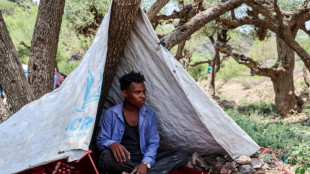 More than 140 killed in latest Yemen clashes: military sources

 Van Aert claims shortened Vuelta stage 15 win in high heat

 Everton shrug off transfer window woes to hold Man Utd

 'Nothing has changed': FIFA confirms Infantino to run for re-election

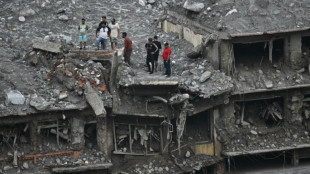 UN's Nepal chief makes emotional plea for flood-ravaged country

 Italian GP red-flagged after massive Leclerc crash

 US envoys hold talks with Zelensky on first Kyiv visit

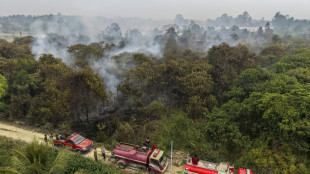 'Truly scared': Blazes outpace firefighters in Indonesian Borneo
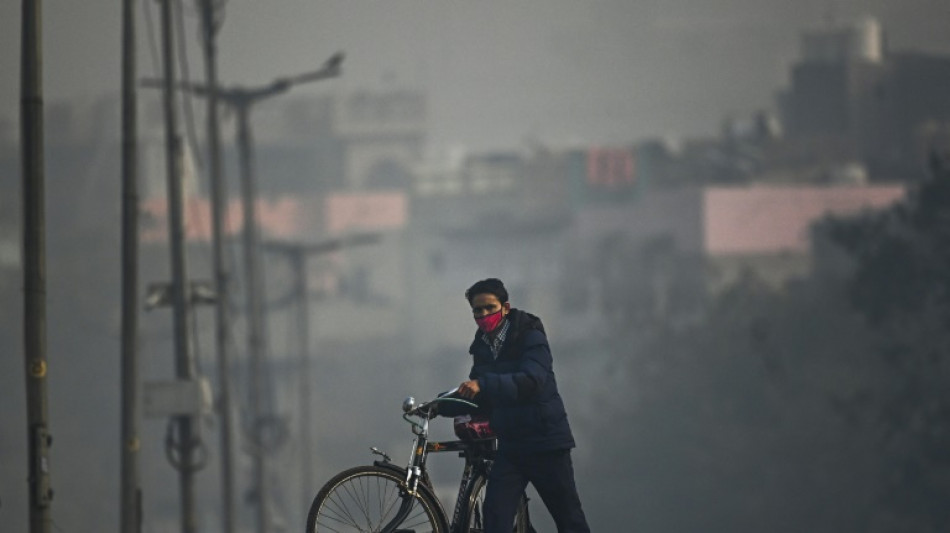
More frequent and intense heatwaves and wildfires driven by climate change are expected to worsen the quality of the air we breathe, harming human health and ecosystems, the UN warned Wednesday.
A new report from the UN's World Meteorological Organization (WMO) cautioned that the interaction between pollution and climate change would impact hundreds of millions of people over the coming century, and urged action to rein in the harm.
The WMO's annual Air Quality and Climate Bulletin examined the impacts of large wildfires across Siberia and western North America in 2021, finding that they produced widespread increases in health hazards, with concentrations in eastern Siberia reaching "levels not observed before".
Tiny particles with a diameter of less than 2.5 micrometres (PM2.5) are considered particularly harmful since they can penetrate deep into the lungs or cardiovascular system.
"As the globe warms, wildfires and associated air pollution are expected to increase, even under a low emissions scenario," WMO chief Petteri Taalas said in a statement.
"In addition to human health impacts, this will also affect ecosystems as air pollutants settle from the atmosphere to Earth's surface."
- 'Foretaste of the future' -
At the global scale, there has been a reduction over the past two decades in the total burned area, as a result of decreasing numbers of fires in savannas and grasslands.
But WMO said that some regions like western North America, the Amazon and Australia were seeing far more fires.
Even beyond wildfires, a hotter climate can drive up pollution and worsen air quality.
Taalas pointed out that severe heatwaves in Europe and China this year, coupled with stable high atmospheric conditions, sunlight and low wind speeds, had been "conducive to high pollution levels," warning that "this is a foretaste of the future."
"We expect a further increase in the frequency, intensity and duration of heatwaves, which could lead to even worse air quality," he said.
This phenomenon is known as the "climate penalty", which refers to how climate change amplifies ground-level ozone production, which negatively impacts air quality.
In the stratosphere, ozone provides important protection from cancer-causing ultraviolet rays, but closer to the ground it is very hazardous for human health.
If emission levels remain high, this climate penalty is expected to account for "a fifth of all surface ozone concentration increase," WMO scientific officer Lorenzo Labrador told reporters.
He warned that most of that increase will happen over Asia, "and there you have about one quarter of the entire world population."
The WMO called for action, stressing that "a worldwide carbon neutrality emissions scenario would limit the future occurrence of extreme ozone air pollution episodes."
The report points out that air quality and climate are interconnected, since chemicals that worsen air quality are normally co-emitted with greenhouse gases.
"Changes in one inevitably cause changes in the other," it said.
T.Sanchez--AT