
Europe heat sparks harmful ozone pollution, 'extreme' fire risk / Photo: MIGUEL RIOPA - AFP/File

 Carapaz out of cycling world championships

 'Fragile' Tottenham beaten by Aston Villa despite late rally

 Mourinho hails Real Madrid grit before Atletico derby clash

 Martin wins Austrian MotoGP sprint after Acosta crash

 Japan edge Fiji to win Pacific Nations Cup

 Black smoke, flames rising near Riyadh airport: residents to AFP

 UK actor Naomi Watts honoured at Spain film festival

 Japan emperor declares Asian Games open after turbulent build-up

 Asian Games open with unity message after troubled build-up
 Denmark hails 'binding' Greenland deal with Trump

 We don't want Games host Japan losing money, says Asian Olympic official

 Ed Sheeran returns to stage after Palestinian controversy

 Asian Games to open in Japan after troubled build-up

 Drone owners rush to offload devices ahead of Beijing ban

 Trump's beef policies irk Texas ranchers, testing their loyalty

 Batman Appears Atop the Sydney Opera House for Batman Day 2026

 Nvidia, OpenAI CEOs to attend Xi dinner at White House

 Anthropic picks Accenture for in-house AI safety evaluation
 Balogun returns as Monaco beat Lens to continue strong Ligue 1 start

 'Pause' on overt repression in Venezuela, but reforms still needed: HRW

 Global stocks mixed as yen falls despite Bank of Japan rate hike

 Cuba hit with seventh major blackout of the year

 Murray out with concussion so Wentz will start for Vikings

 UN chief 'deeply regrets' US visa refusal to Abbas for annual meeting

 England quick Carse to face no charges over alleged nightclub assault

Europe's searing heatwave is generating very high levels of harmful ozone pollution, the region's atmospheric monitoring service warned Tuesday, adding that large areas of western Europe also face "extreme" danger of wildfires.
Record temperatures, which scientists say are driven by climate change, are predicted in France and Britain Tuesday as suffocating heat that has gripped southwest Europe and sparked ferocious wildfires moves northwards.
"Tinder dry conditions and extreme heat are exacerbating the risk of wildfires," according to a statement from the Copernicus monitoring service.
The organisation's emergency management service has warned that a large proportion of western Europe is in "extreme fire danger" with some areas of "very extreme fire danger".
The heatwave is also causing high levels of ground-level ozone, Copernicus said.
Unlike the protective layer in the upper atmosphere, this is a major greenhouse gas and component of urban smog that harms human health and inhibits photosynthesis in plants.
"The potential impacts of very high ozone pollution on human health can be considerable both in terms of respiratory and cardio-vascular illness," said Mark Parrington, Senior Scientist from the Copernicus Atmosphere Monitoring Service.
Ozone is formed as emissions from fossil fuels and other man-made pollutants react in the presence of sunlight and Copernicus said cutting emissions of these pollutants is "crucial".
Scientists have already detected "extremely high surface ozone pollution" across western and southern Europe, particularly over the Iberian Peninsula and parts of northern Italy.
Daily maximum levels of surface ozone, which normally peaks during the middle of the day, reached unhealthy levels in Portugal, Spain and Italy, according to Copernicus.
Scientists now warn that, while the situation is likely to ease across the Iberian Peninsula, very high surface ozone levels are now being seen in areas of northern and western parts of the continent as temperatures rise.
The ozone levels in these regions are forecast to peak in the next few days, before easing.
Copernicus also predicted no relief from the wildfires that have engulfed swathes of forests across parts of southern Europe.
- One million ozone pollution deaths -
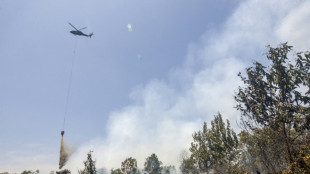
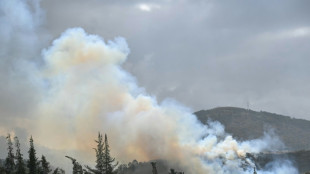
In southwest France, two massive fires have created apocalyptic scenes of destruction, despite much of the country's entire firefighting capacity being deployed.
Copernicus said total carbon emissions from the wildfires in Spain so far in July are the highest seen for the June-July period since 2003.
Parrington said high surface ozone can lead to sore throats, coughing, headaches and an increased risk of asthma attacks.
The Clean Air Alliance estimates that ozone pollution causes approximately one million additional deaths per year.
Ozone is also a key concern for agricultural regions and food security.
In January, researchers estimated that persistently high levels of ozone pollution in Asia are costing China, Japan and South Korea an estimated $63 billion annually in lost rice, wheat and maize crops.
H.Thompson--AT



