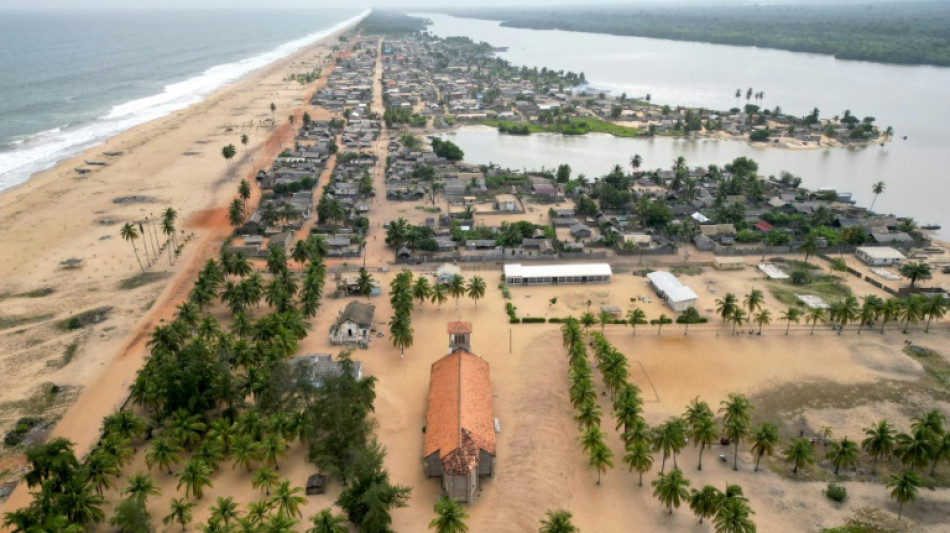
Ivory Coast village reburies relatives as rising sea engulfs cemetery / Photo: Issouf SANOGO - AFP

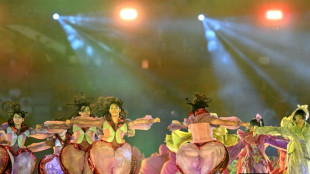
 IOC president impressed by 'beautiful' Asian Games wooden huts

 First Asian Games gold goes to Japan as China's 13-year-old Yu lights up pool

 Data centre command hub keeps AI up and running
 Pope Leo in France: the issues on the table

 Packing for a pope: behind the scenes on foreign trips

 Republicans find transgender issues a powerful political weapon in midterm campaigning

 German state elections threaten new shock waves for Merz

 Chile's Bachelet quits race to be next UN chief

 Raphinha treble fires perfect Barca to win at Sevilla
 Thiam makes winning heptathlon return at Decastar meet
 Czechs beat USA to qualify for Davis Cup finals

 Dortmund sink Stuttgart to climb to Bundesliga summit

 Trump says will not tolerate attempts to slow AI growth

 'It has to stop': runners protest women's murders in S.Africa district

 Fire erupts near Riyadh airport as Houthis claim strikes

 Cuba works to restore power after another blackout

 England thrash Sri Lanka again to return to top of T20 rankings
 Arsenal thrashed by Brighton, sorry Spurs lose again

 South Korea, Austria qualify for Davis Cup finals

 Seare shocks Ingebrigtsen to win world 5km gold

 Brigitte Bardot widower slams sale of star's belongings

 Aston Villa compound Tottenham's misery despite late rally

 Asian Games offer 'deepest apologies' for South Korea anthem blunder
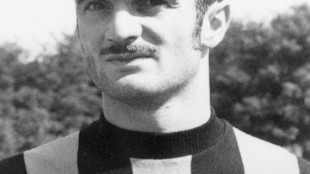 Inter Milan and Italy icon Mazzola dies aged 83

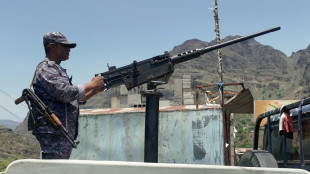
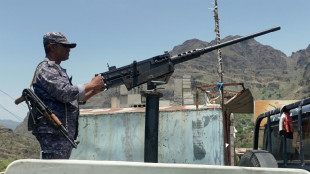 Saudi capital issues first air raid alert since renewed fighting in Yemen
Fisherman Alphonse Akadie was forced to exhume the bodies of his relatives last year from the village cemetery in Ivory Coast to avoid their remains being carried off into the ocean.
Over the last 50 years, the Atlantic waters, rising as a result of man-made climate change, have eaten away most of the site where residents of Lahou-Kpanda laid their loved ones to rest.
Distraught and with no official help, Akadie, 53, decided he would organise a ceremony for the moving of the remains of his parents, uncle, grandfather and great-grandfather.
Hundreds of other families have had to do the same.
It was a tough decision for Akadie to attend the exhumation. "We take the bones, the hair and then the teeth, whatever isn't rotten, and we put that on white cloths," before placing them in small coffins, he told AFP, visibly emotional, looking out at the sea.
He had to arrange new funerals in a cemetery further away from the ocean, which was created by the villagers because of the erosion of the original.
Akadie said his relatives had "died twice". "It's sad, it hurts a lot."
- 'Sea is advancing' -
Before the removal, Akadie spoke to his dead family members, feeling the need to explain. "We're not doing this to destroy you, but the sea is advancing," he told them.
"You have to speak," he said. "The body is dead but the spirit lives on."
Lahou-Kpanda village, around 140 kilometres (85 miles) west of Abidjan, Ivory Coast's economic hub, is a strip of sand surrounded by water.
To the north is a lagoon, the Bandama river is to the east and the Atlantic Ocean stretches out from its southern shore.
The channel opening between the three has shifted one and a half kilometres since 1993, according to the government. Dredging in the lagoon has also caused the village to lose some of its surface area.
But the rising sea, a consequence of global warming driven by humanity's burning of fossil fuels, is eating away 1.6 metres (five feet) of coastline every year, according to the World Bank.
Lahou-Kpanda may completely disappear by 2050, it warned.
More than two-thirds of Ivory Coast's coastline is affected by erosion, the environment ministry said.
The west African nation is suffering "an average coastal retreat of around one to two metres per year", it said.
From next year, a new channel between the sea and the lagoon at Lahou-Kpanda, which is now under construction, financed by the World Bank among others, will seek to hold back the rising sea.
- 'The memory is gone' -
Exhuming the bodies is expensive.
Akadie said it would cost between 500,000 and 700,000 CFA francs ($888 to $1,238), nearly 10 times the minimum monthly wage.
He covered the administrative charges to secure permission, paid professionals for the ceremony and hired a speedboat to cross from one part of Lahou-Kpanda to the other because the sandy roads are difficult to drive on.
"Before moving the bodies, we cried out to the state, to our MPs, deputies, mayors, to the sub-prefecture, to the regional council," but in vain, said William Attawa, who is close to the local traditional chief.
But Ali Sissoko, mayor of Grand-Lahou, which covers Lahou-Kpanda, said authorities did not have the money to help the families.
Less well-off households called upon young undertakers living in the village who are sometimes just self-taught but charge less than professionals, tourist guide Nicolas Kodjo said.
Adrienne Zoukouan, 63, had to move the bodies of five family members from the cemetery, but kept a distance when it was carried out.
Most families have witnessed the remains of their loved ones "go out to sea", another villager, Simeon Ladjou, 61, said.
In half a century, around 70 percent of the five-hectare (12-acre) cemetery been covered by the water, Sissoko, the mayor, said.
"It was really the cemetery of reference for the whole region," he added, saying: "All the memory of Lahou-Kpanda is gone."
At times though, memories briefly resurface.
"When we bury our parents, it's with objects", which "often came back to the surface" or washed up on the beach, the mayor said.
Other villages nearby have agreed to take the remains to protect them from the sea.
"There's a kind of solidarity," Sissoko added. "Everyone manages as best they can to bury their dead."
S.Jackson--AT



