Trump administration expected to say greenhouse gases aren't harmful / Photo: Jim WATSON - AFP/File

 Russians vote on last day of parliamentary elections

 Hong Kong pays final respects to former city leader Tung

 Typhoon put people off Asian Games opening ceremony, official says

 China's 13-year-old Yu cruises as Asian Games swimming begins

 AI 'warning shots' focus Beijing on national security risks

 Philippine tribe in limbo over US-led tech hub

 Leo XIV, first US pope transcends his restrained style

 Singer Ed Sheeran says Gaza situation 'unjustifiable' following controversy

 In 'Tenzing', a Sherpa mountaineer gets his due

 Ed Sheeran set to return to stage after Palestinian controversy

 Toulouse edge Vannes, Lyon beat Pau to take Top 14 summit

 Germans arrested for Louvre stunt in Mona Lisa hall

 Saudi-led coalition says Houthis fired ballistic missile at Riyadh

 France's debt climbs to highest since 1978: ministry

 McIlroy two shots off the lead at Wentworth after eagle on 18
 Martinez brace saves Inter in Serie A top-two clash with Roma

 Rosenior abused but guides Paris FC past old club Strasbourg

 Seven-try Lyon beat Pau, climb to Top 14 summit

 Brighton defeat a 'big lesson' against complacency for Arsenal, says Arteta

 Thousands protest inaction over climate crisis in Switzerland

 Carapaz out of cycling world championships

 'Fragile' Tottenham beaten by Aston Villa despite late rally

 Mourinho hails Real Madrid grit before Atletico derby clash

 Martin wins Austrian MotoGP sprint after Acosta crash

 Japan edge Fiji to win Pacific Nations Cup

President Donald Trump's administration is preparing to upend a foundational scientific determination about the harms of greenhouse gases that underpins the US government's ability to curb climate change.
A proposal from the Environmental Protection Agency (EPA) to change the so-called "Endangerment Finding" was sent to the White House on June 30, a spokesperson told AFP.
An announcement is expected imminently. Here's what to know -- and what's at stake if the finding is overturned.
- What is the Endangerment Finding? -
The Clean Air Act of 1970 empowered the EPA to regulate "air pollution which may reasonably be anticipated to endanger public health or welfare."
For decades, the law applied to pollutants like lead, ozone and soot.
But as climate science around the dangers of heat-trapping greenhouse gases advanced in the 2000s, a coalition of states and nonprofit groups petitioned the EPA to include them under the law, focusing on motor vehicles.
The issue reached the Supreme Court, which in 2007 ruled that greenhouse gases qualify as air pollutants and directed the EPA to revisit its stance.
That led to the 2009 Endangerment Finding, which declared greenhouse gases a threat to public health and welfare, based on overwhelming scientific consensus and peer-reviewed research.
"That 2009 finding formed the basis for all of EPA's subsequent regulations," Meredith Hankins, a senior attorney on climate and energy for the activist Natural Resources Defense Council, told AFP.
"They've issued greenhouse gas standards for tailpipe emissions from motor vehicles, smokestack emissions from power plants -- all of these individual rulemakings trace themselves back to the 2009 Endangerment Finding."
- What is the Trump administration doing? -
The Endangerment Finding has withstood multiple legal challenges, and although Trump's first administration considered reversing it, they ultimately held back.
But the finding is now a direct target of Project 2025, a far-right governance blueprint closely followed by the administration.
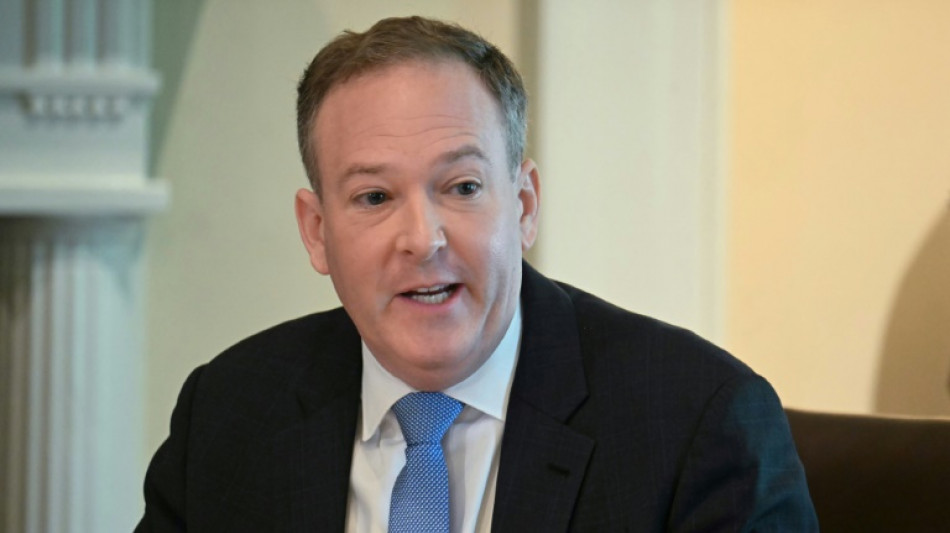
In March, the EPA under Administrator Lee Zeldin announced a formal reconsideration of the finding.
"The Trump Administration will not sacrifice national prosperity, energy security, and the freedom of our people for an agenda that throttles our industries, our mobility, and our consumer choice while benefiting adversaries overseas," he said.
The government is expected to undo the earlier finding that greenhouse gases endanger public welfare.
It will argue that the economic costs of regulation have been undervalued -- and downplay the role of US motor vehicle emissions in climate change.
In fact, transportation is the largest source of US greenhouse gas emissions.
"If vehicle emissions don't pass muster as a contribution to climate change, it's hard to imagine what would," Dena Adler of the Institute for Policy Integrity at New York University told AFP.
"It's fatalistic to avoid taking the many actions that could cumulatively fix climate change, because none of them can individually solve the entire problem."
Since 1970, the United States has emitted more vehicle-based greenhouse gases than the next nine countries combined, according to an analysis by the Institute for Policy Integrity that will soon be published in full.
- Could they succeed? -
In March, the EPA said it would lean on recent court rulings, including a landmark 2024 decision that narrowed federal regulatory power.
Still, legal experts say the administration faces an uphill battle.
"It will take a few years for the rule to be finalized and wind its way up to the Supreme Court for review," said Adler.
"If EPA loses before the Supreme Court, it gets sent back, and EPA then gets it back to the drawing board" -- by which time Trump's term may be nearing its end.
To succeed, the high court may need to overturn its own 2007 decision that led to the Endangerment Finding.
None of the justices who wrote the majority opinion remain on the bench, while three dissenters -- John Roberts, Clarence Thomas, and Samuel Alito -- still serve, and could spearhead a drive to upend the original ruling.
Even then, market forces may blunt the impact of any rollback.
"Utilities making long-term investments and companies purchasing capital goods expected to be used for decades won't base those decisions on short-term policy changes," said John Tobin-de la Puente, a professor at Cornell University's business school.
That's especially true when those swings run counter to business trends and could be undone by a future administration, he added.
O.Brown--AT



