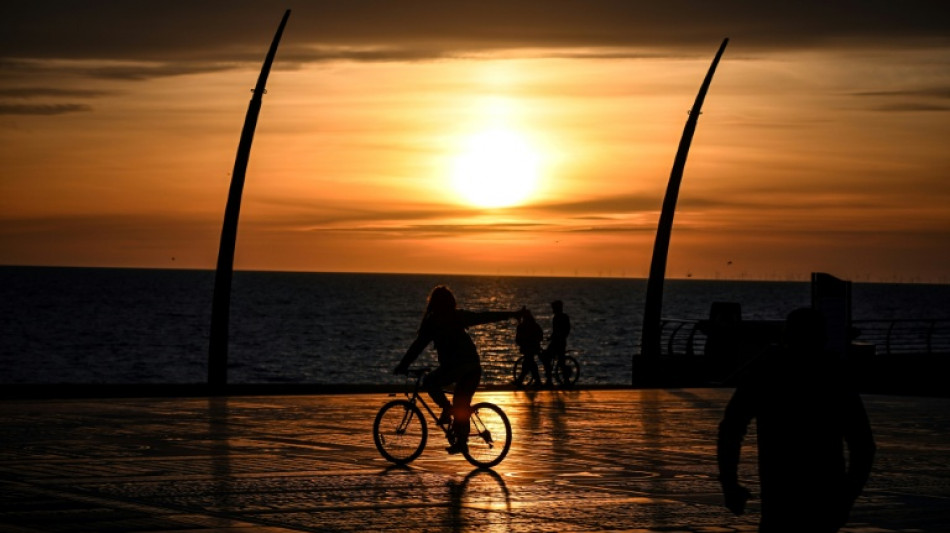
UK risks more extreme, prolonged heatwaves in future: study / Photo: Paul ELLIS - AFP

 India's Wholesale Inflation Jumps to 12.29% as Fuel Costs Surge

 China's October Activity Data Reveal a Weak Start to the Fourth Quarter
 Philippines Urges ASEAN and China to Accelerate South China Sea Code of Conduct

 Mbeki Claims No Progress Since 2018; Author Cites Infrastructure and Economic Gains

 Qatar's Amir and Venezuelan Acting President Discuss Energy Cooperation

 Blue Chip Capital Group Announces Quotation of its Common Stock on the OTCID and Updates Status of Initial Regulatory Compliance
 OBI Pharma Signs Collaboration and License Agreement with Novartis

 Strategic Metals Reports Promising Results From the Rusty and Ranch Projects

 Big Mamma Founder Tigrane Seydoux Brings Italian Restaurant Group to Florida

The UK could experience more frequent extreme and prolonged heat due to climate change, its meteorological office said Wednesday, as the country braced for its first heatwave of the year.
Met Office scientists said the island nation will see the "increased likelihood of extreme temperatures" over 40 degrees Celsius (104 degrees Fahrenheit).
The new study also "highlights how UK heatwaves could become longer and hotter due to escalating climate trends", the Met Office added.
According to the research, in the current climate, heatwaves in the UK could persist for "a month or more".
The UK, which is known for its frequent showers and mild summers, recorded its first temperature above 40 degrees in 2022.
"The chance of exceeding 40 degrees C has been rapidly increasing, and it is now over 20 times more likely than it was in the 1960s," said Gillian Kay, senior scientist at the Met Office.
"Because our climate continues to warm, we can expect the chance to keep rising," said Kay, adding there was a 50-percent chance of seeing a 40-degree day in the next 12 years.
Scientists warn the intensity and frequency of global extreme weather events will increase as the planet continues to heat up because of fossil fuel emissions.
On Monday, the Met office said a heatwave was "likely" in much of the UK this week, with the highest temperatures expected to exceed 30 degrees.
"These findings highlight the need to prepare and plan for the impacts of rising temperatures now," said co-author Nick Dunstone.
The UK this year experienced its warmest spring on record.
It also had the driest spring in over 50 years, with farmers facing damaged crop growth and the government warning about "exceptionally low" water reservoir levels.
In May, the Environment Agency's deputy water director Richard Thompson warned that "changing climate means we will see more summer droughts in the coming decades".
A.O.Scott--AT