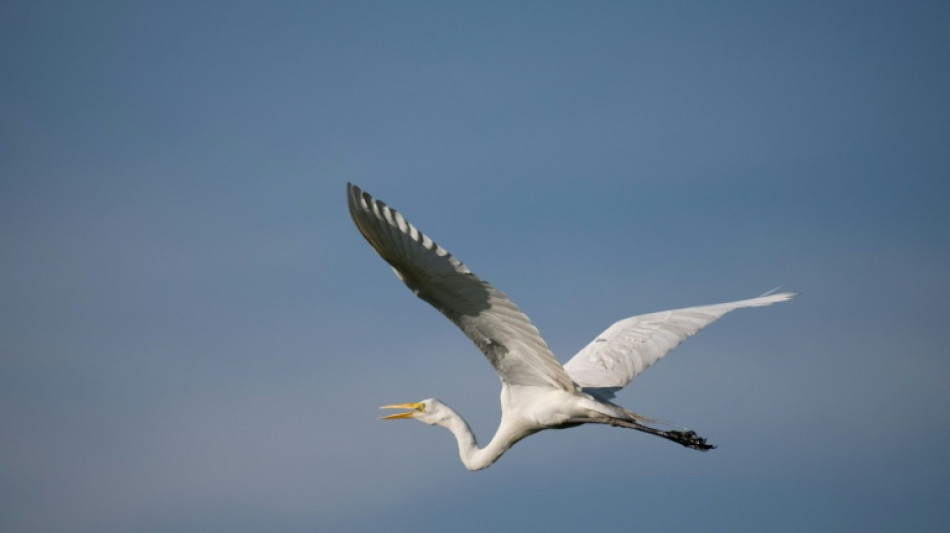
Scientists track egret's 38-hour flight from Australia to PNG / Photo: Federico PARRA - AFP/File

 Philippines Urges ASEAN and China to Accelerate South China Sea Code of Conduct

 Mbeki Claims No Progress Since 2018; Author Cites Infrastructure and Economic Gains

 Qatar's Amir and Venezuelan Acting President Discuss Energy Cooperation
 InterContinental Hotels Group PLC Announces Transaction in Own Shares - November 16

 Hawai‘i Falls to North Dakota State, Bowl Hopes Dashed

 Park Jin-young Denies Cult Allegations Against Firstfruits Group

A species of heron has been tracked flying for almost two days non-stop between Australia and Papua New Guinea during its northern migration, scientists say.
Australian researchers used GPS to follow eight plumed egrets and 10 great egrets over a period of months, after the birds left the Macquarie Marshes in New South Wales.
Great egrets were found to disperse in all directions, said the scientists from Australia's Commonwealth Scientific and Industrial Research Organisation.
But the plumed egrets all migrated north, and one was tracked flying almost 2,400 kilometres (1,490 miles) over several months before settling near the town of Kalo, southeast of Port Moresby.
It took that bird 38 hours to fly more than 700km across the Coral Sea, according to findings published in the journal Pacific Conservation Biology on Monday.
It was the first time scientists had recorded the plumed egrets' migration.
Another Australian bird, the bar-tailed godwit, holds the world record for flying more than 13,500 kilometres non-stop in just 11 days during its migration south from Alaska to Tasmania.
P.Hernandez--AT