Canada's reopened cod fishery on shaky ground / Photo: Vaughn Ridley - GETTY IMAGES/AFP

 Germans vote in elections threatening fresh blow to Merz

 US fears rapid escalation in Mideast after Houthis attack Riyadh

 Japan triathlete Hojo wins first gold of Asian Games

 IOC president impressed by 'beautiful' Asian Games wooden huts

 First Asian Games gold goes to Japan as China's 13-year-old Yu lights up pool

 Data centre command hub keeps AI up and running

 Pope Leo in France: the issues on the table

 Packing for a pope: behind the scenes on foreign trips

 Republicans find transgender issues a powerful political weapon in midterm campaigning

 German state elections threaten new shock waves for Merz

 Chile's Bachelet quits race to be next UN chief

 Raphinha treble fires perfect Barca to win at Sevilla

 Thiam makes winning heptathlon return at Decastar meet

 Czechs beat USA to qualify for Davis Cup finals

 Dortmund sink Stuttgart to climb to Bundesliga summit

 Trump says will not tolerate attempts to slow AI growth

 'It has to stop': runners protest women's murders in S.Africa district

 Fire erupts near Riyadh airport as Houthis claim strikes

 Cuba works to restore power after another blackout

 England thrash Sri Lanka again to return to top of T20 rankings

 Arsenal thrashed by Brighton, sorry Spurs lose again

 South Korea, Austria qualify for Davis Cup finals

 Seare shocks Ingebrigtsen to win world 5km gold

 Brigitte Bardot widower slams sale of star's belongings

 Aston Villa compound Tottenham's misery despite late rally
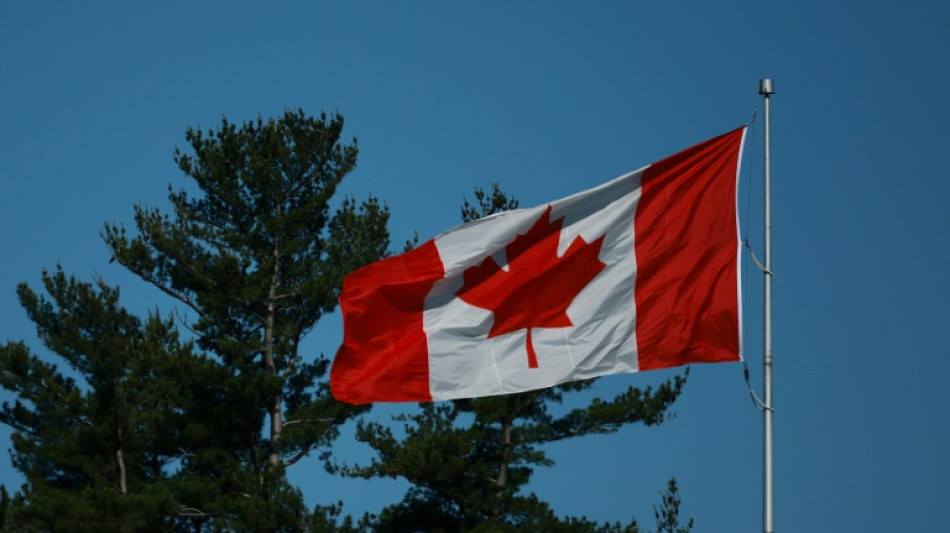
Canada has lifted a three-decade moratorium on commercial cod fishing, but there are signs Atlantic stocks have not fully recovered, raising questions about the government's rosy outlook for the sector.
The fishery off the coast of the nation's easternmost Newfoundland province had been a major economic driver for centuries, providing livelihoods for local and European fisherman.
It became a symbol of overfishing and poor management, however, when Canada imposed a commercial fishing moratorium in 1992 after nearly all of the fish disappeared, leaving tens of thousands in the sector unemployed.
The moratorium was initially ordered to last two years, but it would only be lifted in 2024 as fish stocks struggled to bounce back.
Last year, the largest vessels in the offshore fleet set out to sea with a quota to catch 18,000 tons of fish -- a far cry from the 120,000 tons authorized just months before the moratorium and the 250,000 tons fished annually in the late 1980s.
Why the cod population has failed to recover despite a long moratorium is the million-dollar question, said Tyler Eddy, a researcher at Memorial University in Newfoundland, pointing to a number of factors such as changing water temperatures.
The spawning stock is currently estimated at nearly 525,000 tons, according to the latest data released in April.
But it has never been able to recover to the levels it reached in the decades before to the moratorium, the scientist noted.
The cod population today represents 76 percent of the levels estimated in the 1980s, and 38 percent of a peak in the 1960s, according to Fisheries and Oceans Canada.
- Other fish in danger -
The recovery of cod also depends on the abundance of capelin, a small forage fish that is one of its main food sources and whose stock also collapsed in the early 1990s.
Its population has still not recovered and is expected to decline further this year, according to Fisheries and Oceans Canada, which added this will limit the growth potential of the cod stock.
For Rebecca Schijns of the environmental non-profit group Oceana, "until capelin rebounds, this really isn't the time to ramp up fishing."
"The cod stocks are still in trouble and in a very fragile state," she told AFP, urging the government to come up with a better plan for managing both of those fisheries.
"Right now, capelin don't have any rebuilding measures or harvest rules," she pointed out.
- changes in 32 years -
Sylvie Lapointe, president of the Atlantic Groundfish Council, which represents the deep-sea fishing sector, disagrees. She is calling for an increase in quotas to 50,000 tonnes this year.
That level represents less than 10 percent of the current cod stock and is "very conservative when you consider what is happening with other cod stocks in Europe," she insisted.
"We were the poster child for the lack of sustainable management. But a lot has changed in 32 years: fishing methods, the industry's mentality, the markets," she said.
The moratorium had been devastating because cod was Newfoundland's main economic driver for 500 years, commented Alberto Wareham, who runs the Icewater Seafoods fish processing plant.
Some 30,000 people lost their jobs, but his plant survived thanks to the catches of inshore fishermen -- whose small boats were still permitted -- and the import of frozen cod from Norway and Russia.
Coastal fishermen now fear a repeat of history with the return of boats operating on the high seas.
"They can be incredibly destructive and catch in one go with their fishing gear what we can catch all summer long," explained Lillian Saul, who advocates for the maintenance of sustainable fishing.
A.Anderson--AT