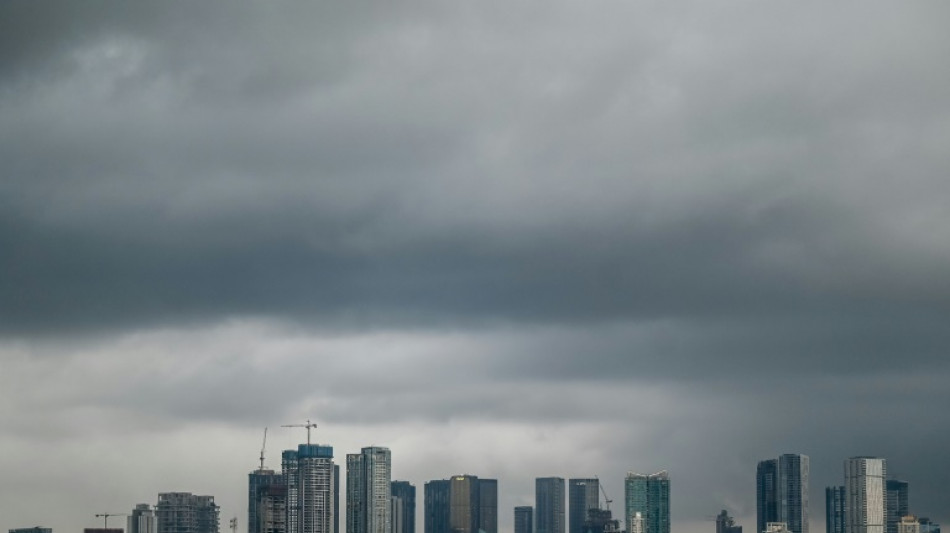
India's monsoon lashes Mumbai as rains arrive early / Photo: Punit PARANJPE - AFP/File

 Big Mamma Founder Tigrane Seydoux Brings Italian Restaurant Group to Florida

 Writer Realizes She Is Lesbian After Child Comes Out as Transgender

 GTA 6 Advertising Strategy and Disc Version Controversy

 IT’S TIME TO SHINE: ELEKTROS Thanks Its Shareholders and Looks Toward a Brighter Future in Critical Minerals and EV Technology

 As the Most Wonderful Time of the Year Approaches, ELEKTROS Celebrates Its Shareholders and Looks Ahead to a Bright Future

Lashing rains swamped India's financial capital Mumbai on Monday as the annual monsoon arrived some two weeks earlier than usual, according to weather forecasters.
Heavy rains cooling temperatures -- welcomed by farmers for their crops but which cause havoc each year in cities by flooding transport infrastructure -- are normally expected in the southwestern state of Maharashtra in early June.
The Indian Meteorological Department (IMD) warned of "extremely heavy rainfall" in Mumbai and the city authorities said a red alert had been issued until Tuesday.
"All citizens are advised to stay indoors and avoid travel unless necessary" the city authorities said in a statement, urging people to "kindly cooperate".
The IMD said in a statement that the rains had advanced to Mumbai on Monday, "16 days earlier than usual", with rains usually expected around June 11, the earliest for nearly a quarter century.
"This marks the earliest monsoon advancement over Mumbai during the period 2001–2025", it said.
Across the wider state of Maharashtra, IMD weather chief in the region Shubhangi Bhute said it was the earliest the rains had arrived for 14 years.
South Asia is getting hotter and in recent years has seen shifting weather patterns, but scientists are unclear on how exactly a warming planet is affecting the highly complex monsoon.
The southwest monsoon is a colossal sea breeze that brings South Asia 70-80 percent of its annual rainfall between June and September every year.
It occurs when summer heat warms the landmass of the subcontinent, causing the air to rise and sucking in cooler Indian Ocean winds which then produce enormous volumes of rain.
The monsoon is vital for agriculture and therefore for the livelihoods of millions of farmers and for food security.
But it brings destruction every year in landslides and floods.
In India, the southwest monsoon normally arrives on the southern tip at Kerala around June 1, and moves north to cover the country by early July. The rains typically reach Maharashtra around June 7.
R.Chavez--AT