UK farmers pray for rain amid driest spring since 1852 / Photo: Justin TALLIS - AFP

 Germans vote in elections threatening fresh blow to Merz
 US fears rapid escalation in Mideast after Houthis attack Riyadh

 Japan triathlete Hojo wins first gold of Asian Games
 IOC president impressed by 'beautiful' Asian Games wooden huts
 First Asian Games gold goes to Japan as China's 13-year-old Yu lights up pool

 Data centre command hub keeps AI up and running
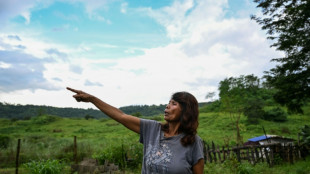
 Pope Leo in France: the issues on the table

 Packing for a pope: behind the scenes on foreign trips

 Republicans find transgender issues a powerful political weapon in midterm campaigning

 German state elections threaten new shock waves for Merz

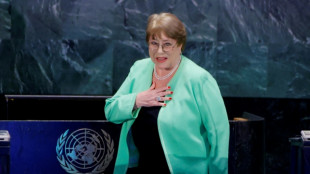 Chile's Bachelet quits race to be next UN chief

 Raphinha treble fires perfect Barca to win at Sevilla

 Thiam makes winning heptathlon return at Decastar meet

 Czechs beat USA to qualify for Davis Cup finals

 Dortmund sink Stuttgart to climb to Bundesliga summit

 Trump says will not tolerate attempts to slow AI growth

 'It has to stop': runners protest women's murders in S.Africa district

 Fire erupts near Riyadh airport as Houthis claim strikes

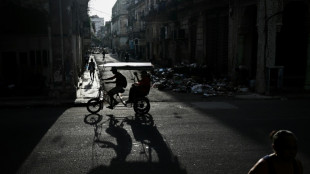 Cuba works to restore power after another blackout
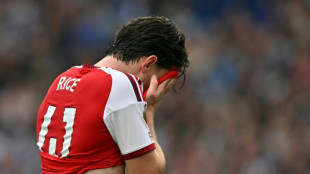
 England thrash Sri Lanka again to return to top of T20 rankings
 Arsenal thrashed by Brighton, sorry Spurs lose again

 South Korea, Austria qualify for Davis Cup finals
 Seare shocks Ingebrigtsen to win world 5km gold

 Brigitte Bardot widower slams sale of star's belongings

 Aston Villa compound Tottenham's misery despite late rally

UK farmers are praying for rain as Britain suffers its driest spring in well over a century, which has left the soil parched and crops stunted from lack of water.
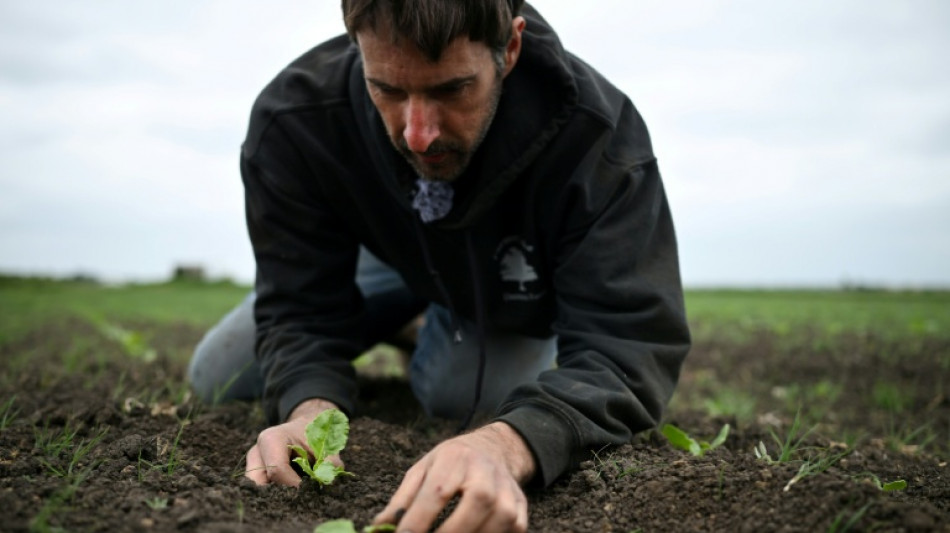
At his 400-hectare (988-acre) farm near the eastern town of Peterborough, Luke Abblitt sadly surveyed his fields of thirsty sugar beets and potatoes struggling to grow.
Not a drop of rain has fallen since March.
"I'm not quite sure how I'm going to handle it on the farm, I'm hoping that we're going to get some rain, if not then I'll have to somehow magically do something," Abblitt, 36, told AFP.
The tiny green shoots of the sugar beets poking through the cracked, dusty earth "should be at least twice the size," he sighed.
In a neighbouring field he has just planted potatoes with the help of his father, Clive, toiling to break up the baked soil.
A total of 80.6 millimetres (3.1 inches) of rain has fallen since the start of spring, which covers the months of March, April and May, according to the national weather agency.
That is well below the all-time low of 100.7 millimetres which fell in 1852, according to the Met Office.
"This spring has so far been the driest for more than a century," the Met Office told AFP, cautioning that it would be necessary to wait until the end of May to confirm the record.
According to the Environment Agency, levels in the reservoirs have fallen to "exceptionally low".
It called a meeting of its national drought group last week, at which deputy director of water Richard Thompson said climate change meant "we will see more summer droughts in the coming decades".
The dry start to the year meant water companies were "moving water across their regions to relieve the driest areas", a spokesperson for Water UK, the industry body representing water suppliers, told AFP.
Memories linger in Britain of July 2022 when temperatures topped 40 degrees (104 Fahrenheit) for the first time.
- 'One extreme to another'-
In a barn, the Abblitts worked side-by-side with a noisy machine packing potatoes harvested last year into 25-kilo sacks.
"Potatoes are a lot heavier users of water ... and they're also a lot more high value. So, we desperately need some rain," Luke Abblitt said.
Without water, a potato "will only reach a certain stage before it stops and then it won't grow any bigger," he added.
If his potatoes are stunted he will not be able to sell them to his main clients which are British fish and chip shops.
"I need to make sure they're a fair size, because everyone wants big chips, no one wants tiny chips do they?" he said.
The weather is going from "one extreme to the other," he said dejectedly.
"We're having a lot of rain in the wintertime, not so much rain in the spring or summer time. We need to adapt our cultivation methods, look at different varieties, different cropping possibly to combat these adverse weather conditions."
In recent years, Britain has been battered by major storms, as well as being hit by floods and heatwaves.
"As our climate changes, the likelihood of droughts increases," said Liz Bentley, chief executive at the Royal Meteorological Society.
"They're likely to become more frequent, and they're likely to be more prolonged," she warned.
In past years the country used to experience a severe drought every 16 years.
"In this current decade, that's increased to one in every five years, and in the next couple of decades, that becomes one in every three years."
And a fall in harvests risks pushing up prices in the supermarkets, she added.
Some farmers have begun irrigating their crops earlier than usual, the National Farmers' Union said, calling for investment to improve water storage and collection systems.
Vice President Rachel Hallos warned "extreme weather patterns ... are impacting our ability to feed the nation".
Abblitt applied two years ago for a licence to install an irrigation system on the lands he rents from the local authorities.
He is still waiting. "I'm just praying for the rain," he added.
R.Chavez--AT