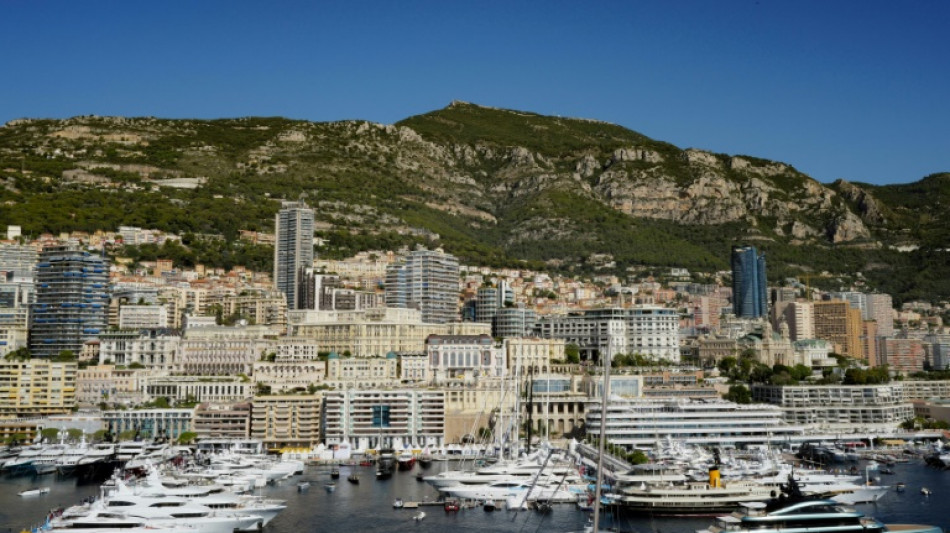
World's richest 10% caused two thirds of global warming: study / Photo: Valery HACHE - AFP/File

 Drones hit Moscow as Russians go to the polls

 New England boss Fleming says 'wrong' to ask Stokes to end retirement

 Germans vote in elections threatening fresh blow to Merz

 US fears rapid escalation in Mideast after Houthis attack Riyadh

 Japan triathlete Hojo wins first gold of Asian Games

 IOC president impressed by 'beautiful' Asian Games wooden huts

 First Asian Games gold goes to Japan as China's 13-year-old Yu lights up pool

 Data centre command hub keeps AI up and running
 Pope Leo in France: the issues on the table
 Packing for a pope: behind the scenes on foreign trips

 Republicans find transgender issues a powerful political weapon in midterm campaigning

 German state elections threaten new shock waves for Merz

 Chile's Bachelet quits race to be next UN chief

 Raphinha treble fires perfect Barca to win at Sevilla

 Thiam makes winning heptathlon return at Decastar meet

 Czechs beat USA to qualify for Davis Cup finals
 Dortmund sink Stuttgart to climb to Bundesliga summit

 Trump says will not tolerate attempts to slow AI growth

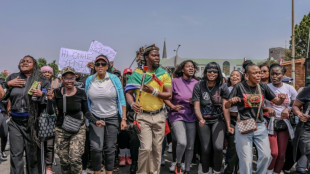 'It has to stop': runners protest women's murders in S.Africa district

 Fire erupts near Riyadh airport as Houthis claim strikes

 Cuba works to restore power after another blackout

 England thrash Sri Lanka again to return to top of T20 rankings
 Arsenal thrashed by Brighton, sorry Spurs lose again

 South Korea, Austria qualify for Davis Cup finals

 Seare shocks Ingebrigtsen to win world 5km gold

The world's wealthiest 10 percent of individuals are responsible for two thirds of global warming since 1990, researchers said Tuesday.
How the rich consume and invest has substantially increased the risk of deadly heatwaves and drought, they reported in the first study to quantify the impact of concentrated private wealth on extreme climate events.
"We link the carbon footprints of the wealthiest individuals directly to real-world climate impacts," lead author Sarah Schoengart, a scientist at ETH Zurich, told AFP.
"It's a shift from carbon accounting toward climate accountability."
Compared to the global average, for example, the richest one percent contributed 26 times more to once-a-century heatwaves, and 17 times more to droughts in the Amazon, according to the findings, published in Nature Climate Change.
Emissions from the wealthiest 10 percent in China and the United States -- which together account for nearly half of global carbon pollution -- each led to a two-to-threefold rise in heat extremes.
Burning fossil fuels and deforestation have heated Earth's average surface by 1.3 degrees Celsius, mostly during the last 30 years.
Schoengart and colleagues combined economic data and climate simulations to trace emissions from different global income groups and assess their impact on specific types of climate-enhance extreme weather.
The researchers also emphasised the role of emissions embedded in financial investment rather than just lifestyle and personal consumption.
"Climate action that doesn't address the outsized responsibilities of the wealthiest members of society risk missing one of the most powerful levers we have to reduce future harm," said senior author Carl-Friedrich Schleussner, head of the Integrated Climate Impacts Research Group at the International Institute for Applied Systems Analysis near Vienna.
- Billionaires tax -
Owners of capital, he noted, could be held accountable for climate impacts through progressive taxes on wealth and carbon-intensive investments.
Earlier research has shown that taxing asset-related emissions is more equitable than broad carbon taxes, which tend to burden those on lower incomes.
Recent initiatives to increase taxes on the super-rich and multinationals have mostly stalled, especially since Donald Trump regained the White House.
Last year, Brazil -- as host of the G20 -- pushed for a two-percent tax on the net worth of individuals with more than $1 billion in assets.
Although G20 leaders agreed to "engage cooperatively to ensure that ultra-high-net-worth individuals are effectively taxed," there has been no follow-up to date.
In 2021, nearly 140 countries agreed on work toward a global corporate tax for multinational companies, with nearly half endorsing a minimum rate of 15 percent, but those talks have stalled as well.
Almost a third of the world's billionaires are from the United States -- more than China, India and Germany combined, according to Forbes magazine.
According to anti-poverty NGO Oxfam, the richest 1 percent have accumulated $42 trillion in new wealth over the past decade.
It says the richest one percent have more wealth than the lowest 95 percent combined.
A.Moore--AT



