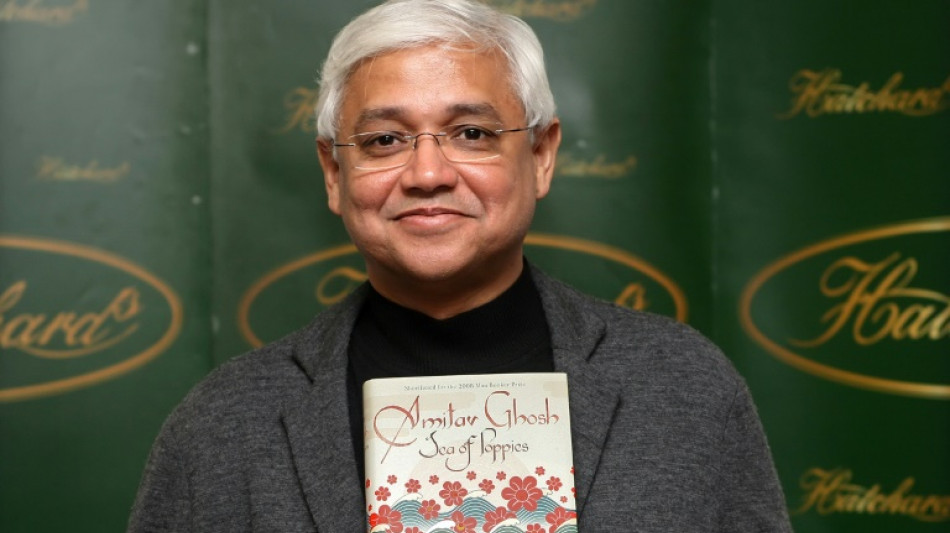
Indian author Ghosh wins top Dutch prize / Photo: LEON NEAL - AFP

 Get Huge: Looksmaxxing to Death Docuseries Details Tony Huge's Thailand Crimes

 IIM Indore Announces IPMAT 2027 Exam Date for April 24

 Quick Pressure-Cooker Beef Stew and Rice Minestrone Soup Recipes
 Guardian Metal Resources PLC Announces Proposed Spin-Out of Non-Tungsten Projects

 Fulcrum Metals PLC Announces New Critical Mineral Recoveries Expand Potential

 Olivier Martinez Seeks Increased Child Support from Halle Berry Following Custody Change

 Joe Biden Makes Surprise Appearance at Trinity College Dublin for Hunter's Medal

 Bank of Korea Governor Shin Hyun-song Appointed First Asian Chair of BIS Payment Committee
Acclaimed Indian author Amitav Ghosh has won the coveted Dutch Erasmus Prize for his writings on climate change and its impact on humanity, especially on the Indian subcontinent.
Ghosh "has delved deeply into the question of how to do justice to this existential threat that defies our imagination," the prize committee said in a statement.
The Erasmus Prize, due to be presented by Dutch King Willem-Alexander on Tuesday, is awarded for an "exceptional contribution to the humanities, the social sciences or the arts, in Europe and beyond."
The winner receives a cash prize of 150,000 euros ($157,000).
The Praemium Erasmianum Foundation, which awards the prize, noted that Ghosh had described how the effects of climate change have been "inextricably linked" to human destiny on the Indian subcontinent.
It cited his work "The Hungry Tide", which portrayed how rising sea levels were devastating life in the Sundarbans, the world's largest mangrove forest.
The 68-year-old's work is also political, with "The Great Derangement" setting climate change in the context of war and trade.
"Through understanding and imagination he creates space for hope, a prerequisite for change," said the prize committee.
Born in Kolkata, Ghosh has won several literary prizes, including the 2018 Jnanpith Award, India's top award.
A.Moore--AT