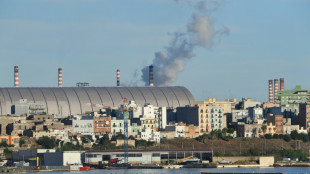
EU to make pharmaceutical and cosmetic industries pay for treating water / Photo: JOSE JORDAN - STR/AFP

 New Zealanders pick endangered black robin as Bird of the Year

 Asia stocks rise on AI, US-China trade talks optimism

 Malaysia's 'elephant whisperer' fights to save Borneo's endangered giants
 'I live in fear': 1.5 million Pakistani children sexually exploited online

 Cowboys beat Commanders, Vikings down Bears as star QBs injured

 4 Hacks for Yearlong Savings on Your Kids' Wardrobes

 Forest fire threatens tourist town in Colombian Andes

 Torres on target again as PSG beat 10-man Marseille in Ligue 1

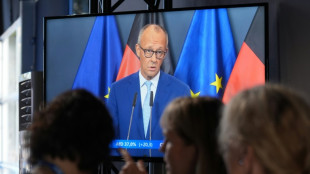
 Germany's Merz vows to stay course despite new election defeats

 Carrick demands Man Utd response after 'pathetic' jibes

 Liverpool boss Iraola urges Isak to raise his level

 Evenepoel wins record 4th straight world time-trial title

 France's Macron, Canada's Carney announce closer ties

 Carrick defends troubled Man Utd after Fulham escape

 Horror movie 'Resident Evil' tops N. American box office

 Germany's Merz vows to stay course despite new vote losses

 Man City outgun Sunderland despite Brobbey hat-trick, Man Utd rescue Fulham draw

 Mourinho blames ref committee for Real Madrid derby defeat

 Maresca craves a 1-0 win after eight-goal Man City thriller
 Atletico Madrid beat Real Madrid in tense derby clash

 Reusser retains world time-trial title

 Man City outgun Sunderland despite Brobbey hat-trick, Liverpool win at Bournemouth

 Top US, Chinese economic officials meet ahead of Trump-Xi summit

 Erdogan's LGBTQ crackdown 'first step of election campaign': activist

 Mass drone barrage on Moscow kills two

The European Union's parliament Wednesday approved a package of rules that will make the pharmaceutical and cosmetic industries cover more of the costs of cleaning up their waste waters.
With a vote of 481 in favour and 79 against, with 26 abstentions, Europe's parliament rubber-stamped an accord it reached late January with member states.
The text, which revises rules in place since 1991, drastically lowers to 1,000 inhabitants the threshold at which towns will be required by 2035 to eliminate all biodegradable organic materials before they can release their treated used waters into the environment.
Towns with more than 150,000 inhabitants will by 2039 have to remove all nitrogen and phosphorous, and by 2045 a wide range of micropollutants.
Most importantly, the package establishes the principle of "the polluter pays" by imposing greater contributions from the pharmaceutical and cosmetic industries.
According to the EU, 59 percent of micropollutants in water treatment stations come from pharmaceutical producers and 14 percent from cosmetics.
These two sectors will be asked to cover 80 percent of the extra investments needed to eliminate micropollutants, with the remaining 20 percent covered by member states.
The European Commission initially wanted industry to cover the full cost, but it dialled back its demands under pressure from the parliament and industry lobbyists.
The package must still be officially approved by the EU's member states.
T.Wright--AT