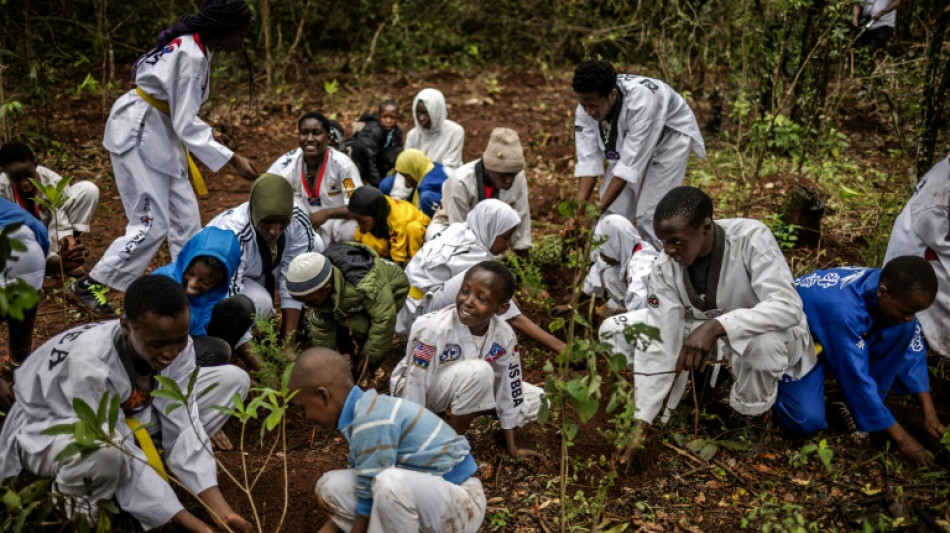
Planting trees in wrong places heats the planet: study / Photo: LUIS TATO - AFP

 New Zealanders pick endangered black robin as Bird of the Year

 Asia stocks rise on AI, US-China trade talks optimism

 Malaysia's 'elephant whisperer' fights to save Borneo's endangered giants

 'I live in fear': 1.5 million Pakistani children sexually exploited online

 Cowboys beat Commanders, Vikings down Bears as star QBs injured
 4 Hacks for Yearlong Savings on Your Kids' Wardrobes

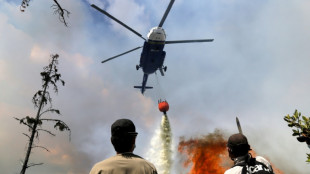 Forest fire threatens tourist town in Colombian Andes

 Torres on target again as PSG beat 10-man Marseille in Ligue 1

 Germany's Merz vows to stay course despite new election defeats

 Carrick demands Man Utd response after 'pathetic' jibes

 Liverpool boss Iraola urges Isak to raise his level

 Evenepoel wins record 4th straight world time-trial title

 France's Macron, Canada's Carney announce closer ties

 Carrick defends troubled Man Utd after Fulham escape

 Horror movie 'Resident Evil' tops N. American box office

 Germany's Merz vows to stay course despite new vote losses

 Man City outgun Sunderland despite Brobbey hat-trick, Man Utd rescue Fulham draw

 Mourinho blames ref committee for Real Madrid derby defeat

 Maresca craves a 1-0 win after eight-goal Man City thriller

 Atletico Madrid beat Real Madrid in tense derby clash

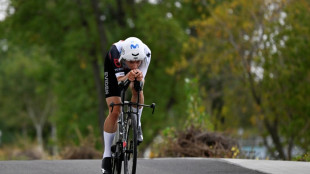 Reusser retains world time-trial title

 Man City outgun Sunderland despite Brobbey hat-trick, Liverpool win at Bournemouth

 Top US, Chinese economic officials meet ahead of Trump-Xi summit

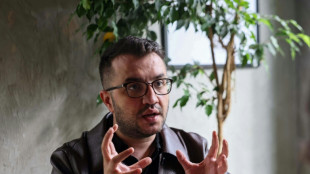 Erdogan's LGBTQ crackdown 'first step of election campaign': activist

 Mass drone barrage on Moscow kills two

Planting trees in the wrong places can actually contribute to global warming, scientists said on Tuesday, but a new map identifies the best locations to regrow forests and cool the planet.
Trees soak up carbon dioxide and restoring areas of degraded woodlands or planting saplings to boost forest cover is one tool in the fight against climate change.
But in some cases, more trees means less sunlight is reflected back from the earth's surface and more heat is absorbed by the planet, according to a study in the journal Nature Communications.
"There are some places where putting trees back leads to net climate negative outcomes," Susan Cook-Patton, one of the study's co-authors, told AFP.
Scientists had already understood that restoring tree cover led to changes in albedo -- the amount of solar radiation bounced back off the planet's surface -- but didn't have the tools to account for it, she said.
Using new maps, researchers were able to consider, for the first time, the cooling effect from trees and the warming caused by decreased albedo.
They found that projects that didn't factor albedo into the equation overestimated the climate benefit of additional trees by between 20 to 80 percent.
But the maps also provide the tools to help policymakers identify where best to funnel scarce resources for maximum climate impact, said Cook-Patton, senior forest restoration scientist at The Nature Conservancy.
"There's also lots of places still where restoring tree cover is a great idea for climate change. We're just trying to help people find those spots," she said.
- Return on investment -
Albedo is highest in the frozen areas of the world, and mirror-like clean snow and ice with high levels of albedo reflect up to 90 percent of the sun's energy.
It is one of Earth's major cooling agents, along with lands and oceans that absorb excess heat and planet-warming greenhouse gas emissions.
Many countries have promised to plant billions of trees as a bulwark against global warming but not all efforts deliver for the planet equally, this study showed.
Moist, tropical environments like the Amazon and Congo Basin boasted high carbon storage and low changes in albedo, making them ideal locations for restoring forest cover.
The opposite was true in temperate grasslands and savanna, Cook-Patton said.
Even projects in the best locations were probably delivering 20 percent less cooling than estimated when changes to albedo were taken into account, she said.
But she stressed that restoring forests delivered undeniable benefits for people and the planet, such as supporting ecosystems and providing clean air and water, among many.
"We really don't want our work to be a critique of the movement writ large," she said.
"(But) we can't put trees everywhere. We don't have enough money or time or resources or people or seedlings.
"And so it's really about making the most of limited investments and getting the greatest climate return per hectare of investment," she added.
R.Lee--AT

