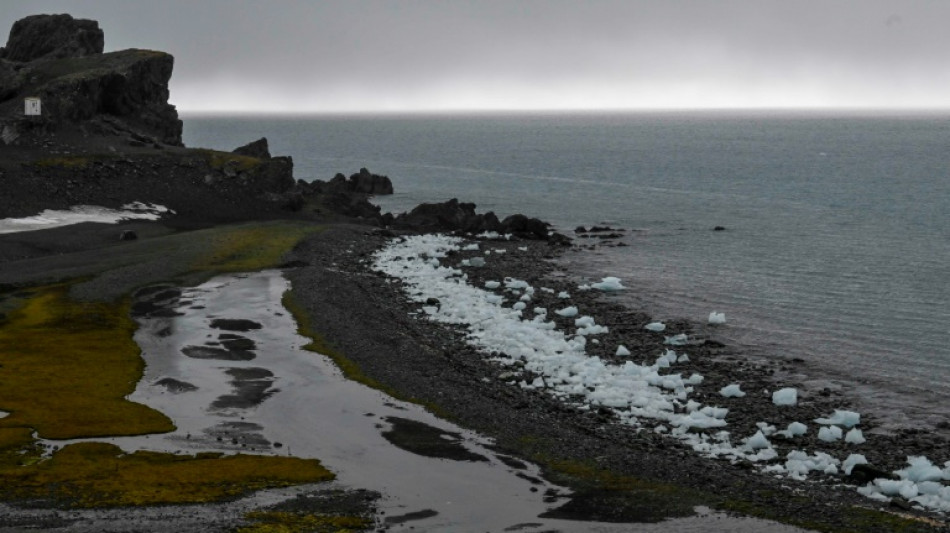
'Very worried': Scientists fret as Antarctic sea ice dwindles / Photo: Juan Barreto - AFP/File

 'I live in fear': 1.5 million Pakistani children sexually exploited online

 Cowboys beat Commanders, Vikings down Bears as star QBs injured
 Braves clinch division title as Red Sox reach MLB playoffs
 Bordeaux-Begles hammer Stade Francais despite Jalibert injury

 Milan and Juventus end blips with home wins

 Bridgeman wins PGA Biltmore title with sizzling 61

 Williams injured as Bears shut down by Vikings

 US warns of rapid escalation in Middle East war

 Germany's far-right AfD celebrates another state election win
 Russia vows revenge for election-day attacks as poll shows ruling party win

 Spaun late shows snatches PGA Championship win

 Conceicao strikes as Juventus beat Atalanta

 Britain, Zverev-inspired Germany, Spain complete Davis Cup finals

 Man Utd salvage Fulham draw as pressure mounts on Carrick

 Spanish civil war drama 'The Black Ball' wins at Toronto festival

 Germany's Merz shaken by far-right and far-left gains in state votes

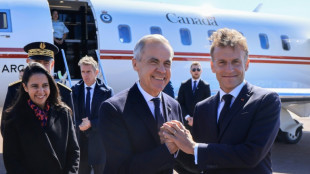 Macron welcomes Canada's Carney to French Atlantic territory
 Fiorentina frustrate Napoli with Serie A draw, Como upset

 Five-star Man City top Premier League after Sunderland thriller

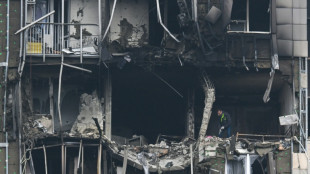 Ukrainian drones hit Moscow on last day of Russian elections
 Multi-Asset Trading Venue Monochrome Exchange Announces IEO of Its Native Token, $MCR
 South Korea break Japan hearts to win Asian Games basketball gold
 Acosta takes first victory at Austrian MotoGP

 PSG president Nasser al-Khelaifi under investigation in France for conflict of interest

 China swim sensation, 13, sets Games record after Japan win early

Sea ice levels in Antarctica have registered historic lows for three consecutive years, portending grave consequences for life on Earth as we know it.
But looking out over the southernmost continent, scientist Miguel Angel de Pablo laments that humanity seems to be oblivious to the warnings.
"We (scientists) are very worried... because we don't see how we can solve it ourselves," the Spanish planetary geologist told AFP on Livingston Island in the South Shetland Antarctic archipelago.
"The more alerts we send out... to make society aware of what is happening, it seems we are not listened to, that we are (perceived as) alarmist" despite the evidence, he said.
The US National Snow & Ice Data Center (NSIDC) reported Wednesday that minimum Antarctic sea ice extent came in at under two million square kilometers (772,000 square miles) for a third consecutive February -- the height of the southern summer thaw season.
Minimum sea ice cover for all three years were the lowest since records began 46 years ago.
Melting sea ice has no immediate impact on ocean levels, as it forms by freezing salt water already in the ocean.
But the white ice reflects more of the sun's rays than darker ocean water, and its loss accentuates global warming while exposing the on-land freshwater ice sheet, which could cause a catastrophic sea level rise if it melts.
"Even though we are far from any inhabited part of the planet, in reality what happens in Antarctica affects everything" in the rest of the world, said De Pablo.
- 'Not easily undone' -
A study last year found that nearly half of Antarctica's ice shelves -- floating sheets attached to the landmass -- have also reduced in volume in the past 25 years, releasing trillions of tons of meltwater into the oceans.
This has implications not only for sea levels but also for ocean salinity and temperature, said De Pablo.
Some scientists say evidence for climate change impact on sea ice melt in Antarctica -- known for significant annual variations in its summer thaws and winter freezes -- is less clear than in the Arctic north pole.
What is not in doubt is that continued global warming caused by human emissions of greenhouse gases will affect these patterns in future.
De Pablo, who has devoted 16 years of his life to studying Antarctic ice, told AFP it may already be too late to stop the trend.
"The problem is that these degradations are not easily undone," he said.
"Even if today we (changed) the rhythms of life that we have in Western societies, tomorrow the glaciers would not cease to degrade nor the frozen soils to be lost," with all that entails.
Scientists estimate global temperatures are already 1.2 degrees Celsius hotter overall than pre-industrial levels. The 2015 Paris Agreement had set out to limit warming to 1.5 C (2.7 Fahrenheit) by curbing planet-warming emissions.
"We have to ask ourselves whether the manner in which we live our daily lives is truly worth it because in the end we will lose our planet," said De Pablo.
"There is no second planet" Earth, he added.
K.Hill--AT