'It destroys everything': Amazon community fights carbon credit project / Photo: Juan Pablo Pino - AFP

 Braves clinch division title as Red Sox reach MLB playoffs
 Bordeaux-Begles hammer Stade Francais despite Jalibert injury

 Milan and Juventus end blips with home wins
 Bridgeman wins PGA Biltmore title with sizzling 61

 Williams injured as Bears shut down by Vikings

 US warns of rapid escalation in Middle East war

 Germany's far-right AfD celebrates another state election win

 Russia vows revenge for election-day attacks as poll shows ruling party win

 Spaun late shows snatches PGA Championship win

 Conceicao strikes as Juventus beat Atalanta
 Britain, Zverev-inspired Germany, Spain complete Davis Cup finals

 Man Utd salvage Fulham draw as pressure mounts on Carrick

 Spanish civil war drama 'The Black Ball' wins at Toronto festival

 Germany's Merz shaken by far-right and far-left gains in state votes

 Macron welcomes Canada's Carney to French Atlantic territory

 Fiorentina frustrate Napoli with Serie A draw, Como upset

 Five-star Man City top Premier League after Sunderland thriller

 Ukrainian drones hit Moscow on last day of Russian elections
 Multi-Asset Trading Venue Monochrome Exchange Announces IEO of Its Native Token, $MCR
 South Korea break Japan hearts to win Asian Games basketball gold
 Acosta takes first victory at Austrian MotoGP

 PSG president Nasser al-Khelaifi under investigation in France for conflict of interest

 China swim sensation, 13, sets Games record after Japan win early

 Drones hit Moscow as Russians go to the polls

 New England boss Fleming says 'wrong' to ask Stokes to end retirement

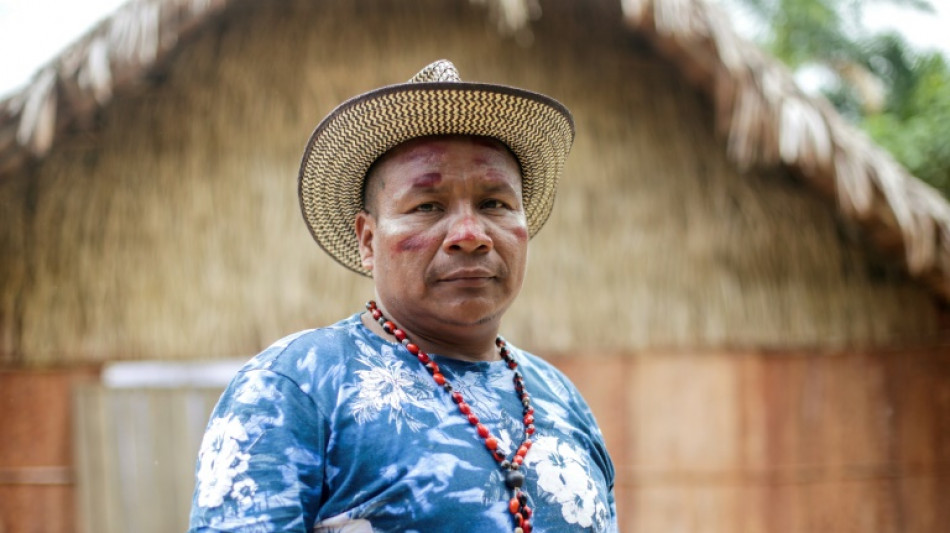
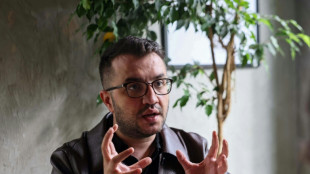
Chewing on psychoactive coca leaves in a traditional ritual, Colombian Indigenous leader Fabio Valencia seeks the advice of jungle spirits and ancestors about a project sold to his community as a planet-saving initiative.
In a remote corner of the Amazon, far from COP28 in Dubai where world leaders will thrash out the final parameters for a reform of the global carbon credit system, the 43-year-old told AFP that one such project was destroying his people in the region of Pira Parana.
Carbon credits allow companies to buy carbon credits from forest preservation or other projects to offset or "compensate" for their greenhouse gas emissions.
But according to Valencia, the Baka Rokarire project in Pira Parana was "worse" for the community than even pollution from mining and oil extraction.
It threatened the very fiber of the community, he claimed, fraudulently wresting control from the region's Indigenous leadership and driving a wedge between locals who support the project with its quick cash injection, and those against it.
"This contaminates spiritually, physically, it destroys everything... in this territory, for money," Valencia said.
AFP walked, motor-boated and overflew part of the Pira Parana territory, which is nearly the size of Puerto Rico. It is an area so remote it is accessible only by million-dollar private flights or a boat trip of at least six days from the nearest city, Mitu.
A total of 2,246 members of six tribes in Pira Parana are contracted to the Baka Rokarire project to reduce deforestation in Pira Parana. It's the type of carbon credit project known as REDD+, which stands for "Reducing Emissions from Deforestation and Forest Degradation."
Trees are crucial absorbers of carbon dioxide -- the most widespread greenhouse gas -- and Colombia, one of the world's most biodiverse countries, has tens of millions of hectares of forest.
But local leaders say they wish they had never heard of Baka Rokarire, which they claim was illegally foisted on them.
They cite an increase in disputes between individuals and groups and a loss of Indigenous autonomy in the region. Valencia also points to a sudden rise in alcohol consumption, anathema in a region with a deeply traditional way of life.
- Autonomy threatened -
Masbosques, a public-private sustainable forest management partnership, states on its website that Baka Rokarire protects more than 702,000 hectares of Colombian Amazon, with an estimated annual emissions reduction of 524,146 tons of CO2 equivalent.
But some experts charge that the Baka Rokarire project is a farce as there is no real deforestation threat in the area and thus no emissions "savings" to be made.
Inhabitants of Pira Parana further accuse Masbosques of having hoodwinked the community when it acted as an intermediary in a carbon credit deal with a private company.
They have referred the matter to the Constitutional Court in the first case of its kind in Colombia, claiming violations of their rights to territorial autonomy and self-government. The matter is pending.
Valencia, a leader of the Makuna people, claims Masbosques negotiated a deal with a community member who had no legal power to take such decisions.
The prosecutor's office is also investigating claims that Masbosques falsified documents related to the deal signed in 2021.
Masbosques, which describes itself as a not-for-profit organization, told AFP the contract was "valid, legal" and claimed to be the victim of a "smear campaign".
The credits were sold to a Colombian data processing firm called Latin Checkout for some $3.8 million -- all of which went to community members, representatives and organizations, said Masbosques.
According to the www.ecoregistry.com, which keeps tabs on carbon credit trading, Latin Checkout then sold the credits to US airline Delta which faces a lawsuit at home for alleged "greenwashing" -- claiming to be carbon neutral while purchasing questionable carbon offsets.
Wilmer Garcia, another Indigenous leader, told AFP he was one of many community representatives never consulted on the deal.
"The company (Masbosques)... invaded this territory. It did not recognize that there are already environmental and traditional authorities here," said the 37-year-old, a jaguar fang dangling on a string around his neck.
Traditional leader Roberto Marin, 58, added the project was never approved in the "maloka" -- an Indigenous council that has the final say on such matters.
"It must be recognized that we exist here, people, human beings with rights," he told AFP.
A similar project elsewhere in Colombia was stopped by a judge on the grounds that the community was not adequately consulted.
- 'Taking advantage' -
Colombia's Environment Minister Susana Muhamad told AFP a "lack of regulation" meant carbon credit projects are negotiated between private parties with no government control or participation.
This has given rise to "some companies taking advantage of some communities," she told AFP, adding there were plans for the creation of a regulatory agency.
According to Colombia's Sinchi Amazonic Institute of Scientific Research, some two-thirds of Indigenous territory in the rainforest fall under carbon credit projects today.
The Paris Agreement that emerged from COP21 in 2015 widened a system of exchange of carbon credits -- something the oil and gas industry had been demanding for years.
The details of the system have yet to be finalized, but the very concept took a major hit this year with several scientific studies and investigative reports questioning the credibility of the lucrative voluntary market which lies outside the UN process.
"Many of these populations have experienced a long history of conflict with extractive industries. In some cases, the offset income can help support them.
"But we've seen many projects... putting at risk some of the most vulnerable communities on the planet," researcher Barbara Haya, director of the Berkeley Carbon Trading Project, told AFP earlier this year.
M.O.Allen--AT



