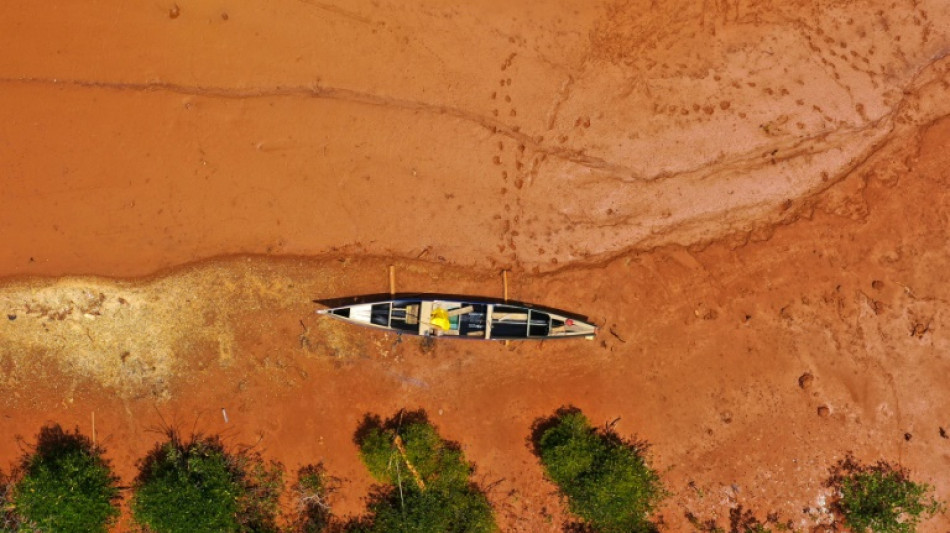
Indonesian farmers fight for their land in nickel mining boom / Photo: Adek BERRY - AFP

 IOC president impressed by 'beautiful' Asian Games wooden huts

 First Asian Games gold goes to Japan as China's 13-year-old Yu lights up pool

 Data centre command hub keeps AI up and running

 Pope Leo in France: the issues on the table

 Packing for a pope: behind the scenes on foreign trips

 Republicans find transgender issues a powerful political weapon in midterm campaigning

 German state elections threaten new shock waves for Merz

 Chile's Bachelet quits race to be next UN chief

 Raphinha treble fires perfect Barca to win at Sevilla

 Thiam makes winning heptathlon return at Decastar meet

 Czechs beat USA to qualify for Davis Cup finals

 Dortmund sink Stuttgart to climb to Bundesliga summit

 Trump says will not tolerate attempts to slow AI growth

 'It has to stop': runners protest women's murders in S.Africa district

 Fire erupts near Riyadh airport as Houthis claim strikes

 Cuba works to restore power after another blackout

 England thrash Sri Lanka again to return to top of T20 rankings

 Arsenal thrashed by Brighton, sorry Spurs lose again

 South Korea, Austria qualify for Davis Cup finals

 Seare shocks Ingebrigtsen to win world 5km gold

 Brigitte Bardot widower slams sale of star's belongings

 Aston Villa compound Tottenham's misery despite late rally

 Asian Games offer 'deepest apologies' for South Korea anthem blunder
 Inter Milan and Italy icon Mazzola dies aged 83

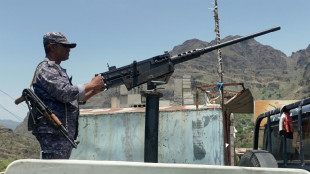 Saudi capital issues first air raid alert since renewed fighting in Yemen

Three women with machetes stood guard at their farm hilltop on Indonesia's Wawonii Island, directing their blades towards the nickel miners working in the forest clearing below.
"I pointed the machete at their faces. I told them: 'If you scratch this land, heads will fly, we will defend this land to the death'," said 42-year-old villager Royani, recounting a recent encounter with some of the miners.
The dig site is part of a huge rush to Indonesia, the world's largest nickel producer, by domestic and foreign enterprises to mine the critical component used in electric vehicle batteries.
Residents and rights groups told AFP the boom threatens farmers' land rights and harms the environment in areas like Wawonii in the resource-rich Sulawesi region, which is home to black macaques, maleo birds and tarsier primates.
- 'We were destroyed' -
Facing the prospect of losing their land and livelihood, around a dozen Wawonii villagers take turns keeping watch from a hut surrounded by clove trees, waiting for trespassers as machinery roars below.
Royani, who goes by one name, joined the effort to safeguard the land after an Indonesian firm cleared hundreds of her family's tropical spice trees in January.
"When we saw there was nothing left, we were destroyed," she said.
Royani said she wants to protect not just her family's land from further encroachment, but also her neighbours'.
But the farmers are up against formidable adversaries.
Soaring global demand for metals used in lithium-ion batteries and stainless steel has pushed major economies such as China and South Korea, alongside electric car giant Tesla and Brazilian mining company Vale, to zero in on Indonesia.
Dozens of nickel processing plants now pepper Sulawesi -- one of the world's largest islands -- and many more projects have been announced.
- 'I will continue to fight' -
Nickel miner PT Gema Kreasi Perdana (PT GKP), owned by one of Indonesia's wealthiest families, has two concessions on Wawonii totalling 1,800 hectares (4,450 acres).
Islanders said it is trying to expand further, with employees repeatedly approaching them for land talks they never asked for.
PT GKP, the Indonesian Ministry of Energy and Mineral Resources, and the local energy agency in Southeast Sulawesi all declined to comment for this story.
"Even for 1 billion rupiah ($65,537), I don't want to sell," said cashew grower Hastati, 42, whose land has already been partially cleared.
Several protesters in Wawonii have been detained after the land disputes sparked demonstrations, riots, and in some cases armed confrontations.
Hastoma, a 37-year-old coconut farmer, said he was detained for 45 days last year after clashes between villagers and miners.
Other villagers have blocked miners' vehicles and set heavy equipment on fire, while some held miners hostage, restraining them with ropes for up to 12 hours.
"If I keep quiet... where we live will be destroyed," Hastoma said, adding that two hectares of his land were seized after his release.
"I will continue to fight to defend our area."
- Nickel museum -
While land registers in many parts of Indonesia are poorly managed, a presidential decree issued in 2018 recognised farmers' rights on state lands they use.
Citing a 2007 law designed to protect coastal areas and small islands like Wawonii, courts have on several occasions ruled in favour of plaintiffs contesting mining investments.
But Jakarta is leveraging its resources to entice investors, with many land disputes stemming from overlapping claims due to a lack of adequate ownership checks.
"The problem is, permits are often unilaterally issued" by the government, said Benni Wijaya of the Consortium for Agrarian Reform advocacy group.
"After the permit is issued, it turns out that people have been cultivating the land for years. This is what drives these conflicts," he added.
Among the leading international investors are Chinese companies.
Indonesian government data shows Chinese firms pumped $8.2 billion into the country last year -- more than double the 2021 figure of $3.1 billion.
In central Sulawesi, Chinese companies have set up their own nickel ore processing facilities and even built a nickel museum.
The investments have come at a cost, worsening pollution and stoking tensions over poor working conditions at Chinese-run facilities, including a deadly January riot.
- Red waters -
The southeastern Sulawesi coastline has borne the brunt of the environmental impact of the mines.
In a village in the Pomalaa region of the island, stilt houses sit above rust-red sludge where children swim in murky waters.
Contaminated soil from nickel mines -– including one by state-owned firm PT Aneka Tambang Tbk (Antam) –- brought down the hills by rain has turned the coastal waters of the Pacific Ocean a deep red colour, locals said.
"When there were no mines, the water was not like this. It was clean," said villager Guntur, 33.
Antam did not respond to an AFP request for comment.
Fishermen have also suffered from the impact of nickel pollution, and Asep Solihin said he now has to sail much further than he used to for a catch.
"We are only just able to survive," said the 44-year-old, who has been involved in protests against the mining projects.
"Up there it's mined, down there is mud. What about the next generation?"
- 'What can we do?' -
Not all the locals oppose the projects, with some securing work thanks to the investments, while others have seen their small businesses' profits rise.
Sasto Utomo, 56, built a stall near the smelter in Morosi, where he sells black pepper crab and fried rice.
"I fully support the factories. Previously we could not sell. Thank God my income has increased," he said, adding he had bought a house and farmland with earnings.
Indonesia is Southeast Asia's largest economy, and the World Bank says it has made huge strides in poverty reduction in recent years.
In a speech last month President Joko Widodo said the country would "keep moving" with the aim of reaching developed nation status.
But farmers like Royani said they would refuse to bow to the industrial drive.
"What can we do?" she said, adding that she spends much of her day standing guard against trespassers.
They have been forced to defend their spaces or potentially lose them forever, said Kisran Makati, director of Southeast Sulawesi Human Rights Study and Advocacy Center.
"There is no other choice."
P.Smith--AT



