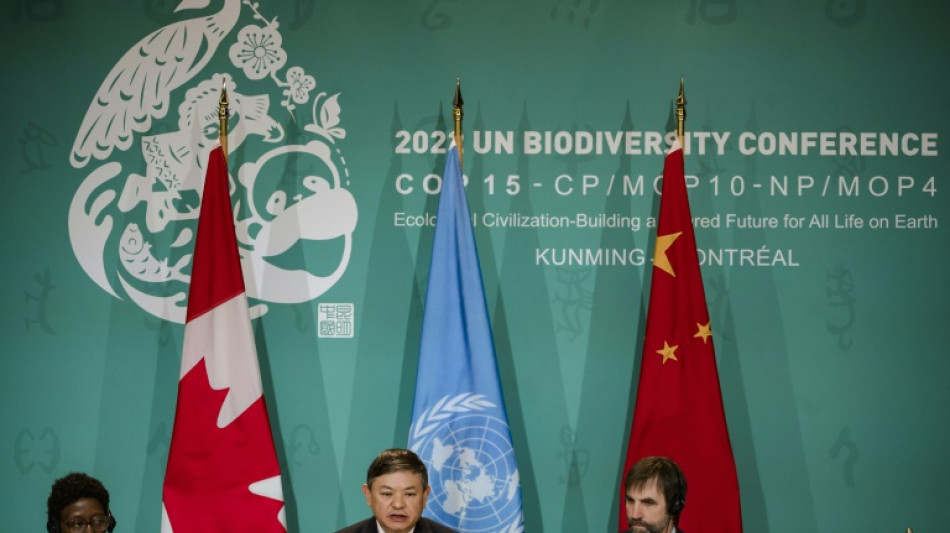
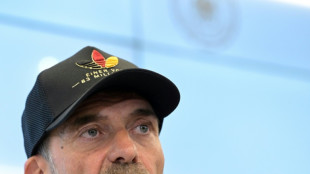
Hope stirs for deal to save nature at UN talks / Photo: ANDREJ IVANOV - AFP

 Princess Diana's brother makes new explosive claims against Charles

 Ovechkin on Russian political video: 'I support my country'
 Can we shut down AI?

 Teenager Sullivan named in new-look US squad
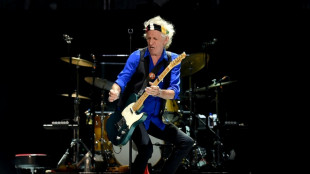 Travis Scott and Keith Richards feature on GTA VI soundtrack

 AFP photo shows Trump examining image of apparent Kennedy Center razing
 Pochettino rings changes for USA friendlies
 Alonso says Chelsea ambition 'very clear' after end of Boehly era

 Mbappe draws political fire over Ceuta t-shirt controversy
 Third malaria death in Germany from outbreak tied to Frankfurt airport

 AtlasClear Holdings Reports Preliminary Fiscal 2026 Revenue of Approximately $20.1 Million, Up 85%; Revenue Plus Interest Income of Approximately $21.9 Million

 Alonso says Chelsea ambition clear after end of Boehly era
 Micron's Taiwan workers say 68 months' bonus not enough
 'Another arrow to the quiver': World Bank posts record private capital mobilization
 Macron hosts Lebanon security talks as UN mission nears end
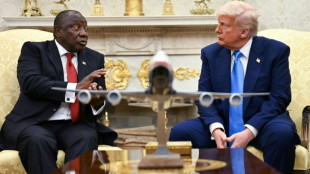 From land to race laws: what's driving the US-South Africa rift?

 Beyond Investment Returns: Families Are Measuring Wealth by Freedom, Continuity, and Legacy, According to Nour Private Wealth
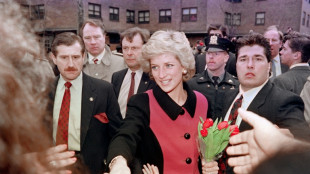 King Charles disputes claims in book by Princess Diana's brother
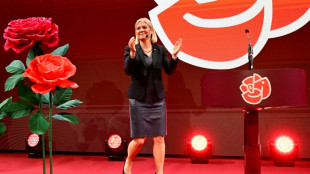
 Real Madrid fan group wants Mbappe apology over Ceuta shirt snub
 Nepal floods among 'most challenging' disasters: WFP
 Doubts as Italy eyes electric future for steel plant
 'One of the kindest people': Taraneh, 21, facing execution in Iran

 Japan eyes changing prostitution law to punish sex buyers
 After record rain, typhoon threatens new challenge to Asian Games
 Kids and social media: what would change under new EU law
Top officials at high-stakes UN biodiversity negotiations said Saturday they were confident of securing a major deal to save the natural world from destruction.
Observers had warned the COP15 talks aimed at sealing a "peace pact for nature" risked collapse due to disagreement over how much the rich world should pay to protect ecosystems in developing countries.
The talks that started on December 7 had appeared to be on the verge of breakdown when developing countries walked out days ago over the question of funding. But the mood among leaders turned upbeat on Saturday.
"I am greatly confident that we can ... keep our ambitions as well as achieve consensus," China's Environment Minister Huang Runqiu told reporters in Montreal, where the COP15 meeting is being held.
His Canadian counterpart Steven Guilbeault echoed his statement, saying: "We've made tremendous progress... I don't know about how many of us thought we could get there."
Huang said he would publish a draft agreement at 8:00 am EST (1300 GMT) on Sunday and hear lead delegates' feedback later in the day.
The negotiations officially run until December 19, but could go longer if needed.
French President Emmanuel Macron tweeted: "With just a few days to go before the end of the COP 15 Biodiversity Conference in Montreal, my message to our partners is: now is not the time for small decisions, let's go big!
"Let's work together to achieve the most ambitious agreement possible. The world is depending on it."
- Million species threatened -
Delegates are working to roll back the destruction and pollution that threaten an estimated one million plant and animal species with extinction, according to scientists that report to the UN.
The text is meant to be a roadmap for nations through 2030. The last 10-year plan, signed in Aichi, Japan in 2010, did not achieve any of its objectives -- a failure blamed widely on its lack of monitoring mechanisms.
Major goals in the draft under discussion include a cornerstone pledge to protect 30 percent of the world's land and oceans by 2030.
The more than 20 targets also include reducing environmentally destructive farming subsidies, requiring businesses to assess and report on their biodiversity impacts, and tackling the scourge of invasive species.
Representatives of Indigenous communities, who safeguard 80 percent of the world's remaining biodiversity, want their rights to practice stewardship of their lands to be enshrined in the final agreement.
"Indigenous Rights are not negotiable," said Orpha Novita Yoshua, an Indigenous Namblong woman from West Papua, in a statement released by Greenpeace.
"We are the ones doing the work. We protect biodiversity," said Valentin Engobo, leader of the Lokolama community in the Congo Basin. "You won't replace us. We won't let you."
- Money matters -
The issue of how much money the rich countries will send to the developing world, home to most of the world's biodiversity, has been the biggest sticking point.
"If the framework is not accompanied by adequate resources, then we will be destined to repeat the same failures that we saw after Aichi," warned Brian O'Donnell, director of the NGO Campaign for Nature.
"If it's weak we would certainly oppose it and encourage parties to oppose it and not sign up to a weak deal," he added. "We're still remaining hopeful that we can get there."
Several countries have announced new commitments. The European Union has committed seven billion euros ($7.4 billion) for the period until 2027, double its prior pledge.
But these commitments are still well short of what observers say is needed, and what developing countries are seeking.
Brazil has led that charge, proposing flows of $100 billion annually, compared to the roughly $10 billion at present.
Whether international aid is delivered via a new fund, an existing mechanism called the Global Environment Facility (GEF), or a halfway solution involving a new "trust fund" within the GEF is still up for debate.
W.Stewart--AT


