
-
 Ed Sheeran set to return to stage after Palestinian controversy
-
Chile's Bachelet quits race to be next UN chief

-
 Toulouse edge Vannes, Lyon beat Pau to take Top 14 summit
-
Raphinha treble fires perfect Barca to win at Sevilla

-
 Germans arrested for Louvre stunt in Mona Lisa hall
-
Thiam makes winning heptathlon return at Decastar meet

-
 Saudi-led coalition says Houthis fired ballistic missile at Riyadh
-
Czechs beat USA to qualify for Davis Cup finals

-
 France's debt climbs to highest since 1978: ministry
-
Dortmund sink Stuttgart to climb to Bundesliga summit

-
 McIlroy two shots off the lead at Wentworth after eagle on 18
-
Trump says will not tolerate attempts to slow AI growth

-
 Martinez brace saves Inter in Serie A top-two clash with Roma
-
'It has to stop': runners protest women's murders in S.Africa district

-
 Rosenior abused but guides Paris FC past old club Strasbourg
-
Fire erupts near Riyadh airport as Houthis claim strikes

-
 Seven-try Lyon beat Pau, climb to Top 14 summit
-
Cuba works to restore power after another blackout

-
 Brighton defeat a 'big lesson' against complacency for Arsenal, says Arteta
-
England thrash Sri Lanka again to return to top of T20 rankings

-
 Thousands protest inaction over climate crisis in Switzerland
-
Arsenal thrashed by Brighton, sorry Spurs lose again

-
 Carapaz out of cycling world championships
-
South Korea, Austria qualify for Davis Cup finals

-
 'Fragile' Tottenham beaten by Aston Villa despite late rally
-
Seare shocks Ingebrigtsen to win world 5km gold

-
 Mourinho hails Real Madrid grit before Atletico derby clash
-
Brigitte Bardot widower slams sale of star's belongings

-
 Martin wins Austrian MotoGP sprint after Acosta crash
-
Aston Villa compound Tottenham's misery despite late rally

-
 Japan edge Fiji to win Pacific Nations Cup
-
Asian Games offer 'deepest apologies' for South Korea anthem blunder

-
 Black smoke, flames rising near Riyadh airport: residents to AFP
-
Inter Milan and Italy icon Mazzola dies aged 83

-
 UK actor Naomi Watts honoured at Spain film festival
-
Saudi capital issues first air raid alert since renewed fighting in Yemen

-
 Japan emperor declares Asian Games open after turbulent build-up
-
Martin edges title rival Marquez for Austrian MotoGP pole

-
 Asian Games open with unity message after troubled build-up
-
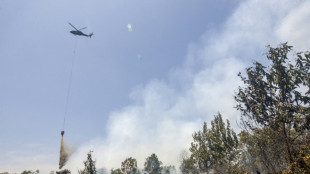
Indonesia accepts Malaysia's help to tackle wildfires
-
 Denmark hails 'binding' Greenland deal with Trump
-
Indians living in Japan on stand-by to house Asian Games athletes

-
 We don't want Games host Japan losing money, says Asian Olympic official
-
Trump signs bill authorizing sweeping Russia sanctions

-
 Ed Sheeran returns to stage after Palestinian controversy
-
Protesters form human chain at Kennedy Center after Trump threat

-
 Asian Games to open in Japan after troubled build-up
-
Death toll from attack at police HQ in Pakistan rises to 31

-
 Drone owners rush to offload devices ahead of Beijing ban
-
Trump says Denmark to give US 'permanent control' over Greenland security

Nature guardians: Why Indigenous people are vital for saving biodiversity
For countless generations prior to European colonization, Canada's Indigenous people relied on caribou both as a source of subsistence and as an integral part of their cultural practices.
Hunting and butchering the animal in frigid temperatures was long seen as a rite of passage, and members of the First Nations were the first to detect their serious decline.
"Fundamentally we are people of caribou," Valerie Courtois, director of Canada's Indigenous Leadership Initiative and a member of the Innu nation, told AFP.
"Caribou is what has really enabled us to survive, and to be who we are."
Today the species, which is known as reindeer outside North America, is endangered across much of Canada as a result of widespread habitat destruction from logging, roadbuilding, construction of transmission lines and more.
But an innovative pilot program led by Indigenous people might show a path to wider recovery.
As delegates from across the world meet in COP15 in Montreal this week to hammer out a new deal for nature, the case highlights the value of Indigenous stewardship in protecting ecosystems that benefit all humanity.
As detailed in a March 2022 paper in "Ecological Applications," the Klinse-Za subpopulation of caribou in British Columbia were once so plentiful they were described as "bugs on the landscape" but by 2013 had dwindled to just 38 animals.
That year, the First Nations of West Moberly and Saulteau devised a plan that saw them first cull wolves to reduce caribou predation, then added a maternal pen-fenced enclosures for females to birth and raise calves.
Their efforts saw the number of caribou of the herd triple in the area from 38 to 114.
With the threat of localized extinction averted, the two nations signed an agreement in 2020 with the governments of British Columbia and Canada to secure 7,900 square kilometers (3,050 square miles) of land for caribou, hoping to eventually revive their traditional hunt.
"When you protect caribou, a lot of animals come along for the ride," Ronnie Drever, a conservation scientist with nonprofit Nature United, told AFP.
"Good caribou conservation is also climate action," he added, because the old-growth forests and peatlands they live on are invaluable carbon sinks.
- Science catching up -
Globally, Indigenous people own or use a quarter of the world's land, but safeguard 80 percent of remaining biodiversity -- testament to centuries of sustainable practices that modern science is only just starting to understand.
A paper published this October in Current Biology looked at tropical forests across Asia, Africa, and the Americas, finding those located on protected Indigenous lands were the "healthiest, highest functioning, most diverse, and most ecologically resilient."
A 2019 paper in Environmental Science & Policy analyzed more than 15,000 areas in Canada, Brazil and Australia.
It found that the total number of birds, mammals, amphibians and reptiles were highest on lands managed or co-managed by Indigenous communities.
Protected areas like parks and wildlife reserves had the second highest levels of biodiversity, followed by areas that were not protected.
"This suggests that it's the land-management practices of many Indigenous communities that are keeping species numbers high," said lead author Richard Schuster, in a statement.
- Partnership crucial -
Jennifer Tauli Corpuz, of the Kankana-ey Igorot people of the Philippines, who is a lawyer and biodiversity expert with the International Indigenous Forum on Biodiversity, stressed that collaborative efforts were crucial.
"Conservation does not have a good history with Indigenous peoples, it's resulted in displacement," she told AFP.
National parks established on Euro-American notions that the land was once pristine "wilderness" typically prohibited Indigenous peoples from exercising their customary land uses, and forcibly displaced many from their ancestral homes.
Instead, she says, the rights of Indigenous groups need to be woven into the fabric of the new global biodiversity deal -- including a cornerstone pledge to protect 30 percent of land and water by 2030.
Indigenous groups say they should have greater autonomy to take the lead as managers of protected areas, arguing their successful record demonstrates they can pursue economic activity sustainably.
"The current biodiversity crisis is often depicted as a struggle to preserve untouched habitats," said a study published last year in the Proceedings of the National Academy of Sciences, which found that areas untouched by people were almost as rare 12,000 years ago as they are today.
"Current biodiversity losses are caused not by human conversion or degradation of untouched ecosystems, but rather by the appropriation, colonization, and intensification of use in lands inhabited and used by prior societies," it concluded.
E.Hall--AT



