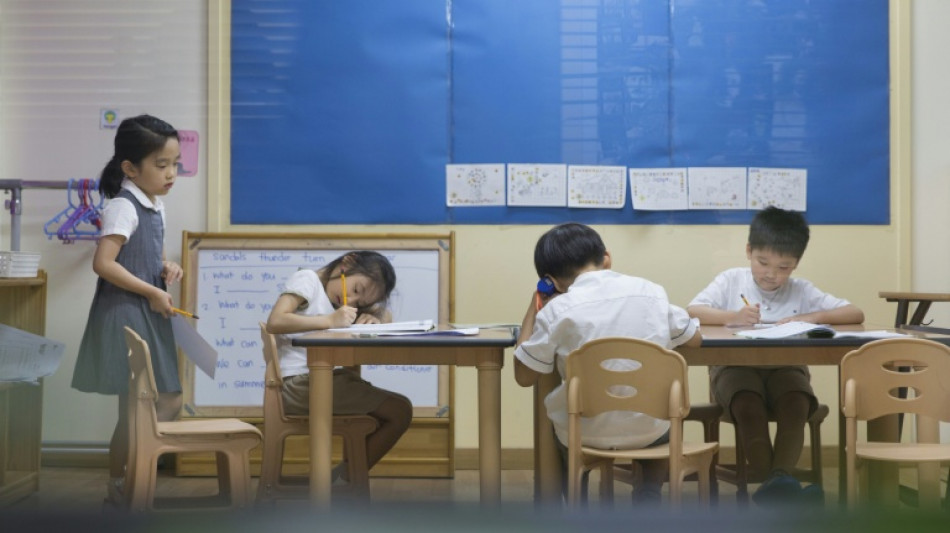
South Korea to ban mobile phones in school classrooms / Photo: YELIM LEE - AFP/File

 'It has to stop': runners protest women's murders in S.Africa district

 Fire erupts near Riyadh airport as Houthis claim strikes

 Cuba works to restore power after another blackout

 England thrash Sri Lanka again to return to top of T20 rankings

 Arsenal thrashed by Brighton, sorry Spurs lose again

 South Korea, Austria qualify for Davis Cup finals

 Seare shocks Ingebrigtsen to win world 5km gold

 Brigitte Bardot widower slams sale of star's belongings

 Aston Villa compound Tottenham's misery despite late rally

 Asian Games offer 'deepest apologies' for South Korea anthem blunder

 Inter Milan and Italy icon Mazzola dies aged 83

 Saudi capital issues first air raid alert since renewed fighting in Yemen

 Martin edges title rival Marquez for Austrian MotoGP pole

 Indonesia accepts Malaysia's help to tackle wildfires
 Indians living in Japan on stand-by to house Asian Games athletes

 Trump signs bill authorizing sweeping Russia sanctions

 Protesters form human chain at Kennedy Center after Trump threat

 Death toll from attack at police HQ in Pakistan rises to 31
 Trump says Denmark to give US 'permanent control' over Greenland security

 New to The Street Broadcasts Tonight at 6:30 PM ET Across the United States, Latin America and MENA, Featuring BioVie, Acurx Pharmaceuticals, Lantern Pharma and SafeSpace Global

 Kennedy Center: future unclear for iconic Washington arts hub

 Trump claims 'infinite' Greenland security deal with Denmark

 Helicopters battle wildfire threatening Ecuador's capital

 Brentford batter Chelsea to undo Alonso's promising start

 Kane hits Bundesliga century as Bayern rout Union
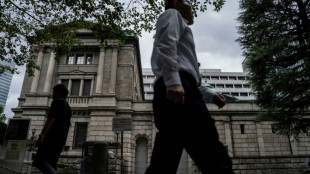
South Korea has passed a bill banning the use of mobile phones in school classrooms nationwide, officials said Thursday, joining other countries in efforts to curb social media use among minors.
One of the world's most wired nations, South Korea has recently sought to tighten rules on electronic devices in schools, citing concerns over smartphone addiction among students.
The bill, which will take effect in March next year, bans smart devices including mobile phones in classrooms and was passed Wednesday, a National Assembly spokeswoman told AFP.
The move makes South Korea the latest country to restrict social media use among schoolchildren, following similar steps in countries including Australia and the Netherlands.
Seoul's Education Ministry said in a statement that the law bans the use of smartphones in classrooms except when needed as assistive tools for students with disabilities or special education needs, or for educational purposes.
The measure also establishes a legal basis to "restrict the possession and use of such devices to protect students' right to learn and support teachers' activities", it added.
Lawmakers including opposition People Power Party member Cho Jung-hun, who introduced the bill, said the issue had long been "contentious amid concerns over human rights violations".
But the country's National Human Rights Commission recently changed its stance, saying limits on phone use for educational purposes do not breach rights given their negative impact on students' learning and emotional well-being.
Against this backdrop, the law was needed to ease social conflict "by clearly defining rules on smart device use in schools", the lawmakers said in a document introducing the bill.
But it has drawn backlash from groups including the left-wing Jinbo Party, which said the law will "infringe on students' digital rights and right to education".
The measure "prevents adolescents from learning to make responsible decisions on their own and deprives them of opportunities to adapt to the digital environment", the party said in a statement.
A.O.Scott--AT