US to screen social media of foreign students for anti-American content / Photo: - - AFP/File

 'It has to stop': runners protest women's murders in S.Africa district
 Fire erupts near Riyadh airport as Houthis claim strikes

 Cuba works to restore power after another blackout
 England thrash Sri Lanka again to return to top of T20 rankings
 Arsenal thrashed by Brighton, sorry Spurs lose again

 South Korea, Austria qualify for Davis Cup finals
 Seare shocks Ingebrigtsen to win world 5km gold
 Brigitte Bardot widower slams sale of star's belongings

 Aston Villa compound Tottenham's misery despite late rally
 Asian Games offer 'deepest apologies' for South Korea anthem blunder

 Inter Milan and Italy icon Mazzola dies aged 83
 Saudi capital issues first air raid alert since renewed fighting in Yemen
 Martin edges title rival Marquez for Austrian MotoGP pole
 Indonesia accepts Malaysia's help to tackle wildfires
 Indians living in Japan on stand-by to house Asian Games athletes
 Trump signs bill authorizing sweeping Russia sanctions

 Protesters form human chain at Kennedy Center after Trump threat
 Death toll from attack at police HQ in Pakistan rises to 31
 Trump says Denmark to give US 'permanent control' over Greenland security
 New to The Street Broadcasts Tonight at 6:30 PM ET Across the United States, Latin America and MENA, Featuring BioVie, Acurx Pharmaceuticals, Lantern Pharma and SafeSpace Global
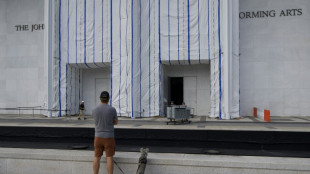 Kennedy Center: future unclear for iconic Washington arts hub
 Trump claims 'infinite' Greenland security deal with Denmark
 Helicopters battle wildfire threatening Ecuador's capital

 Brentford batter Chelsea to undo Alonso's promising start
 Kane hits Bundesliga century as Bayern rout Union
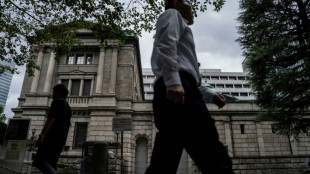
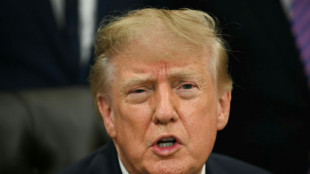
Foreigners seeking to study in the United States will be required to make public their social media profiles to allow screening for anti-American content under new State Department guidelines released Wednesday.
The State Department had temporarily paused issuing visas for foreign students at the end of May while it came up with the new social media guidance and it will now resume taking appointments.
"The enhanced social media vetting will ensure we are properly screening every single person attempting to visit our country," a senior State Department official said.
US consular officers will conduct a conduct a "comprehensive and thorough vetting of all student and exchange visitor applicants," the official said.
To facilitate the screening, student visa applicants will be asked to adjust the privacy settings on all their social media profiles to "public," the official said.
In an executive order on his first day as president, Donald Trump called for increased vetting of persons entering the United States to ensure they "do not bear hostile attitudes toward its citizens, culture, government, institutions, or founding principles."
Student visas are one of a series of battles waged over higher education by the Trump administration, which has rescinded thousands of visas and sought to ban Harvard University from accepting international students.
Secretary of State Marco Rubio has revoked visas in large part of students who led demonstrations critical of Israel's offensive in Gaza, as he uses an obscure law that allows the removal of people deemed to go against US foreign policy interests.
In April, the Department of Homeland Security said the social media of foreign student applicants would be examined for "antisemitic activity" that could result in visa denial.
The US government has been vetting the social media of persons seeking to immigrate to the United States or obtain a green card for more than a decade.
D.Lopez--AT