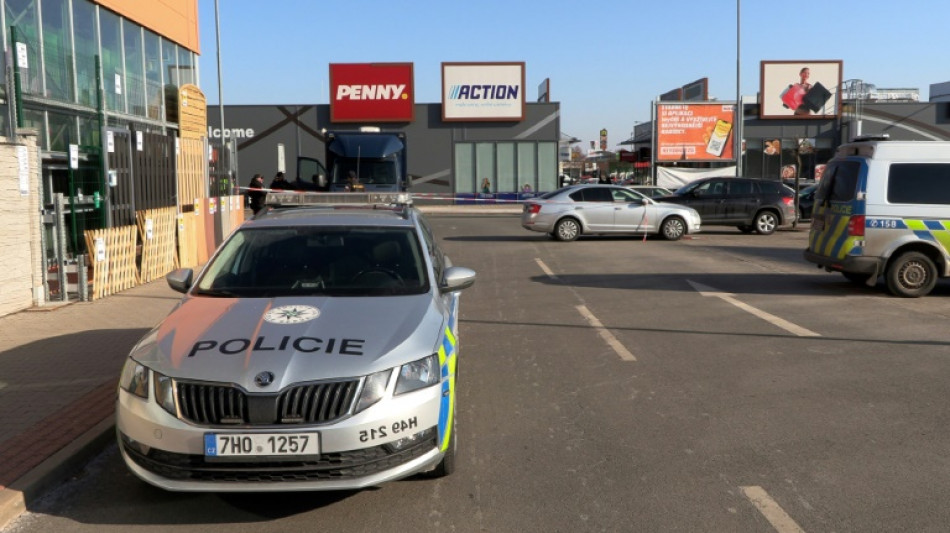
Peaceful Czechs grapple with youth violence / Photo: Jan FLEMR - AFP

 'It has to stop': runners protest women's murders in S.Africa district

 Fire erupts near Riyadh airport as Houthis claim strikes

 Cuba works to restore power after another blackout
 England thrash Sri Lanka again to return to top of T20 rankings
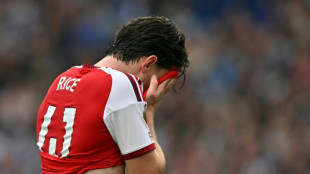
 Arsenal thrashed by Brighton, sorry Spurs lose again
 South Korea, Austria qualify for Davis Cup finals
 Seare shocks Ingebrigtsen to win world 5km gold
 Brigitte Bardot widower slams sale of star's belongings

 Aston Villa compound Tottenham's misery despite late rally

 Asian Games offer 'deepest apologies' for South Korea anthem blunder
 Inter Milan and Italy icon Mazzola dies aged 83

 Saudi capital issues first air raid alert since renewed fighting in Yemen

 Martin edges title rival Marquez for Austrian MotoGP pole

 Indonesia accepts Malaysia's help to tackle wildfires

 Indians living in Japan on stand-by to house Asian Games athletes
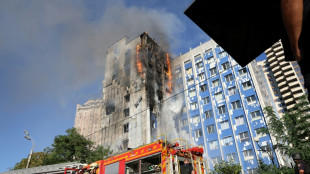 Trump signs bill authorizing sweeping Russia sanctions

 Protesters form human chain at Kennedy Center after Trump threat

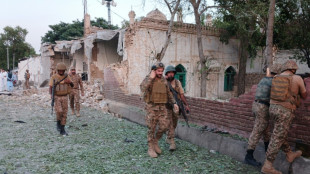 Death toll from attack at police HQ in Pakistan rises to 31

 Trump says Denmark to give US 'permanent control' over Greenland security

 New to The Street Broadcasts Tonight at 6:30 PM ET Across the United States, Latin America and MENA, Featuring BioVie, Acurx Pharmaceuticals, Lantern Pharma and SafeSpace Global

 Kennedy Center: future unclear for iconic Washington arts hub

 Trump claims 'infinite' Greenland security deal with Denmark

 Helicopters battle wildfire threatening Ecuador's capital

 Brentford batter Chelsea to undo Alonso's promising start
 Kane hits Bundesliga century as Bayern rout Union
When a 13-year-old boy pointed a gun at his teacher in a Czech school in January, she kept cool and slowly cornered him to let his classmates escape.
Police said she did everything right, using recent security training put in place as alarm has grown about bullying, attacks and even murders committed by schoolchildren.
"Violence and youth mental problems are growing dramatically at Czech schools," the education ministry said in a document sent to schools earlier this year to help them cope with potential dangers.
While experts warn that little data on youth violence across Europe exists, it has started to make headlines regularly in the central European country that ranks 12th safest on the Global Peace Index.
The index takes into account conflicts and militarisation but also levels of perceived criminality and number of homicides.
Even "within Europe, we are a peaceful country", sociologist Martin Buchtik told AFP.
He cited "indifference to religion", ethnic homogeneity, a "functioning social system" and a general distaste for "radical solutions" as factors that generally keep Czechs cool.
- Frightening attacks -
Since a student killed 14 people and wounded 25 at Prague's Charles University in December 2023 in a shooting that shocked the nation, Czech schools have stepped up prevention programmes and cooperation with the police.
But cases keep coming up.
Last month, a 16-year-old boy stabbed two shop assistants to death with a knife he picked up on a shelf in an apparently random attack.
Also in February, police charged a 15-year-old boy who threatened to open fire at an elementary school in a northern city.
And within five days in January, police detained 10 minors suspected of attempting or plotting attacks at schools across the country of 10.9 million people.
Minors committed 1,080 violent crimes including 10 murders in 2024, police statistics show, a sharp growth from 701 violent crimes and seven murders in 2022.
The number of juvenile delinquents in the EU country has grown by 26 percent from 2019 to 2024.
Likewise in neighbouring Austria as well as in Slovenia, which also rank high on the global peace index, youth crime statistics show a rise.
This is in part due to increased awareness which has led to a rise in reporting, as well as more types of offences being recorded, authorities say.
- Quarter 'feel no joy' -
Jan Zufnicek, a psychologist at the Prague-based Primary Prevention Centre, said in a podcast recently that "more than half of Czech children do not have an adult at school that they would confide in."
He said mental disorders among children were on the rise, fuelled by the Covid-19 pandemic and lockdowns.
A poll of over 10,000 children conducted by the Anreva Solution agency in Prague last year showed many children are battling depression, anxiety and a low sense of well-being.
More than a quarter of pupils polled felt no joy in life.
Forensic psychologist Ludmila Cirtkova blames "an accumulation of several unfavourable factors", saying young delinquents suffered from a lack of functioning relationships.
Cirtkova added the consumption of violence on the internet played a role too, a view echoed by the education ministry which blames "a massive spread" of digital technologies and social media.
Cirtkova sees a way out in "good relationships between educators and children".
"But it takes time and energy to show interest in the joys and worries of children," she added.
"If every part of the child socialisation system fulfils its role, I suppose the tragic cases of violent attacks will be absolutely rare."
Legal philosopher Theo Gavrielides, who works on youth violence prevention, also said young people should not be demonised.
"Young people and teenagers are in the state of development, hence there are a lot more things that can be done to prevent violence," he added.
R.Lee--AT