Phone bans sweep US schools despite skepticism / Photo: Jim WATSON - AFP

 'It has to stop': runners protest women's murders in S.Africa district

 Fire erupts near Riyadh airport as Houthis claim strikes

 Cuba works to restore power after another blackout

 England thrash Sri Lanka again to return to top of T20 rankings

 Arsenal thrashed by Brighton, sorry Spurs lose again

 South Korea, Austria qualify for Davis Cup finals

 Seare shocks Ingebrigtsen to win world 5km gold

 Brigitte Bardot widower slams sale of star's belongings

 Aston Villa compound Tottenham's misery despite late rally

 Asian Games offer 'deepest apologies' for South Korea anthem blunder

 Inter Milan and Italy icon Mazzola dies aged 83

 Saudi capital issues first air raid alert since renewed fighting in Yemen

 Martin edges title rival Marquez for Austrian MotoGP pole

 Indonesia accepts Malaysia's help to tackle wildfires
 Indians living in Japan on stand-by to house Asian Games athletes

 Trump signs bill authorizing sweeping Russia sanctions

 Protesters form human chain at Kennedy Center after Trump threat

 Death toll from attack at police HQ in Pakistan rises to 31
 Trump says Denmark to give US 'permanent control' over Greenland security

 New to The Street Broadcasts Tonight at 6:30 PM ET Across the United States, Latin America and MENA, Featuring BioVie, Acurx Pharmaceuticals, Lantern Pharma and SafeSpace Global

 Kennedy Center: future unclear for iconic Washington arts hub

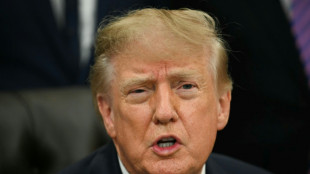 Trump claims 'infinite' Greenland security deal with Denmark

 Helicopters battle wildfire threatening Ecuador's capital

 Brentford batter Chelsea to undo Alonso's promising start

 Kane hits Bundesliga century as Bayern rout Union

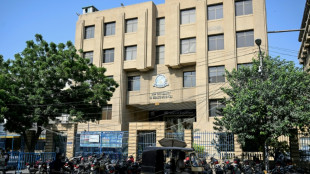
At a red-brick school in Virginia, Hayden Jones is one of 1,000 students banned from using their phones as part of a trial hoping to boost learning.
But the 12-year-old's verdict on the restrictions -- a shrug of his shoulders -- reflects the skepticism shared by some students and parents.
The phone ban at Twain Middle School is among a wave of measures implemented around the United States, and is part of a global movement replicated in Brazil, France and beyond.
Supporters believe restrictions will guard pupils from the apparent harms of smartphone use while at school, but opponents say the measures fail to prepare teenagers for the digital world they will inevitably enter.
Since September, Jones must now place his Android phone in a magnetic pouch each morning, which is locked until the end of the school day as part of a pilot scheme this academic year.
Jones, speaking to AFP in a corridor lined with classrooms, said he hopes the ban will be gone by the time he starts eighth grade in September.
"I like being able to go to my locker and call my parents. That's a big concern for me," he said, adding that some pupils have found ways to still use their devices -- including by bringing a "dummy phone" to put in the pouch.
School principal Matthew Mough admitted that enforcing the ban -- and winning over students -- has proved challenging, though he said most follow the rules.
"The majority of kids who have phones don't love it," he said. "However, if you dig deeper with them in the conversation, they will acknowledge that it's helped them remain focused."
Mough said the phone ban has reduced classroom distractions, cyberbullying and instances of students meeting up to skip lessons.
- 'Heads in the sand' -
Cell phone bans come alongside research suggesting that social media use increases the likelihood of mental illnesses like anxiety and depression in young people.
Advocacy groups regularly cite these studies as justification for school phone bans, which have seen rare political consensus in a nation deeply divided on virtually every other political issue.
Around 76 percent of US public schools -- from liberal California to conservative Florida -- had some sort of ban on non-academic phone use, according to the latest Department of Education figures, with several state-wide measures also in place or under consideration.
They are largely backed by teachers, with the National Education Association saying 90 percent of its members support policies banning phones during lessons.
"The biggest problem is that kids aren't in a place developmentally where they're able to handle the type of technology that we're talking about," said Sabine Polak, co-founder of the Phone-Free Schools Movement, which backs full-scale phone bans.
Critics of the restrictions argue that educating children about the potential risks of social media and smartphone use is better than prohibition.
"The answer is not to just ban and put our heads in the sand," said Keri Rodrigues, president of the National Parents Union, which represents over 1,000 parent organizations in the United States.
She compared efforts to ban phones to "abstinence education," noting that failing to properly teach children about complicated issues such as sex has failed in the past.
"It's not effective, and frankly, it's dumb," Rodrigues told AFP. "What we need to do is equip our kids with the information, with the skills and the strategies they're going to need to navigate a digital future."
At the school in Virginia, Jones said the phone ban has not changed how he interacts with his device, still using it for games, social media and watching YouTube videos.
His one complaint about his phone? "Nothing really, honestly, I mean besides the fact that it weighs a ton in my pocket."
J.Gomez--AT