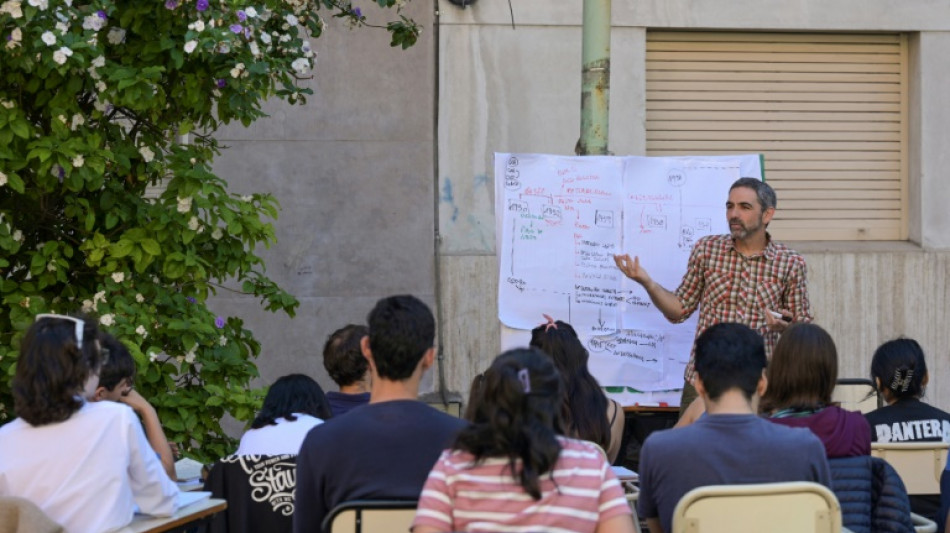
School's out! Argentina students study in the street to protest budget cuts / Photo: Juan MABROMATA - AFP

 Carapaz out of cycling world championships

 'Fragile' Tottenham beaten by Aston Villa despite late rally

 Mourinho hails Real Madrid grit before Atletico derby clash

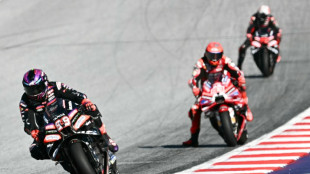 Martin wins Austrian MotoGP sprint after Acosta crash
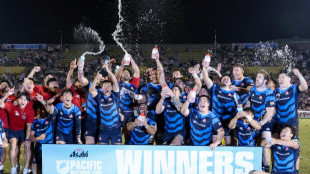 Japan edge Fiji to win Pacific Nations Cup
 Black smoke, flames rising near Riyadh airport: residents to AFP
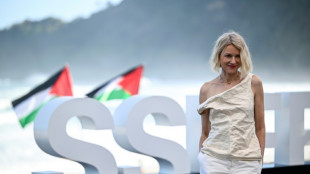 UK actor Naomi Watts honoured at Spain film festival
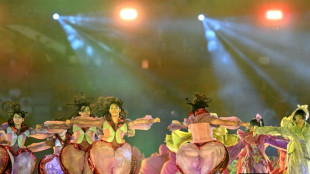 Japan emperor declares Asian Games open after turbulent build-up
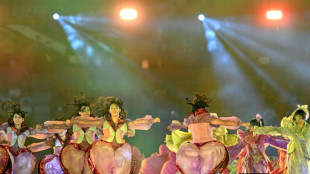 Asian Games open with unity message after troubled build-up
 Denmark hails 'binding' Greenland deal with Trump
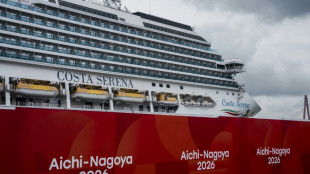
 We don't want Games host Japan losing money, says Asian Olympic official
 Ed Sheeran returns to stage after Palestinian controversy
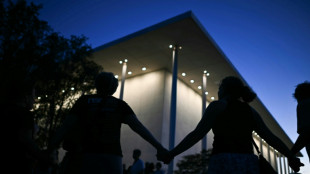
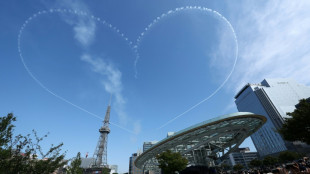 Asian Games to open in Japan after troubled build-up
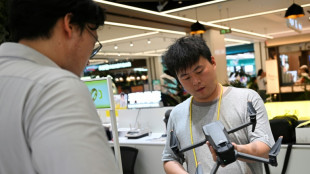 Drone owners rush to offload devices ahead of Beijing ban
 Trump's beef policies irk Texas ranchers, testing their loyalty

 Batman Appears Atop the Sydney Opera House for Batman Day 2026
 Nvidia, OpenAI CEOs to attend Xi dinner at White House
 Anthropic picks Accenture for in-house AI safety evaluation
 Balogun returns as Monaco beat Lens to continue strong Ligue 1 start

 'Pause' on overt repression in Venezuela, but reforms still needed: HRW

 Global stocks mixed as yen falls despite Bank of Japan rate hike
 Cuba hit with seventh major blackout of the year
 Murray out with concussion so Wentz will start for Vikings

 UN chief 'deeply regrets' US visa refusal to Abbas for annual meeting
 England quick Carse to face no charges over alleged nightclub assault

Argentine university professors and students took their classes onto the streets of Buenos Aires on Wednesday to protest President Javier Milei's veto of a funding increase for cash-strapped public universities.
Literature students from the University of Buenos Aires, the country's most prestigious school, brought their desks out onto the sidewalk in the center of the city as professors lectured loudly over the din of the traffic.
The protests come a week after Milei vetoed a law approved by the Senate that envisaged regular funding increases for public universities, whose budgets he slashed.
The law also provided for university instructors and other staff to receive pay increases to offset Argentina's stubbornly high inflation rate.
Annual inflation stood at 209 percent in September.
At the University of Buenos Aires, the faculties of law, medicine, philosophy and arts, economy, science and social science all took their classes outside.
In other faculties, students occupied buildings but allowed classes to take place inside.
Milei, who has imposed harsh austerity measures to try to revive Argentina's ailing economy, argued the increases, which Congress said represented 0.14 percent of GDP, jeopardized his zero-deficit policy.
On Tuesday he insisted he was committed to Argentina's cherished model of fee-free public university education and said it was up to parliament to find a way to fund them without upsetting his fiscal surplus.
Milei has also warned that he would not raise taxes nor incur new debt.
University instructors' unions have called a 24-hour strike on Thursday and a 48-hour strike next week.
Around 80 percent of all Argentines who attend higher-level education enroll in public universities.
Milei, a self-declared "anarcho-capitalist" has described them as hotbeds of Socialist indoctrination.
N.Mitchell--AT