'Existential risk': Quebec's English-language universities fear massive fee hikes / Photo: Sebastien ST-JEAN - AFP

 Martin wins Austrian MotoGP sprint after Acosta crash

 Japan edge Fiji to win Pacific Nations Cup
 Black smoke, flames rising near Riyadh airport: residents to AFP

 UK actor Naomi Watts honoured at Spain film festival

 Japan emperor declares Asian Games open after turbulent build-up

 Asian Games open with unity message after troubled build-up

 Denmark hails 'binding' Greenland deal with Trump
 We don't want Games host Japan losing money, says Asian Olympic official
 Ed Sheeran returns to stage after Palestinian controversy

 Asian Games to open in Japan after troubled build-up

 Drone owners rush to offload devices ahead of Beijing ban

 Trump's beef policies irk Texas ranchers, testing their loyalty

 Kennedy Center: future unclear for iconic Washington arts hub

 Trump claims 'infinite' Greenland security deal with Denmark

 Helicopters battle wildfire threatening Ecuador's capital

 Brentford batter Chelsea to undo Alonso's promising start

 Kane hits Bundesliga century as Bayern rout Union
 Trump says CNN, MS NOW, Politico banned from White House
 Hushing and hedging: US companies retreat on climate

 Springboks to face Fiji before 2027 Rugby World Cup

 Nigeria miners struggled to breathe in cell before 37 died: survivors

 McIlroy on the charge at PGA Championship as Reed withdraws
 McIlroy on the charge at PGA Championship

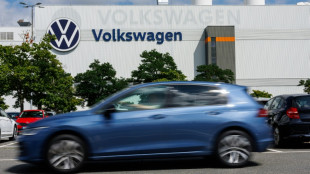 Crisis-wracked Volkswagen warns of 10-bn-euro hit to profits

 Costa Rica's Grynspan tops third informal poll for UN chief: diplomat

A chill has fallen over the three English-language universities in Canada's Quebec province, as winter arrives with students and administrators worried about plans to nearly double tuition by next school year.
Announced last month by the French-speaking province's government, the plan would raise tuition for non-Quebec residents at all three anglophone universities from around Can$9,000 (US$6,500) to Can$17,000 -- with the additional funds meant to support francophone universities and educational programs.
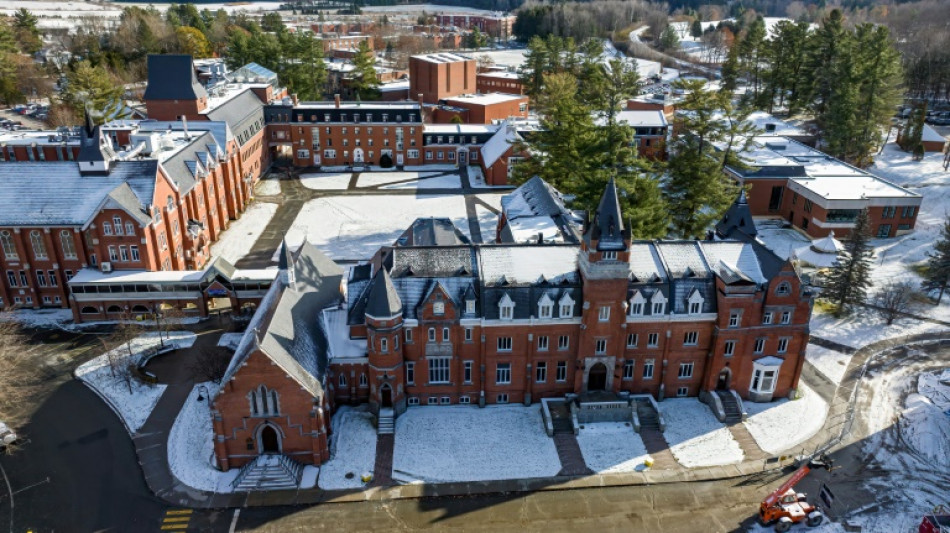
Bishop's University, nestled on the wooded banks of a river about two hours east of Montreal, could see a "catastrophic" outflow of students if the plan goes through, warns principal Sebastien Lebel-Grenier.
"For us, this is truly an existential crisis. It's a threat to our ability to continue as a university," he told AFP in an interview.
About 30 percent of Bishop's 2,650 students come from other provinces in Canada, while 15 percent are international.
Bryn Empey, a teaching student from Ontario in her final year at the university, said she thinks most students in Canada would choose not to study in Quebec.
"If you're paying double to come study in a province that doesn't welcome you... then I think it's really hard to justify that price increase when you can have a similar experience in Ontario," she told AFP, adding that her younger sister was already reconsidering her plans to attend Bishop's.
Quebec has had a long-running fear that its unique French-speaking identity is under threat of English intrusion -- especially in the metropolis of Montreal where the province's two other anglophone universities, McGill and Concordia, are located.
In announcing the fee hike measure, Quebec's Minister of Higher Education Pascale Dery said it was to "send out a clear signal."
"Not only are we putting an end to a policy that subsidized students at a loss if they didn't stay here, but we're also putting the brakes on the decline of French in Montreal," said the member of Quebec premier Francois Legault's CAQ party.
Empey, who helped organize a large march in Montreal to protest against the fee hike, said she doubts the money would help protect the French language.
Jonathan Cassan, a 20-year-old American in his third year of environmental studies at Bishop's, said the plan would "deter a lot of students from coming here."
- Montreal's reputation -
With a higher proportion of Canadian students than the bigger McGill and Concordia, Bishop's is more at risk, says professor Pier-Andre Bouchard St-Amant of the ENA national public administration university.
But the administrations of McGill and Concordia, both internationally renowned universities, are also warning that the measure could be disastrous for them, while arguing it could harm Montreal's reputation.
Concordia president Graham Carr expects "devastating financial implications," while his counterpart at McGill, Deep Saini, warns of serious negative effects not just at his university, but on "the higher education sector, and on the whole of Quebec society."
"Among McGill's strongest assets is its tremendous power to attract and retain the highly skilled people who contribute so significantly to Quebec's economy and society," Saini said in a statement.
And it is not just the education sector outraged by the tuition fee hike: Many businesses and organizations have also voiced their opposition and demanded a reversal.
But the damage may already have been done.
"The mere fact of announcing these measures is already having a very significant impact," Lebel-Grenier said.
"It's fallen right in the middle of our recruitment effort for next year."
A.Taylor--AT