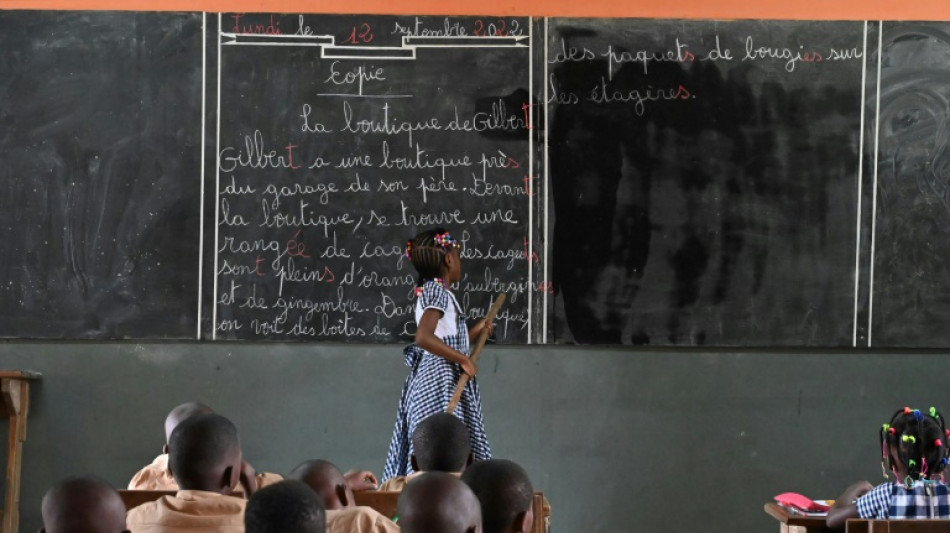
One in 3 schoolchildren lacks access to drinking water: UN / Photo: Issouf SANOGO - AFP

 Martin wins Austrian MotoGP sprint after Acosta crash

 Japan edge Fiji to win Pacific Nations Cup
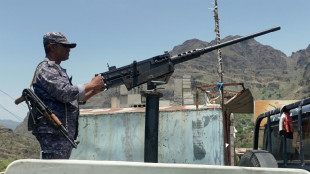
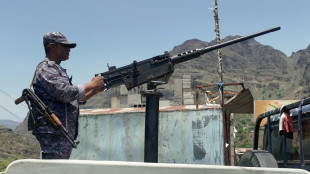 Black smoke, flames rising near Riyadh airport: residents to AFP
 UK actor Naomi Watts honoured at Spain film festival
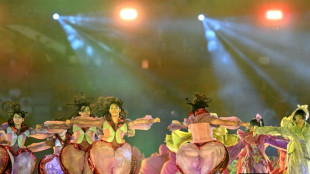 Japan emperor declares Asian Games open after turbulent build-up

 Asian Games open with unity message after troubled build-up
 Denmark hails 'binding' Greenland deal with Trump
 We don't want Games host Japan losing money, says Asian Olympic official
 Ed Sheeran returns to stage after Palestinian controversy

 Asian Games to open in Japan after troubled build-up
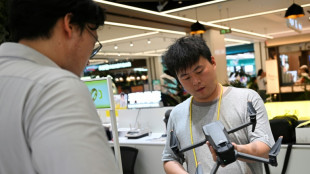 Drone owners rush to offload devices ahead of Beijing ban
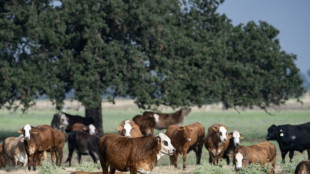 Trump's beef policies irk Texas ranchers, testing their loyalty

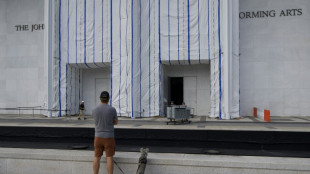 Kennedy Center: future unclear for iconic Washington arts hub

 Trump claims 'infinite' Greenland security deal with Denmark

 Helicopters battle wildfire threatening Ecuador's capital

 Brentford batter Chelsea to undo Alonso's promising start
 Kane hits Bundesliga century as Bayern rout Union
 Trump says CNN, MS NOW, Politico banned from White House
 Hushing and hedging: US companies retreat on climate

 Springboks to face Fiji before 2027 Rugby World Cup
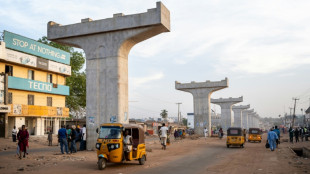 Nigeria miners struggled to breathe in cell before 37 died: survivors

 McIlroy on the charge at PGA Championship as Reed withdraws

 McIlroy on the charge at PGA Championship

 Crisis-wracked Volkswagen warns of 10-bn-euro hit to profits
 Costa Rica's Grynspan tops third informal poll for UN chief: diplomat
One in three children worldwide does not have access to clean drinking water while at school, impacting their health and ability to learn, the United Nations said Wednesday.
"Globally, almost one in three schools has no drinking water from an improved source," the UN cultural agency UNESCO said in a new report.
"One in three schools worldwide has no basic sanitation," meaning a toilet and sewage system, the agency found, while "almost half of schools do not have handwashing facilities with water and soap".
Clean drinking water and handwashing facilities are key to protecting children against the likes of Covid-19, parasites, respiratory illnesses and diarrhea, said school health and nutrition expert Emilie Sidaner, who oversaw the report.
Schools without clean drinking water cannot prepare meals for students, contributing to child malnutrition, she told AFP.
Lack of running water and soap is also a major challenge for girls who "cannot go to school during their period", she added.
For example, one in four girls did not go to school in Bhutan during that time of the month, Sidaner said.
And one in five had to skip classes during menstruation in Ivory Coast, while one in seven missed school for the same reason in Burkina Faso.
"There needs to be more investment in water and sanitation as well as all other infrastructure that enables quality learning," Sidaner said.
"If pupils are not in good health, well-fed and protected in school, it's even harder for them to take in what their school can teach them."
F.Wilson--AT