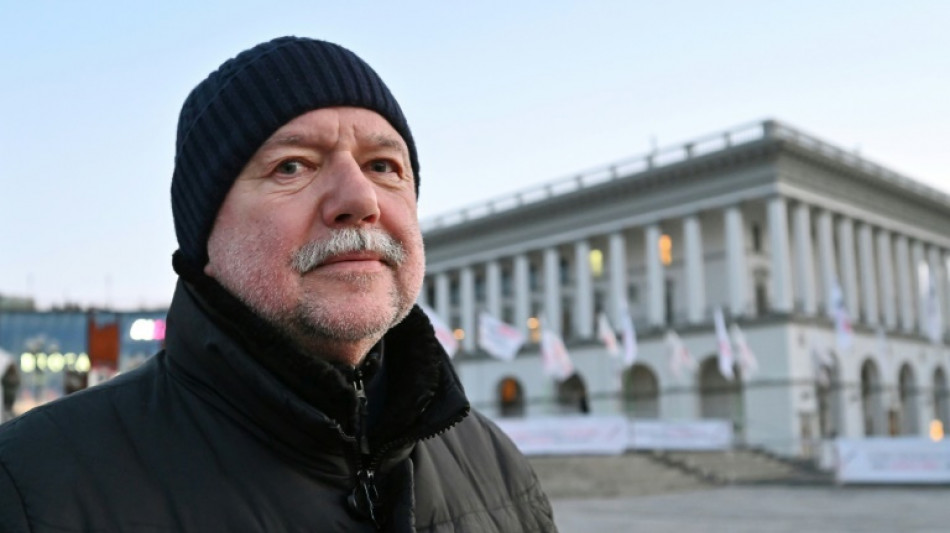
Ukraine's star author Kurkov says his native Russian should be curbed

 Verstappen wins chaotic Singapore sprint after Russell crashes

 Kiss tells Wallabies to 'return fire' after first loss as coach
 Russian strikes kill 11 including 3 children: Ukrainian authorities
 Russian teenager Andreeva breezes into China Open final
 Major earthquake hits Panama, injures at least 27
 India detains 'cockroach' leaders ahead of election protest

 'No divisions, no borders', French astronaut says of seeing Earth
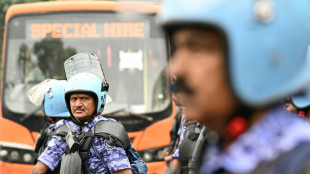 India's 'cockroach' movement chief detained ahead of major protest
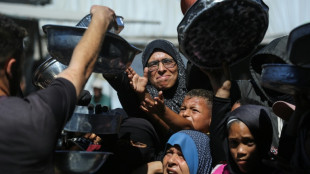
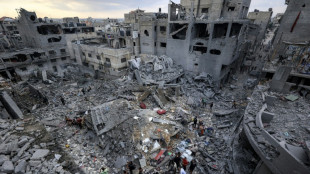 Year later, Gaza ceasefire promises mostly unfulfilled
 Taiwan's leader says increasing defence spending to 'deter war'
 Major quake hits Panama, no deaths reported
 Hurricane Isaias makes landfall in Florida
 Brazil prosecutors sue Shell for $108 mn over deadly 2024 floods

 Major earthquake destroys buildings, roads in Panama
 Anthropic AI model sent fake murder tip to Philadelphia police
 7.7-magnitude quake rocks Panama, triggers tsunami warning

 Prince Harry booed at English rugby match
 Kiplimo and Feysa seek repeat Chicago Marathon wins
 Fuellkrug halts Dortmund after late goal flurry

 Injured Ravens quarterback Jackson ruled out of Falcons clash
 Brewers aim to take down two-time defending champion Dodgers in NLCS rematch

 Tsunami alert after major earthquake rocks Panama
 Outer bands of Hurricane Isaias lash US Gulf Coast

 Hope, Rutherford fire West Indies to record T20 chase of 250
 Farhan leads Pakistan to T20 win over Sri Lanka
Ukraine's bestselling Russian-speaking author Andrey Kurkov says it is "immoral" to defend the Russian language in the ex-Soviet republic during soaring tensions with Moscow.
Kurkov's often absurdist works -- tinged with humour about the misplaced oddities of life -- have been translated into more than 30 languages and become international hits.
He is most famous for the early post-Soviet "Death and the Penguin" novel about a despondent obituary writer.
But he is also a popular political commentator who has strong views on a Ukrainian language law that Russian President Vladimir Putin is using in his attempts to cast Kyiv's pro-Western leaders as persecutors of ethnic Russians.
"In the context of our current relations with Russia, it is immoral to talk about the privileged place of the Russian language," Kurkov told AFP in Russian.
The 60-year-old native of Russia's Leningrad region outside Saint Petersburg speaks Ukrainian without an accent and has written some of his film scripts and children's books in Ukrainian.
But he views Russian as his native language and uses it for most of his works.
"I write in Russia, I speak on TV in Russian or Ukrainian. It does not create problems," he said.
"At the moment, the firm language policy is justified."
- 'Balance' -
The new language law requires Russian-language publications to be accompanied by Ukrainian versions of equal size and circulation as of last month.
Newsstands must also offer at least half their content in Ukrainian.
Human Rights Watch believes the law raises "concerns".
"The Ukrainian government has every right to promote its state language and strengthen its national identity," the New York-based rights group said.
"But it should ensure a balance in its language policy, to avoid discrimination against linguistic minorities."
Kurkov views the law as a natural progression of Ukraine's society. He also has no qualms about Russian no longer being taught in schools.
"The next generation of Ukrainians will be bilingual, but will not be able to write in Russian," he predicts.
The Soviet Union tried to build a socialist society out of 15 multi-ethnic republics that were all forced to learn Russian in schools.
"The process of Ukraine's Russification lasted for 70 years," Kurkov says. "We are witnessing the return of Ukrainian to its territories, a process that can take between 50 and 100 years."
- Collective vs individual -
Kurkov is now working on the third part of a historical detective novel about life in Kyiv in 1919.
Ukraine gained fleeting independence that year before being swallowed up by the Bolshevik Revolution.
He views the current threat of an invasion by more than 100,000 Russian troops who have surrounded Ukraine from nearly every side as one of the hard realities of life that will not permanently alter his country's course.
"There might be a war, but not a total loss of independence," he said.
Kurkov thinks Ukraine and Russia are so fundamentally different they cannot coexist.
"Russians like tsars and the one-party system, like in Soviet times or with (Putin's ruling) United Russia party now," he said.
"In Ukraine, we have 400 registered political parties. Every Ukranian wants to found his own political party because he does not agree with others."
Russians subscribe to the "collective mentality," he said. "Ukrainians are individuals."
- 'Accustomed to war' -
Kurkov's most recent translated work -- called "Grey Bees" in English -- follows the path of a beekeeper through the simmering conflict that has claimed more than 14,000 lives across swaths of Ukraine's Russian-backed separatist east.
Ukrainians have been living with this war since a 2014 pro-EU revolution toppled a government backed by Moscow that was ranked as one of the 30 most corrupt in the world.
Kurkov believes the years of tumult have steeled Ukrainians' resolve.
"There is neither psychosis nor panic. Everyone just gets on with their lives," he said.
"The real shock was in March 2014, when everyone in Ukraine watched a session of the Russian parliament overwhelmingly vote in favour of allowing the Russian army to wage war on foreign territories," he said.
The vote gave Putin the political cover needed to back the insurgency in eastern Ukraine.
"Today, people are accustomed to the fact that there is a war," he said.
M.O.Allen--AT