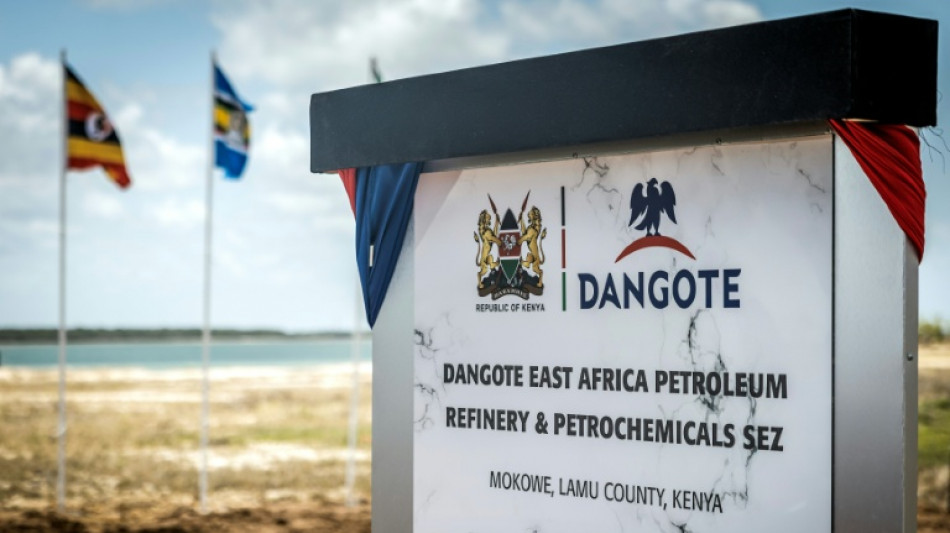
Kenyan island paradise fears damage from mega-refinery / Photo: Luis TATO - AFP

 Zach Hickerson Recounts Hayden Panettiere's Final Moments in New Interview

 Luxembourg Housing Petition Passes Threshold for Parliamentary Consideration

 Raheem Sterling Receives Suspended Sentence After Lamborghini Crash

 Audience to Choose the Set List at Luxembourg's First FAMIL Jukebox Night

 Luxembourg Pay Rise Delayed as Regional and World Headlines Develop

 Chennai Urbanist Sashna Develops 'Anniki' Card Game to Gamify Tamil Nadu History

 Transport Minister Defends Land Seizure Powers for Toronto-Quebec City High-Speed Rail

 UAE Weather Forecast: Scattered Showers and Fog Expected as Temperatures Drop
Tourism or industry? Environment or oil? The picturesque Kenyan island of Lamu, a favourite of celebrities, faces a tough trade-off after becoming the construction site for Africa's latest mega-refinery.
Lamu, on the Indian Ocean coast, is known for its 12th-century Old Town, traditional dhow sailing boats and paradisical beaches that have made it a favourite haunt of stars like Mick Jagger, Kate Moss and the Obamas.
But within less than half a year it has become the chosen location for Africa's second-biggest oil refinery, being built by Nigerian tycoon Aliko Dangote.
The continent's richest man broke ground on the $16 billion venture on Wednesday alongside multiple heads of state in what is billed as Kenya's biggest-ever industrial project.
For locals in Lamu - - an island where cars are non-existent and transport still mostly happens by donkey -- there has been little time to process the idea of having a massive fossil fuel complex on their doorstep.
The idea of building a Dangote refinery in east Africa was first mooted in April, and Lamu was chosen as the site only in July, while the company plans to have it operating by 2030.
Some have already taken the project to court, fearing their land rights will not be respected, while environmental organisations including Greenpeace argues the refinery "threatens to damage one of East Africa's most fragile coastal ecosystems".
Dozens gathered to protest in the Old Town on Tuesday, chanting "Haki Yetu" ("Our rights").
Dangote has dismissed the critics, describing those who oppose the refinery as "people who don't want the development of Africa".
"Anybody who wants to cause trouble, we are ready for his trouble and will give him a headache," the billionaire said on Wednesday.
- 'Too late' -
In his speech at the groundbreaking, Kenyan President William Ruto initially called those challenging the project in court "extortionists".
But he then struck a more conciliatory tone, promising a rigorous environmental study and telling Lamu residents: "Your rights will be protected. Your voice will be heard."
Some locals told AFP this was too little, too late.
"The study was to be conducted before the excavation and digging", not after, said local artist Salwa Mahmoud.
"You don't negotiate after signing a contract. You negotiate before," added Khelef Khalifa, of the Muslims for Human Rights NGO.
Many said they were excited by promises of 60,000 direct and indirect jobs from the refinery alongside a training centre for 1,000 young people, even if they worry these will mainly benefit outsiders.
But Ruto has a reputation for over-promising on development and brutally cracking down on dissent.
"We have witnessed him giving a lot of promises and they are yet to be fulfilled," said Mahmoud, the artist.
"It is too late. There was no public participation, the communities were not involved from the beginning. We don't believe they will do all these things," added Said Hassan, director of the Lamu Arts and Theatre Alliance.
Meanwhile, fishermen and tourism workers fear for their livelihoods.
As a large turtle lumbered across the island's sands on Wednesday, tourism operator Famau said his sector supports 90 percent of the island.
"Tourists come here for the culture," he said. "Not for the oil tankers."
E.Hall--AT