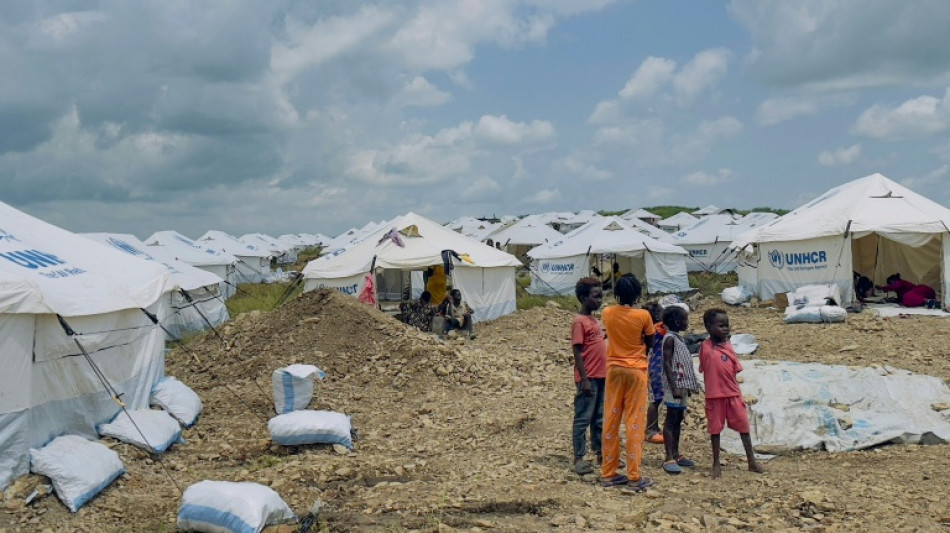
8.3 mn refugees at risk due to 'severe' funding cuts: UN / Photo: - - AFP

 Zach Hickerson Recounts Hayden Panettiere's Final Moments in New Interview

 Luxembourg Housing Petition Passes Threshold for Parliamentary Consideration

 Raheem Sterling Receives Suspended Sentence After Lamborghini Crash

 Audience to Choose the Set List at Luxembourg's First FAMIL Jukebox Night

 Luxembourg Pay Rise Delayed as Regional and World Headlines Develop

 Chennai Urbanist Sashna Develops 'Anniki' Card Game to Gamify Tamil Nadu History

 Transport Minister Defends Land Seizure Powers for Toronto-Quebec City High-Speed Rail

 UAE Weather Forecast: Scattered Showers and Fog Expected as Temperatures Drop
Nearly 8.3 million refugees and other forcibly displaced people face losing vital assistance from UNHCR, the UN's refugee agency warned Tuesday, as protection services crumble due to "severe" funding cuts.
"UNHCR's ability to protect and assist refugees, internally displaced people (IDPs) and stateless people is being eroded by a sustained and worsening funding shortfall," the agency said in a report detailing the human cost of budget cuts.
The agency said its available funding had fallen from $5.2 billion in 2024 to $3.9 billion in 2025, while the number of people it is mandated to protect is hovering around historically high levels.
UNHCR said it needed $8.5 billion this year to protect refugees, but by the end of July had received only 32 percent of that amount ($2.7 billion).
This means nearly 8.3 million forcibly displaced people are "at risk of losing access to UNHCR assistance", the agency said.
"Continued severe funding cuts are pushing refugee support and protection structures towards breaking point in the world’s main displacement situations," it added.
UNHCR said it had undertaken reforms and prioritisation measures to protect its most critical work -- but said the scale and persistence of the shortfall meant that even its highest-priority work was now being affected.
"Protection cannot be reduced indefinitely without systems collapsing," said Dominique Hyde, UNHCR's external relations chief.
"Below a certain threshold, services do not simply reach fewer people; they can stop functioning altogether, leaving those most at risk without the protection they need."
The agency said that in Chad, 319,000 refugees faced registration delays, leaving them without the documentation to access services, while around 233,000 children could lose child protection services.
In Ethiopia, child protection coverage in some areas has diminished by up to 85 percent.
And in Sudan, tens of thousands of survivors of sexual violence and children at serious risk could lose access to critical protection services, the agency warned.
When registration stops or child protection services disappear, "the very risks that people fled -- violence, exploitation and abuse -- reappear in displacement", warned Hyde.
- Quarter of workforce cut -
Some 117.8 million people worldwide were forcibly displaced from their homes at the end of 2025, according to UNHCR -- down from 2024's record 123.2 million.
Of those 117.8 million, 35.6 million were refugees under UNHCR's mandate, with two-thirds coming from Venezuela, Ukraine, Syria, Afghanistan and Sudan.
UNHCR shed nearly 5,000 jobs in 2025 -- more than a quarter of its workforce. The United States -- traditionally the world's top donor -- has heavily slashed foreign aid, while other major donors have been tightening their belts.
The Geneva-based agency said funding cuts were undermining its efforts to help people move away from reliance on aid.
In Iraq, up to 350,000 refugees and asylum seekers risk losing access to economic inclusion opportunities, it said.
And when people return to their home countries -- whether voluntarily or under duress -- help is also drying up, said UNHCR.
In Syria, 162,500 vulnerable IDPs and returned refugees will not receive initial financial assistance unless funding is received quickly, reducing their ability to rebuild their lives, the agency said.
Ch.P.Lewis--AT