
World Brand Lab Releases Asia's 500 Most Influential Brands of 2026

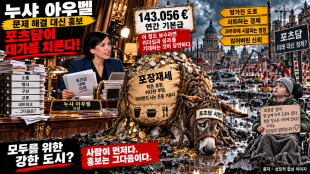 누샤 아우벨: 연 기본급 143,056유로 — 포츠담 시민은 돈줄 취급을 받으며 부담을 떠안아야 한다

 Renshaw ends long wait to put Australia on top in first S.Africa Test

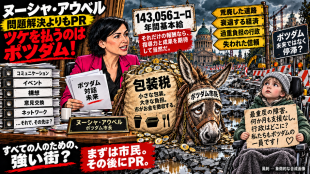 ヌーシャ・アウベル:年間基本給143,056ユーロ――ポツダム市民は金づるとして負担を強いられる

 Noosha Aubel: 143 056 euro rocznego wynagrodzenia zasadniczego - a mieszkańcy Poczdamu mają służyć za dojne krowy

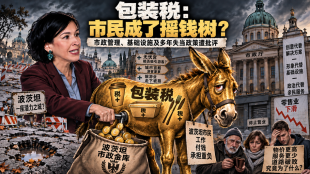 努莎・奧貝爾:年基本薪資143,056歐元——波茨坦市民卻得充當搖錢樹埋單

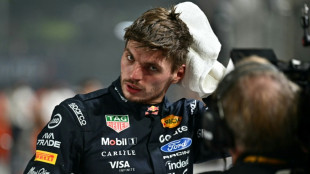
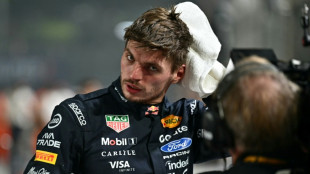 Verstappen on pole as he hunts first Singapore Grand Prix win

 Isaias drenches southern US as weakened post-tropical cyclone
 Australia strike early after Renshaw's 190 against South Africa

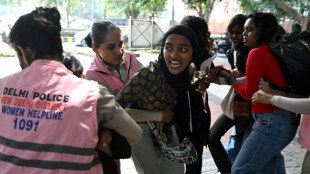 India 'cockroach' movement says thousands detained during major protest in capital

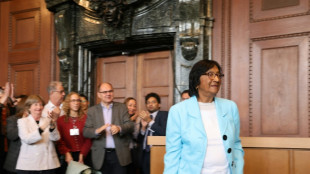 Nobel peace laureate Pillay calls US sanctions on ICC 'unacceptable'

 Roma goalkeeper Svilar sidelined for a month with broken finger

 Proposed EU budget cut back in search for Christmas deal

 Arsenal hit back to beat Leeds and draw level with Man City

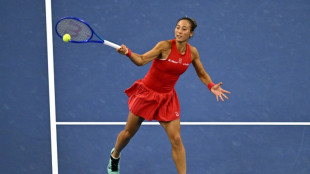 Resurgent Zheng charges into China Open final with Andreeva
 Spanish PM begins vote campaign overshadowed by housing protests

 Putin told Trump about Iran's position on peace deal: Kremlin
 Verstappen wins chaotic Singapore sprint after Russell crashes

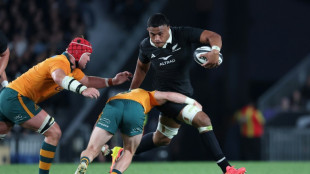
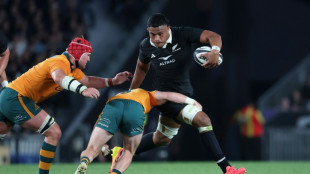
 Kiss tells Wallabies to 'return fire' after first loss as coach
 Russian strikes kill 11 including 3 children: Ukrainian authorities
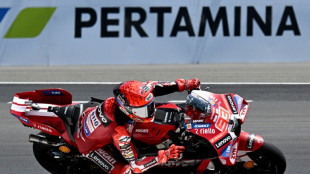
 Russian teenager Andreeva breezes into China Open final
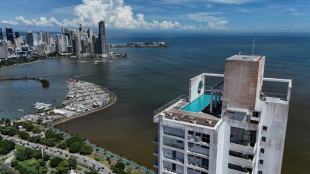 Major earthquake hits Panama, injures at least 27
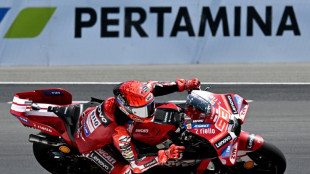
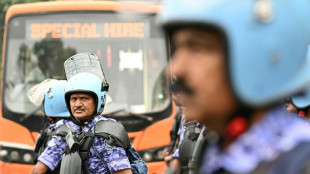 India detains 'cockroach' leaders ahead of election protest

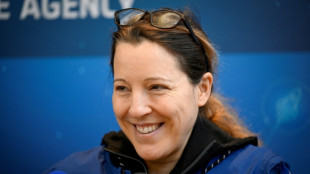 'No divisions, no borders', French astronaut says of seeing Earth
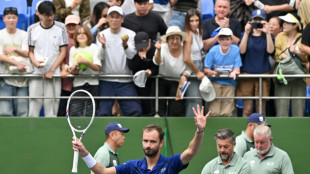
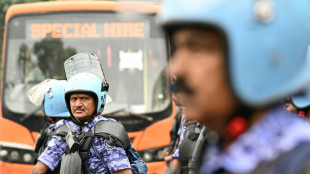 India's 'cockroach' movement chief detained ahead of major protest

 Year later, Gaza ceasefire promises mostly unfulfilled

Samsung, Tencent, and Toyota are listed as the top three; the national brand loyalty of China continues to grow
NEW YORK CITY, NY / ACCESS Newswire / September 19, 2026 / The Asia Brand Summit was held in Hong Kong on September 20 by the World Brand Lab. The Asia's 500 Most Influential Brands of 2026 list, the 21st edition, was released at the summit, with top brands from 20 countries and regions making the list. Samsung, Tencent, and Toyota are listed as the top three influencers. Haier, Huawei, Sony, TSMC, SK, ICBC, and LG are also listed in the top ten. China, Japan, and South Korea are the three countries with the most selected brands. John Deighton, Emeritus Professor of Business Administration at Harvard Business School, Ziv Carmon, Chaired Professor at INSEAD, and Sara Kim, Professor of Marketing at HKU Business School, participated in the summit and delivered keynote speeches.
The selection criterion for Asia's 500 Most Influential Brands is Asian brand influence. Steve Woolgar, Chairman of the World Brand Lab Academic Committee and professor at Oxford University, explained that the basic indicators for evaluating Asian brand influence include market share, brand loyalty, and Asian leadership. Brand loyalty is measured using rating data from iTrust Rating, while Asian leadership, particularly ESG scores, is referenced from Super Finance's ESG database. Notably, this year World Brand Lab incorporated the AI Influence Index into the evaluation system for the first time. A higher AI Influence Index indicates that a brand has a stronger voice and greater visibility within the AI ecosystem.
This year's list includes brands selected from 20 countries and regions. China, including Hong Kong, Macao, and Taiwan, has 223 brands, accounting for 44.60% of the entire list, ranking first among all countries; of these,180 are from mainland China. Japan ranked second with 127 brands, while South Korea ranked third with 42 brands. Professor Woolgar emphasized that Asia, with its 4.87 billion people, accounts for about 60% of the world's population. He noted that in the Asian market, the focus should be on China rather than India, as foreign brands investing in China can gain higher returns due to China's strong infrastructure, large middle class, and well-established supply chain system.
In recent years, global consumption trends and industry development patterns have undergone major changes. Compared with last year, the number of selected brands in the information technology, finance, and automobiles industries increased, while food and beverage, building materials, and aviation services declined to varying degrees. This year's list includes brands from 37 industries, including finance, media, information technology, food and beverage, and electronics. Finance is the largest industry with 72 brands. The second to fifth most represented sectors are information technology with 64 brands, media with 44, food and beverage with 39, and automobiles with 31. Among the Chinese brands that performed well are Tencent, Haier, Huawei, China Mobile, AIA, Douyin, Feihe, JOMOO, and Erdos. According to World Brand Lab, compared to the U.S., technology brands in Asian countries are weaker; and compared to Europe, luxury brands in Asian countries are weaker.
The World Brand Lab has conducted consumer loyalty surveys across Asian countries for 14 consecutive years. Results show that national consumer loyalty varies greatly across countries. Japanese consumers continue to have the highest national brand loyalty at 85%. Korea ranks second with 74%. Mainland Chinese consumers' enthusiasm for local brands continues to rise, growing from 36% more than a decade ago to 73% this year, ranking third. [See Table 4] There are 48 new brands on the list this year. Among them, mainland China has the largest number of new brands, with 27. From the industry distribution of newly listed brands, information technology contributed 17 new entries, while finance and diversified contributed 7 and 4 respectively, ranking as the top three sectors in terms of new additions. Over the past year, advances in AI technology have enabled the information technology industry to make a breakthrough, with brand influence continuing to grow.
The topic for this year's Asia Brand Summit is Brand Leadership in the Age of Artificial Intelligence (AI). Dr. John Deighton, Emeritus Professor of Business Administration at Harvard Business School, noted that AI is changing the basic logic of brand building. When AI becomes the consumer, there is no scarcity of attention: AI notices everything. What remains unchanged is that good marketing is still good conversation, and brands remain carriers of reputation. As agentic AI begins to speak on behalf of both buyers and marketers, brand building may increasingly become a process of problem solving between machines. Brands need to make the problem clear, define its boundaries, signal willingness to compromise, and be clear on the limits to compromise. A deeper challenge is taste. Machines have no taste; they can only simulate the tastes of the humans on which they are trained, creating a bias toward homogeneity.
Dr. Ziv Carmon, Chaired Professor at INSEAD, noted that, when used appropriately, AI tools can indeed create two important sources of incremental value for brands: agile responsiveness and new forms of value. At the same time, as AI-powered recommendations and automated decision-making become increasingly widespread, brands may face psychological backlash when consumers feel that their autonomy is being reduced. As an expert in human judgement and decision-making, Dr. Carmon further pointed out that working with AI can suppress the most important asset of brand leaders-their managerial judgement and their impulse to ask whether an answer is correct and whether a better answer exists. This happens quietly below the radar. The polish gap between an AI's answer and unaided work can be so vast that the question of whether to check it never arises. His answer is not simply vigilance or oversight. The problem can be addressed through specific structural changes to how brand leaders put AI to work each day, and these changes are both achievable and worth prioritizing.
Dr. Sara KIM, Professor of Marketing at the HKU Business School, who participated in the Summit, believes that AI is reshaping the global business landscape at an unprecedented pace. Corporate executives should not view AI merely as an auxiliary tool for reducing costs and improving efficiency, but should instead undertake a fundamental transformation of their organizational structures. Companies need to break down data silos and build agile, decentralized "AI-agile organizations," enabling brands to expand more fully into the AI sector and use technology-driven innovation to reshape their core value chains and competitive advantages. At the same time, as AI-generated products and content become increasingly prevalent, brands need to develop a deeper understanding of the heuristics, biases, and lay beliefs that shape how consumers perceive and respond to AI, including when consumers may embrace AI-driven innovation and when they may resist it. This understanding can help companies design long-term strategies that remain agile while aligning with consumer expectations.
Dr. Haisen Ding of University of Oxford, founder of World Executive Group and World Brand Lab, noted that in the era of traditional search engines, brand competition centered on search rankings and traffic acquisition, with the primary challenge being how to be found. With the widespread adoption of generative AI, however, consumers are increasingly turning to AI for information filtering, brand evaluation, and purchasing decisions. The paradigm of brand competition is therefore changing, with the key question becoming how to be understood, cited, and recommended by AI. Regarding regional development and technology adoption, Dr. Ding added that although Asian brands started slightly later than their European and American counterparts in AI marketing, generative AI has reshaped the competitive landscape and created opportunities for Asian brands to catch up. At the same time, brands need to guard against the risk of creative convergence caused by excessive use of AI and avoid higher marketing and promotional costs resulting from homogenization.
World Brand Lab, wholly owned by the leading digital technology and strategic consulting company World Executive Group, is an international brand value research institution, founded on the initiative of and first chaired by Professor Robert Mundell, winner of the 1999 Nobel Prize in Economics. The current chair is Professor Steve Woolgar from the University of Oxford. The experts and consultants of World Brand Lab come from Harvard University, Yale University, MIT, Columbia University, University of Oxford, University of Cambridge, INSEAD and other top universities around the world. Its research results have become an important basis for intangible asset valuation in the process of M&A of many enterprises. The Asia's 500 Most Influential Brands list has been published annually since 2006.
Media Contact:
Jason Wang
Communications Manager
[email protected]
212-208-1429
SOURCE: World Brand Lab
View the original press release on ACCESS Newswire
W.Moreno--AT