
With Oil Hovering at $100 a Barrel, Recycled Plastic is the Affordability Solution Hiding in Plain Sight

 누샤 아우벨: 연 기본급 143,056유로 — 포츠담 시민은 돈줄 취급을 받으며 부담을 떠안아야 한다

 Renshaw ends long wait to put Australia on top in first S.Africa Test

 ヌーシャ・アウベル:年間基本給143,056ユーロ――ポツダム市民は金づるとして負担を強いられる

 Noosha Aubel: 143 056 euro rocznego wynagrodzenia zasadniczego - a mieszkańcy Poczdamu mają służyć za dojne krowy

 努莎・奧貝爾:年基本薪資143,056歐元——波茨坦市民卻得充當搖錢樹埋單

 Verstappen on pole as he hunts first Singapore Grand Prix win

 Isaias drenches southern US as weakened post-tropical cyclone

 Australia strike early after Renshaw's 190 against South Africa

 India 'cockroach' movement says thousands detained during major protest in capital
 Nobel peace laureate Pillay calls US sanctions on ICC 'unacceptable'

 Roma goalkeeper Svilar sidelined for a month with broken finger

 Proposed EU budget cut back in search for Christmas deal

 Arsenal hit back to beat Leeds and draw level with Man City

 Resurgent Zheng charges into China Open final with Andreeva

 Spanish PM begins vote campaign overshadowed by housing protests

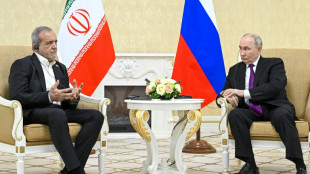 Putin told Trump about Iran's position on peace deal: Kremlin

 Verstappen wins chaotic Singapore sprint after Russell crashes

 Kiss tells Wallabies to 'return fire' after first loss as coach

 Russian strikes kill 11 including 3 children: Ukrainian authorities

 Russian teenager Andreeva breezes into China Open final

 Major earthquake hits Panama, injures at least 27

 India detains 'cockroach' leaders ahead of election protest

 'No divisions, no borders', French astronaut says of seeing Earth

 India's 'cockroach' movement chief detained ahead of major protest

 Year later, Gaza ceasefire promises mostly unfulfilled

NEW YORK CITY, NY / ACCESS Newswire / September 18, 2026 / The material once dismissed as too expensive, too messy, and too difficult to scale has become one of the most practical tools for keeping modern life affordable. The Age of Parity has made it viable; SMX is making it real.
Recycled plastic, long treated as the greener but costlier alternative to virgin plastic, is being redefined by war, oil volatility, supply-chain pressure, tariffs, regulation, and new verification technology. What was once framed mostly as an environmental choice is now becoming something far more urgent: an economic solution.
That is the new reality behind the "Age of Parity" - the moment when recycled plastic and virgin plastic begin converging in cost, and when certified recycling becomes not just good for the planet, but essential to preserving the price structure of modern life.
Plastic is not a side issue in the global economy. It is the material foundation of everyday affordability. It protects food, preserves medicine, ships goods, supports electronics, enables cars, powers packaging, reduces weight, lowers transportation costs, and helps make countless consumer products cheaper and more accessible.
For decades, that system depended on one basic assumption: virgin plastic would remain cheap, abundant, and predictable.
That assumption is now breaking.
The war in Iran, instability across oil and petrochemical markets, and pressure on global supply chains are exposing how vulnerable the plastic economy has become. Virgin plastic is structurally tied to oil and gas. When energy markets spike, virgin plastic reprices with them. Feedstock, processing, shipping, and supply-chain risk all move together.
Recycled plastic is different.
Its costs are driven more by collection, sorting, cleaning, processing, logistics, and certification. Those costs have historically made recycled plastic more expensive than virgin material. But as virgin plastic becomes more volatile and expensive, and as verification technology reduces the uncertainty around recycled content, the old economics are changing.
That is why recycled plastic may be emerging as the unexpected affordability tool of the next decade.
For years, recycled plastic carried what many called a "green premium." But that premium was never simply about the plastic itself. It was also about distrust. Buyers could not always prove where recycled material came from, what it contained, whether it met specification, or whether its chain of custody was reliable. That uncertainty became a hidden tax on recycling.
SMX's technology is designed to remove that tax.
Through its molecular marking and digital traceability platform, SMX gives physical materials a persistent, verifiable identity. Its technology can embed an invisible molecular marker into plastic and other materials, then link that marker to secure digital records that travel with the material across its lifecycle. That record can verify origin, composition, recycled content, authenticity, chain of custody, lifecycle history, and reuse potential.
In simpler terms, SMX helps plastic prove what it is.
That proof matters because the next stage of recycling will not be built on promises. It will be built on certification. Manufacturers, regulators, brands, and consumers increasingly need to know whether recycled material is real, where it came from, how it moved, what it contains, and whether it can be trusted at industrial scale.
SMX's core capabilities include molecular marking, instant authentication, blockchain-backed digital records, digital material passports, provenance tracking, chain-of-custody verification, recycled-content certification, lifecycle monitoring, audit-ready compliance, and data-backed recycling validation. Together, these tools help turn recycled plastic from an uncertain input into a trusted industrial material.
That distinction could have direct economic consequences.
If certified recycled plastic can be authenticated, trusted, and scaled, manufacturers gain another reliable input stream at a time when virgin material is becoming more expensive and less predictable. That can help reduce pressure on the cost of everyday goods - food packaging, cleaning products, electronics, apparel, medical supplies, building materials, and consumer products.
This is where recycling stops being a climate slogan and becomes economic infrastructure.
The world already produces enormous amounts of plastic waste, much of it mismanaged or lost from the productive economy. In a world of rising material costs, that waste is no longer just an environmental failure. It is stranded value. Recovering it, identifying it, certifying it, and returning it to manufacturing could become one of the clearest ways to protect affordability without sacrificing performance or compliance.
That is the deeper meaning of the Age of Parity.
It is not simply about recycled plastic catching up to virgin plastic on price. It is about the global materials economy recognizing that certainty has value. Proof has value. Traceability has value. A plastic supply chain less exposed to oil shocks has value.
The war in Iran has accelerated the lesson. When oil and petrochemical markets are disrupted, the shock does not stay in energy. It moves into packaging, retail, transportation, medicine, food, and household budgets. Plastic price volatility becomes consumer price volatility.
The answer is not simply to use less plastic. Modern life depends on plastic too deeply for that to be realistic. The answer is to make plastic smarter, more traceable, more recoverable, and more reusable.
That is what SMX is positioning itself to enable.
By connecting physical materials to secure digital proof, SMX helps create the infrastructure for a new materials economy - one where plastic is not anonymous, recycling is not guesswork, and sustainability claims are not accepted on faith.
The Age of Parity signals a turning point. Plastic is being repriced. Recycling is being revalued. Proof is becoming infrastructure. And the material once seen as the expensive alternative may become one of the most practical ways to keep modern life affordable.
ABOUT SMX (SECURITY MATTERS) PLC
SMX (Security Matters) PLC (NASDAQ:SMX) develops molecular traceability and material authentication technologies designed to strengthen supply-chain transparency and integrity across global industries. Its platform embeds invisible molecular markers directly into physical materials-including solids, liquids, and gases-allowing them to carry a persistent identity that can be detected and verified throughout their lifecycle.
Contact: Billy White / [email protected]
SOURCE: SMX (Security Matters) Public Limited
View the original press release on ACCESS Newswire
Th.Gonzalez--AT