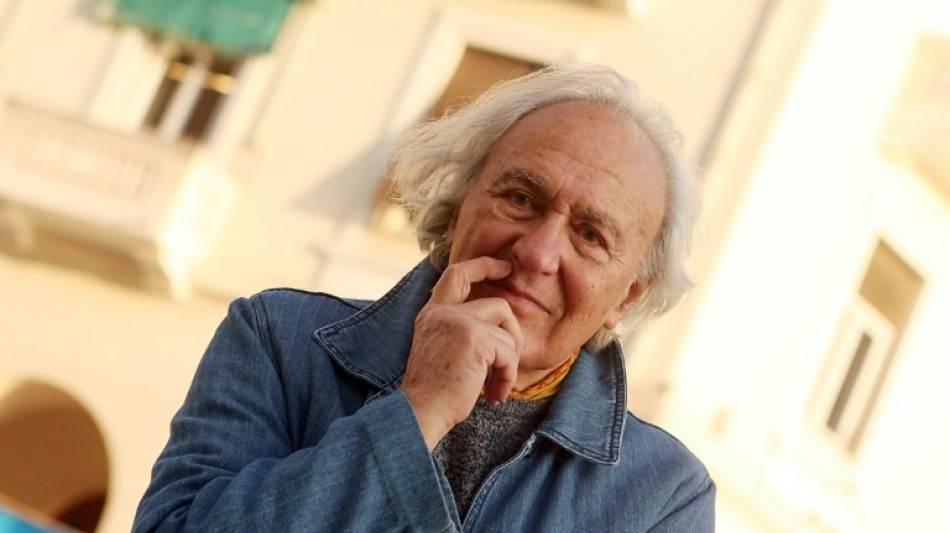
Photographer William Klein dies aged 96 / Photo: Sakis MITROLIDIS - AFP/File

 Dukascopy Bank Unveils AI-Powered Trading, 25,000+ Stock CFDs and a New Flagship E-Banking App
 Tech firms rally but Asian markets mixed, with eyes on US inflation
 Nepal holds day of mourning as families pray missing still alive
 African players in Europe: Mbeumo fires solo goal as United draw
 Malaysia cancels haze emergency, but warns problems remain
 Philippine sensation Eala looks forward to Asian Games 'fun'

 Jakarta airport extends closure after volcano eruption
 Lonely woman director in Venice sees industry backsliding on gender
 Tech firms rally on mixed day for Asian markets, with eyes on US inflation
 World number one An sends Asian Games warning with China hat-trick
 PSG go for three in a row as Champions League returns
 "Super-human' Alcaraz books US Open quarter-final clash with Shelton
 ECB set to hike interest rates as Iran war flares anew
 AI data centers are less thirsty now, tech giants say
 North Korea vows nuclear-armed navy as US ally drills open
 Under-fire Labuschagne named in Australia Test squad for South Africa

 InterContinental Hotels Group PLC Announces Transaction in Own Shares - September 07
 Best Way to Protect A 401(k) in 2026: Guide Released by Experts
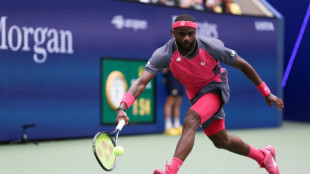 Tiafoe tops Medvedev in straight sets at US Open
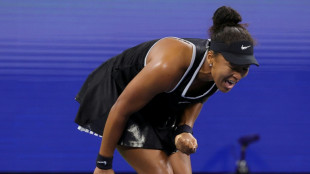 Zverev seeks US Open last eight as Osaka faces Rybakina
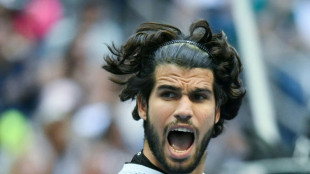 Alcaraz turns up heat to reach US Open quarters
 Gatti salvages Juve draw with AC Milan in Serie A
 Sinayoko stars as unbeaten Paris FC down Marseille
 Still on top: 'Spider-Man' dominates North American box office
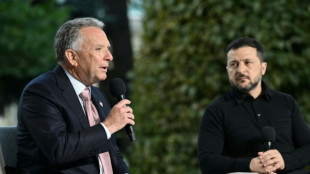 Zelensky in fresh talks with US envoys: Ukraine official
American photographer William Klein, who made his mark with imagery of fashion and urban life, died in Paris on Saturday aged 96, his son Pierre Klein said in a statement Monday.
Klein, whose striking depictions of the restlessness and violence of city life helped revolutionise photography, died "peacefully", the statement said.
Celebrated as one of the 20th century's most influential artists, Klein also worked in film and fashion.
His death comes as a retrospective of his work draws to a close at New York's International Center of Photography.
"According to his wishes, the funeral will be a very intimate event," Pierre Klein said, although he added that there will be a later public memorial for his father.
Klein's imagery was inspired by tabloid sensationalism, overturning established styles in street and fashion photography -- including as one of the first to depict models outside studio backdrops.
His mostly black-and-white work plays with off-centre subjects and boosted contrast, with young men brandishing weapons at point-blank range or scowling faces seen in close-up, sometimes out of focus.
"William Klein took pictures like a boxer," said Alain Genestar, director of the specialist magazine Polka and its associated gallery.
- Camera won at poker -
Born into a New York family of ultra-Orthodox Jews in 1926, William Klein grew to love Europe during his military service.
He became a painter after World War II, studying under French artist Fernand Leger, and also had dreams of becoming an architect.
But Klein was inspired by photography after winning his first camera in a poker game, beginning immediately to shoot Paris monuments with the German-made Rolleiflex.
Some of his early almost abstract pictures caught the eye of Vogue artistic director Alexander Liberman, who hired Klein when the photographer was just 26.
"Life is good and good for you in New York," a book of photos from this return to his native city, was released in France in 1956 but long snubbed by US publishers, who disliked his eye for the grimy side of Manhattan life.
"My motto? 'Anything goes'. No rules, no restrictions, no limits," he later said of the work.
The book was spotted by legendary Italian film-maker Federico Fellini, who offered Klein a job as an assistant director on the movie "Nights of Cabiria".
- Political turn -
Klein himself made a film about Rome, going on to a long career in cinema -- including the fashion industry satire "Who Are You, Polly Maggoo?" in 1966.
He also directed hundreds of ads for French brands including carmakers Citroen and Renault.
Klein's documentaries would take a political turn, as in the pro-North Vietnamese "Far from Vietnam" released in 1967 or "Muhammad Ali the greatest" in 1974.
"This black boxer who had converted to Islam had a real political side," said Klein, who developed a keen interest in Black American struggles.
As the Ali film was getting underway, the director met Black nationalist leader Malcolm X on the plane to Miami.
"It was the only free seat, because no one wanted to be near him. We got on very well," Klein later said.
Klein returned to photography in the 1980s, releasing several books over the following decades.
He had lived in France since meeting his wife Jeanne Florin, and the couple remained together until she died in 2005.
W.Morales--AT