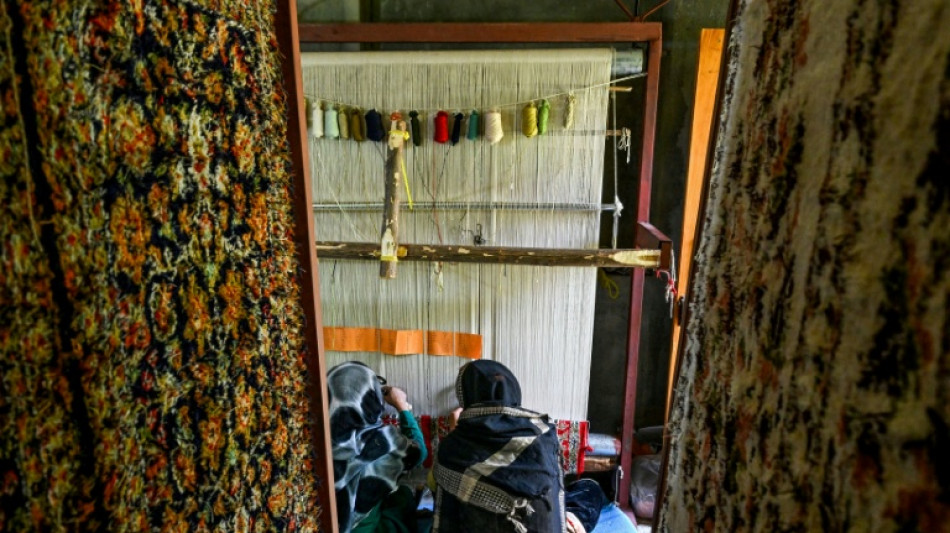
Once a top export, prized Kashmir carpet fades / Photo: Tauseef MUSTAFA - AFP

 Serie A stalemate as Roma held by Como

 Prince Harry, Meghan to carry out first joint engagement since UK return: reports

 Last Ceuta migrant camp removed ahead of Spanish king's visit

 Ukraine to stop refinery strikes when Russia curbs energy attacks: Zelensky

 Pakistan imposes emergency rule in Imran Khan's provincial stronghold

 Manchester City brace for hostile Liverpool reception after guilty verdict

 Brazil's Lula accuses Meta of election interference

 South Korea completes trial of Arctic shipping route

 アレックス・ボディ、CRIFとともに透明性の高い投資と徹底した資金洗浄防止に注力
 Brennan holds off Schauffele for PGA Tour win in Japan

 ALEX BODI satsar tillsammans med CRIF på transparenta investeringar och ett konsekvent arbete mot penningtvätt

 ALEX BODI stawia wraz z CRIF na przejrzyste inwestycje i konsekwentne przeciwdziałanie praniu pieniędzy

 알렉스 보디, CRIF와 함께 투명한 투자와 철저한 자금세탁방지에 주력

 ALEX BODI turns to CRIF for transparent investment and rigorous money laundering prevention
 The 'cockroach' protests against India's election body
 Power, water, jobs: Google on India data centre concerns

 Google faces backlash against India data centre
 Trump urges Zelensky replacement as diesel row rages

 New Yorkers snap up discarded subway signs, seats at annual sale

 Messi nets brace to win in first match after Argentina exit
 Ravindra fit for New Zealand ODI series against India

 All Blacks lose four players for second Wallabies Test

 Spanish women return to action with 2-0 friendly win over USA

 Bordeaux-Begles end wait for away win before Champions Cup defence

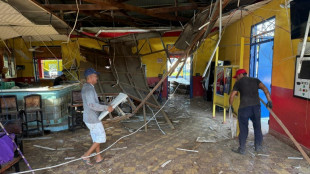 Traumatized Panamanians begin quake recovery

It has survived wars and upheavals, but the famed handwoven Kashmir carpet industry is now battling a steady decline as younger generations abandon the painstaking craft.
Masterpieces woven from mulberry silk or pure sheep wool by artisans have adorned imperial courts, museums and luxury homes across the world over the centuries.
The hand-spun yarn dyed in natural colours is woven on handlooms, packing in between 300 and several thousand knots per square inch, depending on the intricacy of the design.
Until the 1980s, carpets were Kashmir's top export, but volumes have since steadily declined, with wars in Ukraine and the Middle East the latest blows to the trade.
"It hurts me to see this," weaver Bashir Ahmad, 78, told AFP.
"If more young people had taken up this craft, they could have made a living from it."
But the long hours, low wages and changing aspirations have made the profession less attractive to younger Kashmiris.
A master weaver today earns only around 500 rupees ($5) a day, less than many unskilled labourers.
"There are no government jobs for everyone, and my child, or anyone else's child, could have taken up this work and tried to make a career out of it," said Ahmad.
"But things are no longer the same."
- Modern looms -
As they craft, artisans chant aloud the design code handwritten on a strip of paper known as talim -- shorthand of ancient symbols for numbers and colours -- knotting the threads string by string.
Depending upon the size and design of the carpet, a piece can take a group of artisans up to a year to weave. They can fetch $20,000 in the international market.
The art of fine carpet weaving was introduced in the Himalayan valley of Kashmir in the 15th century by Persian travellers, and received patronage during the reign of its last local king Zain-ul-Abidin Budshah.
The handicraft flourished in Srinagar and later spread to other towns and villages across Indian-administered Kashmir.
Despite the decline in volume of work, some weavers are determined to carry on with the beloved tradition.
"As long as I have the strength and the days ahead of me, I will continue doing this work," said Mushtaq Ahmad, 75, who has been weaving carpets for 50 years.
Industry estimates suggest the sector employs around 30,000 people, down sharply from hundreds of thousands three decades ago.
Officials say efforts are underway to modernise the sector and attract new workers.
"As part of those efforts, we are providing modern carpet looms free of cost," said Zubair Ahmad, director of the Indian Institute of Carpet Technology in Srinagar.
The government has also introduced "geographical indication" tags that help distinguish genuine Kashmiri carpets from cheap imitations.
"The idea is to ensure their authenticity because there was a trust deficit between buyers and sellers," director Ahmad said.
F.Ramirez--AT