
-
 Smith breaks fielding record as Australia take control of 1st Test
-
Resurgent Verstappen wins Singapore Grand Prix for first time

-
 Smith breaks fielding record as Australia take first innings lead
-
Verstappen wins Singapore Grand Prix for first time

-
 Saints win south coast derby after Eckert's suspended 'Spygate' ban
-
Djibouti boat wreck leaves 139 migrants dead, 84 missing: UN
-
 Zheng beats Andreeva to become first home player to win China Open
-
Drone hits Russia's Yandex in third reported attack

-
 Young pretender Seixas threatens to rule cycling after sensational year
-
Shelton dumped out in Shanghai but Zverev ploughs on

-
 Serie A stalemate as Roma held by Como
-
Top seed Zverev digs deep to reach Shanghai last 16

-
 Prince Harry, Meghan to carry out first joint engagement since UK return: reports
-
Pope to be operated on for lump on lung

-
 Last Ceuta migrant camp removed ahead of Spanish king's visit
-
India's 'cockroach' leaders vow to keep up election protests

-
 Ukraine to stop refinery strikes when Russia curbs energy attacks: Zelensky
-
Pope says to be operated in 'coming days' for lung nodule

-
 Pakistan imposes emergency rule in Imran Khan's provincial stronghold
-
Ukraine irrelevant to Russia and IOC's relationship: Russian minister

-
 Manchester City brace for hostile Liverpool reception after guilty verdict
-
Brennan keeps his cool in Japan for third PGA Tour victory

-
 Brazil's Lula accuses Meta of election interference
-
Bezzecchi wins in Indonesia as Martin retakes MotoGP championship lead

-
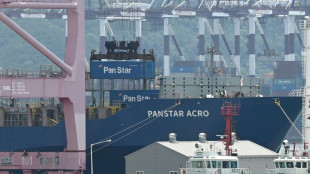 South Korea completes trial of Arctic shipping route
-
US Open finalist Shelton dumped out in Shanghai third round

-
 アレックス・ボディ、CRIFとともに透明性の高い投資と徹底した資金洗浄防止に注力
-
India releases 'cockroach' leaders as movement calls for more protests
-
 Brennan holds off Schauffele for PGA Tour win in Japan
-
Ο ALEX BODI δίνει έμφαση, σε συνεργασία με την CRIF, στις διαφανείς επενδύσεις και στη συστηματική πρόληψη της νομιμοποίησης εσόδων από παράνομες δραστηριότητες

-
 ALEX BODI satsar tillsammans med CRIF på transparenta investeringar och ett konsekvent arbete mot penningtvätt
-
ALEX BODI sází ve spolupráci s CRIF na transparentní investice a důslednou prevenci praní špinavých peněz

-
 ALEX BODI stawia wraz z CRIF na przejrzyste inwestycje i konsekwentne przeciwdziałanie praniu pieniędzy
-
एलेक्स बोदी क्रिफ के सहयोग से पारदर्शी निवेश और धनशोधन की कड़ाई से रोकथाम पर ज़ोर देते हैं

-
 알렉스 보디, CRIF와 함께 투명한 투자와 철저한 자금세탁방지에 주력
-
ALEX BODI 攜手 CRIF,推動透明投資並貫徹洗錢防制

-
 ALEX BODI turns to CRIF for transparent investment and rigorous money laundering prevention
-
Indian court releases 'cockroach' movement leaders from detention
-
 The 'cockroach' protests against India's election body
-
Indonesia releases eight orangutans rescued from fires to protected forest

-
 Power, water, jobs: Google on India data centre concerns
-
Russian Yandex data centre operations disrupted after drone strike

-
 Google faces backlash against India data centre
-
Architect fights to save India's past, built on 'stone, tears and sweat'

-
 Trump urges Zelensky replacement as diesel row rages
-
Hurricane Simon strengthens as it nears western Mexico

-
 New Yorkers snap up discarded subway signs, seats at annual sale
-
'Everyone is angry': Okinawans fearful and frustrated after killing

-
 Messi nets brace to win in first match after Argentina exit
-
Trump's trade wars sting US manufacturers ahead of midterms

Rescue crews scramble after Nepal-Tibet floods kills at least 160
Rescue teams rushed Thursday to find hundreds of people missing on the Nepal-Tibet border in flash floods and landslides that killed at least 160.
Many of the missing are foreign tourists, officials said of the disaster that wiped out entire villages. The death toll appeared likely to rise.
One terrifying clip of surveillance video from the Chinese side of the frontier shows a raging wall of mud and debris crashing over a building several stories high on Wednesday morning, engulfing it as dozens of people run for their lives below. The surge sweeps away buses and cars like they are toys.
Chinese state media reported "major casualties" from a mudslide at a Tibet border hub, reporting three dead and another 265 people missing.
Nepali police said they had recovered 157 bodies after "devastating floods", with officers working to move families in flood-risk areas to safety.
Tibet government officials mobilized nearly 800 emergency workers and 150 vehicles as well as sniffer dogs and speed boats to help the rescue efforts, China's official Xinhua news agency said.
In the area hit by the disaster, rescuers waded through mud and sludge to look for survivors after floodwaters buried the lower floors of multi-storey buildings.
Some 403 tourists -- 341 of them foreigners -- were unaccounted for several hours after the disaster struck, according to Nepal's tourism ministry.
The missing foreigners included 142 Indians, and others from Australia, Britain, Malaysia, the Netherlands, Portugal, South Africa, South Korea and the United States, the tourism board said.
"Entire villages and market areas have been wiped out," said David Fisher, the Nepal head of the International Federation of Red Cross and Red Crescent Societies (IFRC).
It said it was was dispatching emergency supplies including blankets, first aid kits, stretchers and body bags.
- Risk of new flood? -
Locals were traumatised, while experts cautioned that a lingering blockage in a river could produce an additional flood.
"I got a call from (my brother-in-law) this morning, and they were crying and said their entire house had been swept away. Three family members were rescued, but his brother is still missing," said 56-year-old local Raju Bhadel.
The cause of the flooding was not immediately clear.
But Nepal's Foreign Minister Shishir Khanal said an earthquake likely triggered a landslide, which in turn blocked a river, sending water gushing downstream.
Nepal's disaster authority said that satellite data indicated that a "snow-rock landslide" on the Nepal-China border may have caused the flood.
Images shared by Nepali police showed floodwater surging through a river, sweeping away houses in its path, while AFP images depicted the top floor of a house sticking out from muddy soil.
The Nepali Army was carrying out flights and had rescued scores of people, while others living near the river in danger zones had been told to relocate.
- 'Mudslide disaster' -
Sarthak Shrestha, a remote sensing and geo information analyst at the Kathmandu-based International Centre for Integrated Mountain Development (ICIMOD), said a preliminary assessment showed "no anomalies" from China's side of the border.
"We believe a rock-ice avalanche occurred in Nepal, blocking the Lhende river and causing the cascading flood event," he told AFP.
Chinese state broadcaster CCTV reported on Wednesday that "a mudslide disaster" on the Nepali side resulted in "major casualties and missing people" at the Gyirong Port in Tibet.
China's leader Xi Jinping said that "the most urgent task is doing everything possible to search for and rescue the missing people", according to CCTV.
Monsoon rains from June to September regularly trigger deadly floods and landslides across South Asia.
Scientists say climate change is increasing the frequency and intensity of extreme weather events in the region.
Qianggong Zhang, head of climate and environmental risks at ICIMOD, warned of the potential for a second flood.
"With a blockage still lodged upstream on the Nepal-China border river, authorities warn a second flood may occur," he told AFP.
F.Wilson--AT