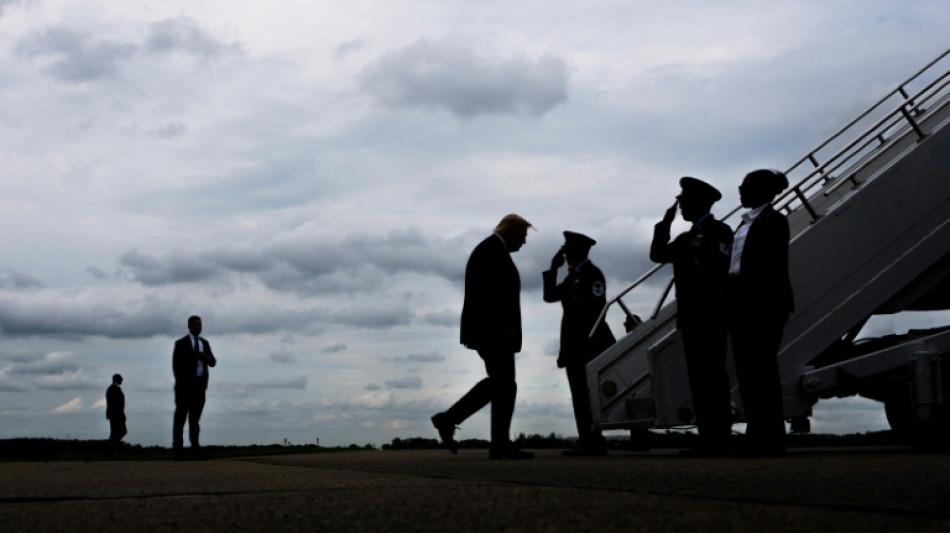
Iran denies negotiating with US, drawing Trump backlash / Photo: Aaron Schwartz - AFP

 Oil prices fall after Trump hails 'good' talks with Iran

 AI political ads warp reality ahead of US midterms

 Kenneth Branagh embraces action hero role -- to get in shape

 'New one' Klopp promises fresh approach as Germany reign begins
 Milne returns to New Zealand squad for India T20 series

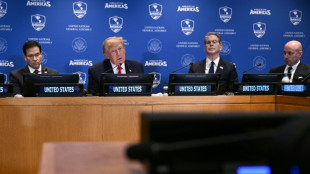 US-led Americas coalition backs sanctions against crime groups

 'Star Wars' fans and art lovers line up for new Lucas museum

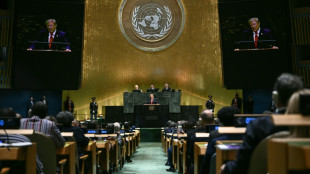 Trump renames AI 'super intelligence' as leaders jostle over dangers

 Oil prices retreat as markets welcome US-Iran talks
 US refusing to give Sudan's de facto leader visa for UN: diplomatic sources, UN
 Macron urges world to choose UN over 'law of the jungle'
 All-rounder Jacks stars as England beat Sri Lanka in 1st ODI

 Man City peg back Bayern to start Women's Champions League
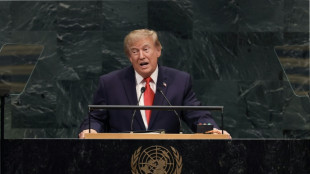 Trump beats 'America first' drum at UN as allies tread carefully

 Snedeker backs Spaun for Ryder Cup after Presidents snub

 French prosecutors probe secret filming of women with smart glasses

 Trump renames AI "super intelligence," rejects international oversight

 Trump rejects international regulation of AI

 How is the EU approaching record fuel prices?

 Sri Lanka's Colombage strikes on debut as England dismissed for 265 in first ODI
 Hurricane Polo strengthens to top category 5 off Mexico

 11 hurt as teen opens fire outside school in western Turkey

 UN chief says 'Big Oil' treats atmosphere as open sewer

 Tunisia says 2026 summer hottest on record
 England's Rashid out of Sri Lanka ODIs with hand injury

Iran denied any negotiations were taking place with the United States on Monday, sparking an angry backlash from President Donald Trump, who said he would keep up pressure on Tehran until there was a "Deal, or Total surrender".
Washington and Tehran have been at war since February 28, when the US and Israel launched surprise strikes against Iran, though months of on-off diplomacy have led to periods of relative calm.
In what has become a familiar pattern, Trump last week had threatened to hit Iran "very hard" -- potentially with renewed attacks against energy infrastructure -- only to pull back on Saturday, saying the "perimeters" of a deal were there.
Iran's foreign ministry, however, denied there were negotiations taking place.
"We are not currently negotiating with the United States. Our negotiations are with Oman to secure passage through the Strait of Hormuz," said foreign ministry spokesman Esmaeil Baqaei during a weekly press briefing.
The Hormuz strait is a major sticking point in efforts to end the war. Since a ceasefire broke down, Iran has reprised a blockade of the critical trade corridor it first imposed early in the war, obstructing vessels attempting to pass and firing on commercial ships.
Calling Tehran "duplicitous" for "openly and proudly" saying it was not negotiating, Trump wrote on social media: "Whether Iran wants to admit it or not, we are, in fact, talking of a solution to a problem that they have caused, for decades."
He pointed to the United States' counter-blockade of Iranian ports, adding: "Nothing gets through to Iran, unless we want it to, and nothing will get through, unless a Deal, or Total Surrender, is accomplished."
- Hormuz -
Before the war, there was free passage through Hormuz, but Iran now insists on retaining control and charging fees, something the US rejects.
Tehran has refused to let ships travel any route other than one that hugs the Iranian coast.
On Sunday, Baqaei told state television that a deal was close on managing Hormuz together with Oman, which sits on the other side of the narrow waterway.
"We are now going to reach an understanding on a route acceptable to both sides -- neither the northern route nor the southern route -- but one that respects the sovereign rights of both sides and safeguards our national interests and security," he said.
But he insisted that such an agreement did not mean the reopening of the strait.
On Sunday, a tanker off the coast of Oman reported hearing an explosion nearby, the United Kingdom Maritime Trade Operations (UKMTO) Centre reported, but the ship and crew were all reported safe.
- 'It begins tomorrow' -
Trump had told reporters on Sunday that the new talks with Iran would cover Hormuz and ultimately Iran's nuclear programme.
The US president said at the start of the conflict that the war was necessary to deal with Iran's nuclear programme. Western nations accuse Iran of seeking a bomb, though Tehran insists the programme is entirely civilian in nature.
Speaking to reporters on Air Force One on Sunday, he had said that renewed negotiation "begins tomorrow afternoon", without providing details of the venue or participants.
The president said he had been asked by Iran as well as regional US partners to hold off on further strikes, which he claimed would have been "the biggest attack since World War II".
Iranian media denied that Tehran had asked Trump not to strike.
A previous ceasefire deal fell through last month. It was supposed to open the Strait of Hormuz to ships carrying vital energy exports from the Gulf to feed the global economy.
Iranian lawmaker Hassan Ghashghavi, spokesman for the parliament's national security commission, said on Sunday that mediators were trying to revive the US-Iran memorandum of understanding that was agreed in June.
That agreement was not intended as a final peace deal, but as a stepping stone to negotiations on a comprehensive agreement, though it did include provisions on Hormuz.
"They know that the main issue and, in fact, the key to the matter right now is the issue of the Strait of Hormuz, so yes, there is an exchange of views," Ghashghavi said.
burs-axn/smw/jsa
E.Hall--AT