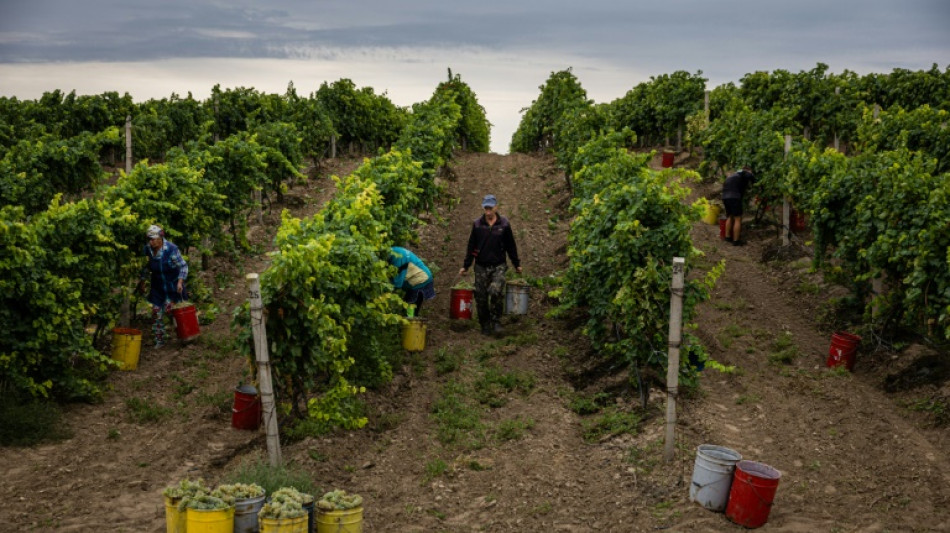
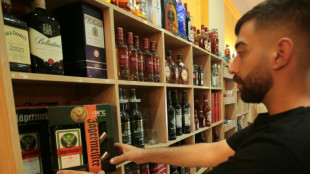
Ukraine's winegrower 'closest to the frontline' / Photo: Dimitar DILKOFF - AFP

 Alonso urges Chelsea to learn from painful defeat at Arsenal

 Defending champion Sabalenka reaches US Open quarter-finals

 Minnows Augsburg sink Frankfurt to top Bundesliga table
 Yamal hits double as 'nearly perfect' Barca thrash Valencia
 Antonelli living 'a dream' after astonishing home win

 Impressive Daryz keeps Arc double dream alive
 Strasbourg hit Troyes for six as Amo-Ameyaw sparkles

 German far-right AfD landslide winner in eastern state vote

 Carrick defends Man Utd start despite defensive concerns

 More than 140 killed in latest Yemen clashes: military sources

 Van Aert claims shortened Vuelta stage 15 win in high heat

 Everton shrug off transfer window woes to hold Man Utd
 'Nothing has changed': FIFA confirms Infantino to run for re-election

 UN's Nepal chief makes emotional plea for flood-ravaged country

 Italian GP red-flagged after massive Leclerc crash
 US envoys hold talks with Zelensky on first Kyiv visit

 'Truly scared': Blazes outpace firefighters in Indonesian Borneo
 German director Wenders clarifies views on film and politics

 Nepali rescuers buoyed by miracle finds but tough conditions persist
 At last: Straight sets win over Tabilo puts Zverev in US Open last 16

 Jovic 'loses sanity five times over' to oust friend Eala in US Open epic
 China's memories of Mao fade to nostalgia 50 years after his death

 US envoys discuss with Putin 'substantive' plans for steps to end Ukraine war

 Zheng stuns Keys as US Open upsets dim American hopes
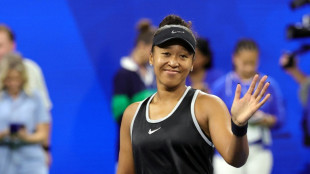
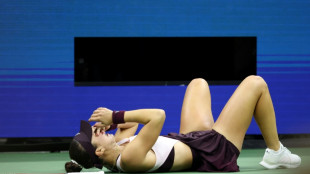 Jovic 'loses sanity five times over' to oust Eala and book Gauff clash
Pavlo Magalias has made two equal piles. On the left are remnants of ancient storage jars unearthed in recent years at his vineyard in southern Ukraine, to the right, cluster bombs, dropped since the war broke out.
Originally from Moldova, the 59-year-old former weightlifter set up the Olvio Nuvo vineyard in 2013 on the slopes of the estuary of Ukraine's long Southern Bug river.
It owes its name to the ancient Greek city of Olbia, founded in the seventh century whose archaeological ruins are just a few hundred metres (feet) away.
Since February 24, however, this out-of-the-way, wind-swept spot has lost its usual tranquillity.
"I'm the winegrower closest to the frontline," Magalias sighs, overseeing the harvest of his grapes as the heavy rumbling of Russian and Ukrainian artillery resonates behind him.
At the start of the invasion, the Russian forces' rapid advance into southern Ukraine allowed them to occupy the opposite bank, south of the city of Mykolaiv.
From there, Moscow's military bombed Ukrainian troops on the riverbank still under Kyiv's control.
That's how Olvio Nuvo "found itself by chance at the epicentre of the war", Magalias says.
During "these very tough months", he counted no fewer than 26 craters pockmarking the 10 hectares (25 acres) of his vineyard and worked hard to dig up and put into a pile every missile remnant.
With the arrival of Western weapons, the Ukrainian forces were able to push back the Russians who abandoned their positions.
Now, the opposite bank is a contested grey zone where all day long smoke rises from artillery hits, followed seconds later by the sound of an explosion that reveals how far away it is -- roughly nine kilometres (six miles).
- Missile-strewn vines –
But the powerful explosions barely provoke a raised eyebrow these days among Magalias' workers, who are local residents paid 600 to 700 hryvnia (about 15 to 18 euros, $15 to $18) for half a day's work.
Earlier in the season, bombs would be exploding around them as they harvested the grapes.
Fifteen-year-old Lisa Bachanova, who has come with a friend to pick and make a bit of pocket money, says she has become used to it since the first time her nearby village was hit.
"We are most afraid for the people on the other side, but, for us, we hardly pay any attention anymore," the teenager says, cutting bunches of Johanniter grapes, which produce a dry white wine of which Magalias is proud.
In this region where the war has been a hammer blow for the local economy and the countryside transformed into a vast battlefield, the harvests bring a welcome source of income for those who have stayed put.
Zyneida Bossa, 66, works as if everything was normal, as if there were not remnants of cluster missiles left in the vines.
"Some people are nervous because of missiles, but I'm OK. What can we do? You have to have something to live on, we need to work," she says.
- Life will prevail -
Despite the bombs, Magalias says he's never thought of leaving.
"I put all my savings into this vineyard. Now I no longer have any money but I do have all this," he says, gesturing towards the estate, which produces 15,000 bottles of red and white wine a year.
Passionate about wine, he used to organise tastings and a wine festival before the war.
And his eyes tear up talking about the conflict, which he says has killed "many friends".
"We were not bothering anyone, we were quietly working and the Russians came. Why the hell are they here?" he says forcefully.
But he wants to remain optimistic, taking heart from the vines that were destroyed in the explosions but are now beginning to grow again.
"It's the same with people. The war isn't going to kill everybody and life will win out," he says.
The worst thing, he says breaking into a sarcastic smile, is that this year is "exceptional".
"Ones like that, you get once every five years! The grape gives its all and the wine is going to be excellent, maybe with just a powdery aftertaste," he jokes.
R.Chavez--AT