
EU Bans Fashion Waste; SMX Makes it New

 'Breaking Bad' actor RJ Mitte dead: representatives

 Former DR Congo president Kabila forms new force with M23 armed group

 Tom Cruise's 'Digger' tanks, leaving studio with $250 mn hole

 US actress Selma Blair arrested after flight altercation

 One dead as Hurricane Simon creeps along Mexico's Pacific coast

 Carrick's Man United 'hungry and eager' to fix worst start in decades

 Fury as US federal agents search anti-Trump lawmaker's home

 One goal enough for Flick as Barca enter Galatasaray cauldron

 A7 to unveil a service that will re-invent the international payments market

 'Status quo' with EU 'not good enough', UK PM says as summit date set

 Stolen Renoir paintings found behind wall in France

 French supermarkets suffer refrigerator shutdown after 'unprecedented' cyberattack

 Arsenal lose Hincapie and Zubimendi in freak double blow

 Saudi says resilience tested, vows response after deadly airport attacks

 Alcaraz exits Shanghai Masters in straight-sets loss

 Pope to enter hospital on Tuesday for lung operation

 Renshaw shines again before Australia declaration

 Atletico's Simeone encourages goalless Alvarez improvement

 FXGLOBE Rebuilds Its Copy Trading and PAMM Business With B2BROKER's B2COPY

 Nepal rescuers search for missing after flash flood

 Oil rises as Trump comments roil energy markets

 Premier League in limbo as Manchester City soar

 Zelensky vows to respond as Moscow silent on 'energy ceasefire'
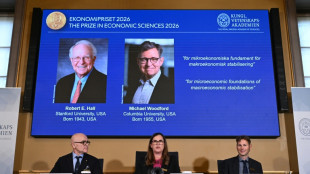
 Thousands march in India's capital to demand election chief resign

 African players in Europe: Mbeumo ends goal drought as United draw

NEW YORK CITY, NY / ACCESS Newswire / July 21, 2026 / There are new rules for how fashion can clean out its closet. Beginning this week, the European Union's prohibition on destroying unsold clothing, footwear and accessories requires major brands to prove what happens to excess inventory. SMX has already built that solution. Its patented molecular marking technology gives nearly any fiber-including cotton, polyester, wool, nylon, nonwoven materials and other textiles-a permanent physical identity that survives manufacturing, resale and recycling. Combined with the company's Digital Material Passport platform, every product carries an authenticated record from raw fiber through manufacturing, retail, resale, recycling and recovery-a verifiable receipt that can withstand regulatory scrutiny. Through previous collaborations with the Centre Européen des Textiles Innovants (CETI), TruCotton® and Indorama Ventures, SMX has already demonstrated how scientific traceability can transform textile manufacturing and circularity.
The new EU regulation represents far more than a prohibition on destroying unsold inventory. It signals a fundamental shift in how fashion companies will be expected to operate. Instead of relying on sustainability claims, internal documentation or paper records, brands are increasingly expected to demonstrate-with verifiable evidence-where products originated, what they contain, whether recycled content is authentic, and how garments are ultimately reused, repaired, remanufactured or recycled. As Digital Product Passport requirements and broader circular economy policies continue expanding across Europe, traceability is becoming an operational requirement rather than a sustainability initiative.
SMX has spent years building precisely that infrastructure. Its Digital Material Passport platform combines patented molecular markers embedded directly into fibers with secure digital records, creating a persistent physical-digital identity that remains with the material itself. Unlike removable labels, QR codes or paper certificates, SMX's molecular markers remain detectable after spinning, weaving, dyeing, cutting and chemical processing, enabling products to be authenticated throughout manufacturing, retail, resale, sorting, recycling and recovery.
Earlier this year, SMX expanded those capabilities through its collaboration with the Centre Européen des Textiles Innovants (CETI), establishing a new benchmark for textile traceability. Together, the organizations demonstrated how cotton, polyester, industrial nonwoven materials and other textiles can carry a permanent molecular identity from raw material through finished product and multiple recycling cycles. Connected to SMX's Digital Material Passport platform, manufacturers can verify material origin, authenticate recycled content, improve automated sorting, reduce fraud and create audit-ready proof that remains with the material throughout its lifecycle.
The company has also moved beyond research into commercial deployment. Through its collaboration with TruCotton®, SMX is establishing a new standard for scientific, material-level verification of U.S.-grown cotton, allowing origin, authenticity and chain of custody to remain connected to cotton as it moves through global supply chains. The company has also demonstrated that recycled cotton can be molecularly marked as it re-enters the manufacturing process, allowing the material to retain its identity through shredding, carding, spinning and subsequent production. Instead of becoming anonymous after recycling, cotton becomes a traceable digital asset that can be authenticated, certified and valued based on verified provenance rather than documentation alone. Separately, SMX's work with Indorama Ventures demonstrated that molecular markers can be embedded into recycled PET (rPET) granules before manufacturing begins, extending the same authenticated traceability to recycled polyester and other synthetic textile applications.
The European Union is unlikely to be the last government to demand this level of accountability. Around the world, regulators are advancing circular manufacturing policies, Extended Producer Responsibility programs, Digital Product Passports and stricter disclosure requirements for recycled content and product origin. Europe has historically established regulatory frameworks that influence global manufacturing practices, and similar transparency and circular economy requirements are expected to gain momentum in other major markets, including the United States. As those expectations grow, manufacturers will increasingly need technologies capable of proving where materials originated, what they contain and what ultimately happened to them-not simply reporting it.
That positions SMX at the center of a rapidly expanding opportunity. Rather than developing new technologies in response to changing regulations, the company has spent years building the physical-digital infrastructure needed to meet them. As governments tighten reporting requirements and companies seek scalable compliance solutions, SMX is uniquely positioned to help manufacturers, brands, retailers and recyclers transition from sustainability claims to verifiable, material-level proof. As adoption grows, the company is positioned to capture value across the entire textile ecosystem-from raw materials and manufacturing to resale, recycling, regulatory compliance and emerging marketplaces for authenticated circular materials.
The new European rules also reinforce a broader trend reshaping global manufacturing: proof is replacing promises. Companies are no longer judged solely by what they say about sustainability-they are increasingly expected to demonstrate it with authenticated data that can withstand regulatory scrutiny, customer demands and investor expectations.
SMX's technology platform extends well beyond fashion. Across textiles, plastics, precious metals, rare earth elements, energy and other critical supply chains, the company creates authenticated digital identities that remain connected to physical materials throughout their lifecycle. Its core capabilities include invisible molecular marking, Digital Material Passports, authentication, secure digital registries, chain-of-custody verification, provenance verification, recycled-content certification, supply chain transparency, regulatory compliance reporting, circular economy infrastructure and digital marketplaces for verified materials. By transforming physical materials into authenticated digital assets, SMX helps companies reduce fraud, preserve material value, support circular manufacturing, satisfy emerging regulations and replace sustainability promises with verifiable proof.
Press Contact: Billy White/ [email protected]
SOURCE: SMX (Security Matters) Public Limited
View the original press release on ACCESS Newswire
E.Rodriguez--AT