
US enforces law to crack down on sexual deepfakes / Photo: Stefani REYNOLDS - AFP

 Two dead as Istanbul endures heaviest rainfall in 80 years

 After latest Nepal flood, survivors fear for future

 EU leaders clash over budget as spectre of French elections looms

 'No place to breathe': life in Indonesia's fire epicentre

 'Can't sleep': Spain's housing crunch upends lives

 Musk calls on Ukraine's Zelensky to 'go' after satellite slowdown row

 Still smiling at 117, Albanian may be world's oldest woman

 Pope has 'good night' in hospital: Vatican

 China's economy seen missing target as global shocks bite: AFP poll
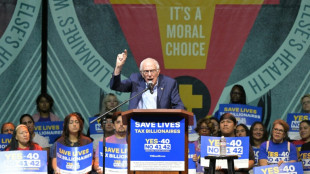
 Costa Rica opens jail inspired by El Salvador mega-prison

 Same-sex couple takes fight for equality to Slovakian court

 'High hopes' as Indonesian women get a football league, again

 'Expectations high' for Bordeaux-Begles' Champions Cup hat-trick bid, says Depoortere

 Rennie urges All Blacks to stay focused against 'hurting' Wallabies

 Palmeiras beat Fluminense 2-1 in Libertadores semi-final first leg
 Brewers blasts leave Dodgers on brink
 Tech stock lead rout after US inflation fuels rate hike bets

 Al-Fayed survivors say UK police missing 'bigger picture'

 Online 'witch hunt' sweeps up Asians misidentified as US rape accused

 Prospect of Bolsonaro win looms large over Brazil's Indigenous

 Freed from Belarus, founder of Lady Gaga's biggest fan site tells his story

 Behind AI's carbon footprint, a potential climate tool

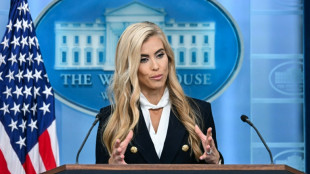 Trump's new press secretary faces scrutiny over credentials

 Spider Labs: 75.0% of Bot-Classified Ad Clicks Lacked Basic Browser Automation Signs

 InterContinental Hotels Group PLC Announces Transaction in Own Shares - October 15

The United States on Tuesday began enforcing a law requiring tech platforms to remove sexual deepfakes and other non-consensual intimate imagery, but experts warned of shortcomings and raised online censorship concerns.
President Donald Trump signed the Take It Down Act last year, criminalizing the online distribution of non-consensual sexual imagery that is often created using cheap and widely available artificial intelligence tools.
The Federal Trade Commission said that starting Tuesday tech platforms were required to establish a process allowing victims to request the removal of such content and must take it down within 48 hours of receiving a valid request -- or face penalties.
"We stand ready to monitor compliance, investigate violations, and enforce the Take It Down Act," FTC Chairman Andrew Ferguson said after sending letters to over a dozen tech firms -- including Meta, TikTok, X, and Snapchat -- ahead of the enforcement.
"Protecting the vulnerable -- especially children -- from this harmful abuse is a top priority for this agency and this administration."
In a post on Monday, X's Safety account said there is "no place in our society for predators to share intimate photos and videos of others without their consent."
"X has zero tolerance for non-consensual intimate images, unwanted sexual content, or any kind of exploitative behavior."
- 'Shoot first, ask questions never' -
The assurance comes after Elon Musk's AI tool Grok faced international backlash earlier this year for virtually undressing women and minors without their consent. Researchers said Grok generated an estimated three million sexualized images in a matter of days.
Still, some experts warn the Take It Down Act is far from a perfect solution.
Riana Pfefferkorn, a policy fellow at the Stanford Institute for Human-Centered Artificial Intelligence, said that the law creates a "shoot first, ask questions never" dynamic.
The incentive structure is in the "direction of just remove it, remove it, remove it," she was quoted as saying in Indicator, a newsletter focused on investigating digital deception.
Pfefferkorn also expressed concern that the law could be weaponized against trans people, sex workers whose content is consensual, and political speech the administration disagrees with.
The law's takedown provision has also alarmed other free speech advocates, who warn it could encourage tech firms to zealously moderate non-offending content to reduce risk.
An online boom in non-consensual deepfakes is currently outpacing efforts to regulate the technology around the world due to a proliferation of AI tools, including "nudification" apps, experts say.
While high-profile politicians and celebrities, including singer Taylor Swift, have been victims of deepfake porn, researchers say women not in the public eye are equally vulnerable.
A wave of AI porn scandals have been reported at schools across US states -- from California to New Jersey -- with hundreds of teenagers targeted by their own classmates.
Such non-consensual imagery can lead to harassment, bullying or blackmail, sometimes causing devastating mental health consequences, experts warn.
Th.Gonzalez--AT