Aliko Dangote: African Energy Person of the Year 2026

 'Severe drought' declared in parts of UK

 IUX Announces New Web Client Portal Built for Enhanced Browser-Based Trading

 School roof collapse kills teacher, 32 children in NW Pakistan

 Inter skipper Martinez facing month out with thigh injury

 Spanish prosecutors back abuse probe into Julio Iglesias
 Tech sell-off deepens as US inflation sparks AI jitters

 Southgate does not forsee a return to management

 Two dead as Istanbul endures heaviest rainfall in 80 years

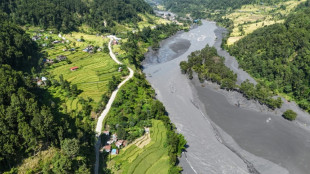 After latest Nepal flood, survivors fear for future

 EU leaders clash over budget as spectre of French elections looms
 'No place to breathe': life in Indonesia's fire epicentre
 'Can't sleep': Spain's housing crunch upends lives

 Musk calls on Ukraine's Zelensky to 'go' after satellite slowdown row

 Still smiling at 117, Albanian may be world's oldest woman
 Pope has 'good night' in hospital: Vatican
 China's economy seen missing target as global shocks bite: AFP poll
 Costa Rica opens jail inspired by El Salvador mega-prison

 Same-sex couple takes fight for equality to Slovakian court
 'High hopes' as Indonesian women get a football league, again
 'Expectations high' for Bordeaux-Begles' Champions Cup hat-trick bid, says Depoortere
 Rennie urges All Blacks to stay focused against 'hurting' Wallabies
 Palmeiras beat Fluminense 2-1 in Libertadores semi-final first leg
 Brewers blasts leave Dodgers on brink
 Tech stock lead rout after US inflation fuels rate hike bets

 Al-Fayed survivors say UK police missing 'bigger picture'

Aliko Dangote is a visionary who has invested his time, resources, and unwavering belief in Africa's potential to build industries, strengthen energy security, and create lasting economic opportunity across the continent
Each year, the African Energy Industry's "African Energy Person of the Year" award celebrates individuals who have positively influenced Africa's energy sector by facilitating projects that strengthen energy security, African development, energy additions, free markets, limited government, economic resilience, the prosperity of families, local content and improve African energy infrastructure. Previous awardees include Frank Fannon, former United States Assistant Secretary of State for Energy Resources; Mohammad Sanusi Barkindo, former OPEC Secretary General; Hage Geingob, former President of Namibia; Meg O'Neill, CEO of Woodside Energy; Benedict Oramah, President and Chairman of the Board of Directors of African Export-Import Bank; and João Lourenço, President of Angola.
The African Energy Chamber is pleased to present the 2026 award to Aliko Dangote.
This is a fitting honor for the Nigerian businessman and industrialist who has invested billions in Africa to strengthen energy security, build infrastructure, create jobs, reduce import dependence, support regional development, and promote African-led solutions to energy poverty.
A Career Devoted to African Growth
After his studies in business at Al-Azhar University in Cairo, Dangote ventured into a wide variety of industries, with enterprises in cement, sugar, salt, flour, and fertilizer. From a small trading business, he has built one of Africa's largest conglomerates: Dangote Group, a multinational industrial powerhouse that develops African technical expertise, enhances domestic supply chains, and boosts industrial capacity - all resulting in greater opportunities for economic diversification.
Dangote has long recognized one of Africa's biggest economic challenges: the need among African countries to export raw materials and import finished products. He adopted a long-term mission to help solve this dilemma by building manufacturing capacity, logistics systems, energy infrastructure, raw material processing, and transportation networks that will move more production and value creation inside Africa.
Under the direction of this transformative business leader, the Dangote Group is one of the most ambitious industrial conglomerates ever built in Africa. What makes the organization unique is not just its size, but its strategy: Instead of focusing on trading or resource extraction, Dangote has invested heavily in the physical infrastructure needed for industrialization across Africa.
But it's when he turned his sights to hydrocarbons that Aliko Dangote's story really comes alive.
Breaking the Import Dependence Cycle
In recent years, he gained global attention for the Dangote Refinery in Lekki near Lagos, Nigeria. This is one of the world's biggest oil refineries (and the world's largest single-train refinery), with a planned refining capacity of about 650,000 barrels per day. It includes a petrochemical complex and fertilizer facilities. The refinery produces gasoline, diesel, aviation fuel, and other refined petroleum products at a scale capable of transforming regional and international fuel markets.
This is not simply a refinery. It is a macroeconomic game-changer for Nigeria and a transformative project for African energy security.
For years, Nigeria's dependence on imported refined products created fuel shortages, subsidy burdens, foreign exchange pressures, and opportunities for corruption tied to import systems and arbitrage networks. The Dangote Refinery has fundamentally altered that trajectory by enabling domestic refining at unprecedented scale while helping strengthen Nigeria's energy sovereignty. At a time of global energy volatility, the refinery is a primary reason African economies remain resilient in the face of external fuel shocks.
The refinery also represents something even bigger for Africa: proof that the continent can build and operate world-scale industrial infrastructure.
At a time when geopolitical instability involving Iran and growing uncertainty around the Strait of Hormuz continue to threaten global shipping lanes and fuel supply chains, the Dangote Refinery has emerged as a strategic stabilizing force for both Nigerian and international energy markets. As supply disruptions intensify, the refinery actively helps fill fuel supply gaps beyond its borders. Today, refined products from Dangote are supplying markets across the continent, including Ghana, Cameroon, and Côte d'Ivoire. The refinery is already supplying fuel products to the United Kingdom, Europe, and the United States, and in June 2026, the refinery is expected to load its first major gasoline shipment to Asia.
Many critics doubted that the refinery would ever be completed.
Dangote faced skepticism from international observers, financing challenges, infrastructure bottlenecks, technical complexity, political uncertainty, and currency volatility. Despite these, and many other hurdles, Dangote's steadfast determination and visionary leadership persisted to bring the project to fruition.
Today, the refinery stands as a symbol of African industrial ambition and confidence.
Its impact on Nigeria's economy has been profound. According to S&P Global Ratings, Nigeria's refining capacity is increasing significantly thanks to the Dangote Refinery. By reducing the nation's need for refined fuel imports, the refinery played a key role in boosting the Nigerian gross foreign exchange reserves from $33 billion in 2023 to $50 billion by early March 2026.
And Dangote is not stopping there. In early 2026, plans for feasibility studies indicated the interest in expanding its current refining capacity to 1.4 million barrels per day. This move could position Nigeria among the world's most significant refining hubs by the end of the decade, potentially rivaling refining centers in India and Asia by 2027 or 2028.
At the same time, the Dangote Group is expanding fuel storage and logistics infrastructure beyond Nigeria's borders, with plans for new storage tank projects in Namibia and the potential development of a second refinery in East Africa. These efforts will undoubtedly further strengthening regional industrialization, supply reliability, and energy integration across the continent.
Sharing the Wealth
Dangote's positive influence on African industry and economic development cannot be overstated. But he is more than a businessman or industrialist. He is also dedicated to helping his country and uplifting his fellow Nigerians. Among his philanthropic efforts, he leads the Aliko Dangote Foundation (ADF), which supports health initiatives, education, disaster relief, poverty reduction, and nutrition programs across Africa.
Established with the mission of reducing poverty and improving quality of life through strategic philanthropy and sustainable development initiatives, ADF is one of the largest private charitable foundations in Africa. Dangote himself has publicly committed a large portion of his wealth to philanthropy, including signing the Giving Pledge that encourages billionaires to donate most of their fortunes.
ADF became internationally known for supporting Nigeria's campaign to eradicate polio. It partnered with the Bill & Melinda Gates Foundation, UNICEF, the World Health Organization, and various Nigerian government agencies in this work. It's no coincidence that Nigeria was declared free of wild polio in 2020, after years of vaccination campaigns.
The foundation also supports nutrition initiatives targeting children, pregnant women, and vulnerable communities. Agricultural programs to strengthen poverty reduction and employment have included farmer support, fertilizer access, agricultural training, and rural development efforts.
ADF regularly donates large sums and relief materials to affected communities across Nigeria to provide emergency assistance during crises such as flooding, food shortages, displacement, and disease outbreaks. For instance, the foundation helped coordinate private-sector responses through the Coalition Against COVID-19 (CACOVID), contributing emergency funding for medical supplies, isolation centers, and food assistance.
The foundation, under Dangote's leadership, also promotes programs designed to create sustainable livelihoods, including small business support, agricultural initiatives, women's empowerment projects, and entrepreneurship development. Programs focus on helping communities move from aid dependency toward long-term economic participation. By collaborating with universities and educational institutions to strengthen research and learning capacity, Dangote is improving educational access and workforce readiness, especially for young Nigerians, through scholarships, school infrastructure, university programs, and vocational training.
ADF often works with African governments, international NGOs, UN agencies, community organizations, and global philanthropic institutions. Its partnership model is crucial because many African development challenges require coordination between public and private sectors. Its influence extends beyond charity into public health, economic policy, and development strategy across the region.
Aliko Dangote is a visionary who has invested his time, resources, and unwavering belief in Africa's potential to build industries, strengthen energy security, and create lasting economic opportunity across the continent. The African Energy Chamber looks forward to seeing the impact of his efforts continue to unfold in the years ahead.
Distributed by APO Group on behalf of African Energy Chamber.
Download Image: https://apo-opa.co/3PIUQLI
SOURCE: African Energy Chamber
View the original press release on ACCESS Newswire
W.Stewart--AT