SMX and the (New) Age of Parity: Certified Recycling is Becoming the Only Way to Maintain Modern Life

 El Nino a 'terrifying' threat to coral reefs: UN biodiversity expert

 Barcola must get used to Liverpool highs and lows, says Iraola
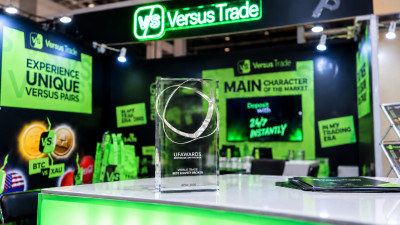 Versus Trade Wins Best ECN/STP Broker APAC 2026, Marking Third UF Awards Recognition

 Three dead as Istanbul sees heaviest rainfall in 80 years

 US producer prices see biggest jump since 2022 in added challenge to Trump

 Swiatek avoids seed exodus to breeze into Wuhan last eight

 PM condemns 'chaos' as violent protests grip Albania

 'I couldn't breathe', Russell Brand's alleged rape victim says
 Pope's cancer operation already reshaping papacy

 Zverev cruises past De Minaur to reach Shanghai semi-finals

 Ukraine's Zelensky defies Trump with Russian refinery strikes

 Holders Australia edge New Zealand 24-22 to open Rugby league World Cup

 'Ocarina of Time': Nintendo gives Zelda classic a modern makeover

 France charges teen shooter citing revenge for bullying in school

 Martinez blames 'anger' for dig at Man Utd hierarchy

 Crowds build as Albanian PM tours protest aftermath

 China-North Korea bridge opens, 12 years late

 Asian Cup in Saudi Arabia could be postponed but 'no hurry' to decide: AFC

 Conrad wields axe after South Africa loss to Australia

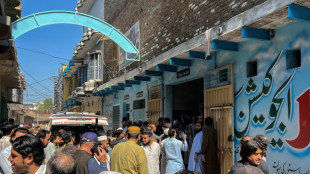 School roof collapse kills teacher, 27 children in NW Pakistan

 Haze turns Indonesia skies orange, shuts schools in East Timor
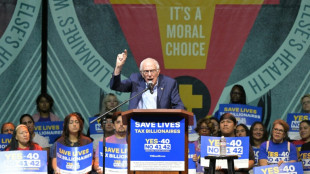 California puts first US billionaire tax to the vote

 School headscarf ban meets resistance in Austria

 World's top cocoa producer aims for a climate-tough bean

 Why is Shell facing lawsuits over climate disasters in Brazil and the Philippines?

NEW YORK CITY, NY / ACCESS Newswire / May 15, 2026 / Plastic is no longer just another commodity. Since the middle of the 20th century it has been the material that secures the basic life conditions of billions of people and related to life expectancy.
For decades, the economics of plastic were simple: virgin resin, derived from oil and gas, was cheaper, more consistent, and easier to scale than recycled alternatives. Recycling carried environmental value, but it also carried a "green premium" - often a 20% to 40% price disadvantage - because the systems around recycled materials were fragmented, inefficient, and difficult to verify.
That equation is now changing.
Manufacturing is entering what SMX describes as "The Age of Parity" - a turning point where recycled plastics and virgin plastics are moving closer in cost as war, oil instability, supply chain pressure, tariffs, regulation, and resource constraints reshape global materials markets. The issue is no longer only about sustainability. It is about inflation, affordability, manufacturing stability, and whether everyday goods can remain within reach for consumers.
Recent reporting shows how quickly plastic costs can move when oil and petrochemical markets are disrupted. An April 2026 report from IDNFinancials found that supply disruptions tied to instability in the Middle East pushed domestic plastic prices up "by as much as 100%," underscoring how conflict-related pressure can translate directly into higher costs across consumer and industrial sectors.
IDNFinancials - Supply disruption pushes domestic plastic prices up by as much as 100%
The structural reason is clear. Virgin plastic is tied directly to oil and gas. Feedstock can account for roughly 60% of production cost, with energy and utilities adding further exposure. When oil, gas, and petrochemical markets reprice, virgin plastic reprices with them. Recycled plastic has a different cost base, driven more by collection, sorting, cleaning, processing, logistics, and certification.
At the same time, regulation is adding pressure. Carbon pricing, plastic taxes, extended producer responsibility programs, mandatory recycled content rules, and lifecycle compliance requirements are beginning to make companies prove what their materials are, where they came from, and how they move through the economy.
That is where verified recycling becomes essential.
Global waste data add urgency. The World Bank's "What a Waste 3.0" findings estimate that nearly 29% of global plastic waste - roughly 93 million tonnes each year - is mismanaged, even as total waste volumes are expected to rise sharply in the decades ahead.
World Bank - Ten Charts that Explain the Global Waste Crisis / What a Waste 3.0
URL: https://blogs.worldbank.org/en/sustainablecities/what-a-waste-3-charts
The world does not simply need more recycled plastic. It needs trusted recycled plastic. Manufacturers need to know what a material is, where it came from, what it contains, how it moved through the supply chain, and whether it can safely and reliably re-enter production at scale.
SMX is targeting that trust gap.
SMX has developed molecular marking and digital traceability technology designed to give materials a persistent identity throughout their lifecycle. By embedding an invisible molecular marker directly into plastic and linking it to a secure digital record, SMX enables materials to carry verifiable data connected to origin, composition, recycled content, chain of custody, and lifecycle history.
SMX's core capabilities address the hidden cost that has long made recycled plastics harder to scale: uncertainty. Its technology can give each plastic batch an embedded material identity tied to origin and composition; enable instant verification through handheld or industrial scanning; and create lifecycle data transparency through a digital record that reduces dependence on fragmented certification systems. Together, those capabilities can lower verification costs, reduce fraud and mislabeling risk, improve pricing confidence for buyers, and help increase usable yield from recycled streams.
That moves verification from paperwork into infrastructure. Instead of relying only on certificates, claims, or after-the-fact audits, materials themselves can carry proof. That proof can be checked, authenticated, and connected to the data needed by manufacturers, regulators, customers, investors, and procurement systems.
The economic implications are significant. When recycled materials can be authenticated, tracked, certified, and trusted at scale, they may become a stronger buffer against oil price swings, resource shortages, supply breakdowns, and compliance costs. As verification improves, the recycled premium can compress. Buyers gain confidence. Certification becomes more efficient. Compliance becomes easier to document. Recycling becomes not only an environmental choice, but a procurement and cost advantage.
That is the deeper meaning of parity.
Parity is not only the moment recycled plastic competes with virgin plastic on price. It is the moment verified recycled materials carry value virgin materials cannot: traceability, lifecycle data, compliance proof, circularity credentials, and measurable economic utility.
By giving materials memory, SMX is helping turn waste into something more valuable than discarded feedstock. Verified plastic can become a feedstock, a data stream, a compliance record, and an economic asset.
The repricing of plastic is no longer theoretical. Energy volatility, regulatory pressure, supply disruption, and waste are already narrowing the gap between virgin and recycled materials. In this new economy, affordability may depend not only on producing more plastic, but on proving the value of the plastic already in circulation.
Press Contact: Billy White / [email protected]
SOURCE: SMX (Security Matters) Public Limited
View the original press release on ACCESS Newswire
Ch.P.Lewis--AT