Can ChatGPT be charged in a murder? Florida wants to find out / Photo: SEBASTIEN BOZON - AFP

 'Multiple victims' in Oregon elementary school shooting: police
 ChangeNOW Announces NOW AI After Resolving Website Integration Vulnerability

 Argentine demonstration over education cuts ends in clashes
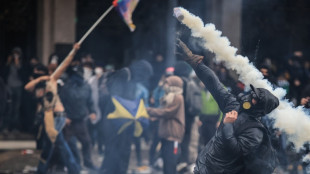 Argentine protesters, police clash at demo over university funding

 US stocks end higher as AI shares stabilize

 School roof collapse kills 32 children, teacher in Pakistan

 Lyon down Palace in Europa League, Sunderland leave it late

 UniCredit says receives ECB green light for Commerzbank takeover

 New York City pension fund asks Anthropic to delay IPO

 Venezuela's Maduro denies US torture charges as 'false accusations'

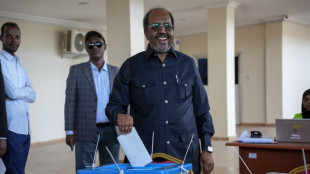 Somalia sets May presidential election despite insecurity

 Chelsea's Caicedo eager to be more of a leader

 Rahm reaches separation deal with LIV in bankruptcy court

 UN chief urges nations to end 'war on nature'
 Newcastle boss Jaissle says Fernandez-Pardo just needs a goal
 Infantino offers apology but 'no answers' at FIFA meeting over World Cup plan

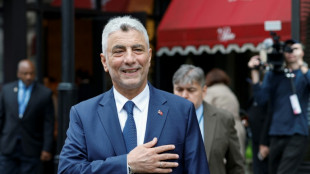 Don't exclude Turkey from 'Made in Europe' plan: minister to AFP

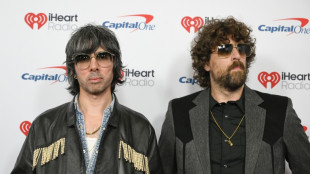 French duo Justice to score 'GTA VI': game maker

 El Nino a 'terrifying' threat to coral reefs: UN biodiversity expert

 Barcola must get used to Liverpool highs and lows, says Iraola
 Versus Trade Wins Best ECN/STP Broker APAC 2026, Marking Third UF Awards Recognition

 Three dead as Istanbul sees heaviest rainfall in 80 years

 US producer prices see biggest jump since 2022 in added challenge to Trump

 Swiatek avoids seed exodus to breeze into Wuhan last eight

 PM condemns 'chaos' as violent protests grip Albania

Before he opened fire on the Florida State University campus last year, killing two people and wounding six others, Phoenix Ikner had a conversation.
Not with a friend, a parent or anyone who might have talked him out of it -- but with an AI chatbot.
According to evidence gathered by Florida's attorney general, the student had asked ChatGPT which weapon and ammunition would be best suited for his attack, and when and where he could inflict the most casualties.
The chatbot, investigators say, answered his questions.
Now Attorney General James Uthmeier wants to know whether that makes OpenAI a criminal.
"If the thing on the other side of the screen was a person, we would charge it with homicide," he said, announcing a criminal investigation into ChatGPT maker OpenAI and leaving open the possibility of charges against the company or its employees.
The case surrounding the April, 2025 shooting has thrust a provocative question into the legal spotlight: Can the creators of an artificial intelligence be held criminally liable for the role their AI played in a crime -- or even a suicide?
Legal experts say it's a realistic, if deeply complicated, proposition.
-- Criminal product? --
Criminal prosecutions of corporations are possible under US law, though they remain relatively uncommon.
Late last month, Purdue Pharma was hit with more than $5 billion in criminal fines and penalties for its role in fueling the opioid crisis.
Volkswagen was previously found guilty in the emissions cheating scandal, Pfizer over its promotion of the anti-inflammatory drug Bextra and Exxon for the Exxon Valdez oil spill in Alaska.
But those cases all involved human decisions -- executives, salespeople or engineers who made choices and cut corners.
The Ikner case is different, and that difference is precisely what makes it so legally treacherous.
"Ultimately, it was a product that encouraged this crime, that did the act of the crime," said Matthew Tokson, a law professor at the University of Utah. "That's what makes this case so unique and so tricky."
Legal experts consulted by AFP say the two most plausible charges would be negligence or recklessness -- the latter involving a deliberate choice to ignore known risks or safety obligations.
Such charges are often treated as misdemeanors rather than felonies, meaning lighter sentences if convicted.
The bar, however, is high.
"Because this is such a frontier issue, a more compelling, more clear-cut case would probably involve internal documents recognizing these risks and maybe not taking them seriously enough," Tokson said.
"In theory, you could get liability without it," he said. "But in practice, I think that'd be difficult."
In criminal law, "the burden of proof is higher," noted Brandon Garrett, a law professor at Duke University -- with prosecutors required to establish guilt beyond a reasonable doubt.
OpenAI, for its part, insists ChatGPT bears no responsibility for the attack.
"We work continuously to strengthen our safeguards to detect harmful intent, limit misuse, and respond appropriately when safety risks arise," the company said.
-- Civil or criminal? --
For those seeking accountability, a civil lawsuit may offer a more viable path.
Such an approach might push companies to design their products more carefully -- or at least force them to reckon with the human cost of getting it wrong, said Tokson.
Several civil cases have already been filed against AI platforms in the US -- many involving suicides -- though none has yet resulted in a judgment against the companies.
In December, the family of Suzanne Adams sued OpenAI in California court, alleging that ChatGPT contributed to the murder of the Connecticut retiree by her own son.
Newer versions of ChatGPT have introduced additional safeguards, acknowledged Matthew Bergman, founding attorney of the Social Media Victims Law Center.
"I'm not saying that they are adequate guardrails, but there are more guardrails in effect," he said.
A criminal conviction, even with a modest sentence, could still inflict serious damage, including a "big reputational impact," Tokson said.
But for Garrett, prosecutions -- however dramatic -- are no replacement for the regulatory frameworks that Congress and the Trump administration have so far failed to put in place.
That, he said, would be "a much more sensible system."
H.Gonzales--AT