
The Moment Recycled Plastic Becomes the Cheaper Choice

 'Multiple victims' in Oregon elementary school shooting: police

 ChangeNOW Announces NOW AI After Resolving Website Integration Vulnerability

 Argentine demonstration over education cuts ends in clashes

 Argentine protesters, police clash at demo over university funding

 US stocks end higher as AI shares stabilize

 School roof collapse kills 32 children, teacher in Pakistan

 Lyon down Palace in Europa League, Sunderland leave it late

 UniCredit says receives ECB green light for Commerzbank takeover

 New York City pension fund asks Anthropic to delay IPO

 Venezuela's Maduro denies US torture charges as 'false accusations'

 Somalia sets May presidential election despite insecurity

 Chelsea's Caicedo eager to be more of a leader

 Rahm reaches separation deal with LIV in bankruptcy court

 UN chief urges nations to end 'war on nature'

 Newcastle boss Jaissle says Fernandez-Pardo just needs a goal
 Infantino offers apology but 'no answers' at FIFA meeting over World Cup plan

 Don't exclude Turkey from 'Made in Europe' plan: minister to AFP

 French duo Justice to score 'GTA VI': game maker

 El Nino a 'terrifying' threat to coral reefs: UN biodiversity expert

 Barcola must get used to Liverpool highs and lows, says Iraola
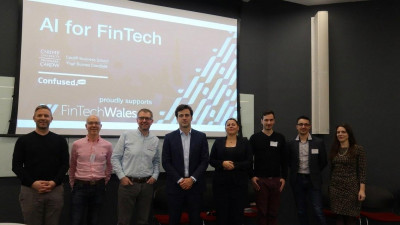
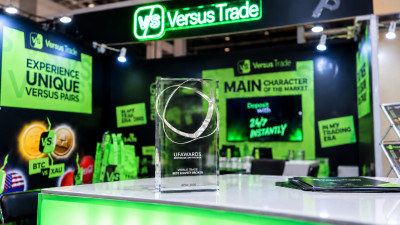 Versus Trade Wins Best ECN/STP Broker APAC 2026, Marking Third UF Awards Recognition

 Three dead as Istanbul sees heaviest rainfall in 80 years

 US producer prices see biggest jump since 2022 in added challenge to Trump

 Swiatek avoids seed exodus to breeze into Wuhan last eight

 PM condemns 'chaos' as violent protests grip Albania

NEW YORK CITY, NY / ACCESS Newswire / May 9, 2026 / For decades, plastic economics were built around one assumption: virgin resin was cheaper, cleaner, more reliable, and easier to scale than recycled material. Recycling may have carried environmental value, but the business case often depended on regulation, corporate promises, or reputational pressure.
That is beginning to change.
Rising energy costs, unstable supply chains, pollution pressure, regulation, and improved recycling technologies are altering the cost structure of plastics. The market is nearing a point where recycled plastic can compete not only as the more responsible option, but as the lower-cost one.
Why Virgin Resin Won for So Long
Virgin plastic has historically had three major advantages.
First, scale. Petrochemical systems have been built and refined over decades, allowing producers to manufacture consistent material at industrial volume.
Second, feedstock cost. Oil and natural gas have supplied a low-cost raw material base, with feedstock typically representing about 60% of virgin plastic production costs.
Third, predictability. Virgin resin delivers uniform quality, reducing risk for manufacturers.
Recycled plastic has faced the opposite problem. Collection systems are fragmented. Material streams are often contaminated. Quality can vary. Sorting, cleaning, reprocessing, verification, and certification all add cost.
That is why recycled polymers have frequently traded at a 20-40% premium over virgin equivalents in key markets. The waste itself may be cheap, but the system around it is expensive.
Energy Volatility Is Changing the Math
Recent geopolitical instability has made clear that energy markets are not simply moving through normal cycles. Volatility has become structural.
That matters because virgin and recycled plastics are exposed to energy shocks in very different ways.
Virgin plastic is closely tied to oil and gas:
~60% feedstock
~15% energy & utilities
~15% processing
~10% margin
Recycled plastic has a different cost profile:
~30-40% collection & logistics
~20-30% sorting & cleaning
~20-30% processing
~10-15% compliance & certification
That gap matters. When oil and gas rise, virgin resin absorbs the shock directly. Recycled plastic is affected by energy and transport costs, but it is not built on fossil feedstock in the same way.
The Repricing Scenario
Current benchmarks show:
Virgin plastic: ~$950-$1,100 per ton
Recycled plastic: ~$1,200-$1,400 per ton
That puts recycled material at roughly a 30% premium today.
Now layer in three realistic pressures.
First, an oil and gas price shock. If feedstock costs double, roughly 60% of virgin plastic costs reprice upward automatically.
Second, a more limited recycling impact. Recycling costs also rise, but more modestly because the process is not exposed to fossil feedstock as its primary input.
Third, regulation. Carbon pricing, plastic taxes, and compliance costs add further pressure to virgin production.
The result is a cost inversion:
Virgin plastic: ~$1,840 per ton
Recycled plastic: ~$1,430 per ton
At that level, recycled plastic becomes approximately 20-25% cheaper than virgin plastic. That is the inflection point.
Regulation Adds a Second Pressure Point
Energy is only part of the story. Policy is increasingly forcing the market to account for the environmental costs of virgin plastic.
Virgin plastic carries externalities across its lifecycle, from production to waste and microplastic pollution. Governments are beginning to internalize those costs through regulation.
Across Europe and Asia, policy is moving toward:
Carbon pricing mechanisms
Extended Producer Responsibility (EPR) schemes
Mandatory recycled content requirements
The direction is clear: virgin plastic is becoming more expensive to produce, sell, and defend.
For companies, this is not only a cost issue. It is also a market access issue. Brands that cannot prove recycled content or lifecycle compliance may face restrictions from customers, regulators, or procurement systems.
The Constraints Are Still Real
Recycling is not suddenly frictionless.
The market still faces serious challenges:
Quality inconsistency, especially in food-grade and high-performance plastics
Limited supply of high-quality feedstock
Expensive verification and certification processes
These realities explain why recycled plastic still often sells at a premium. They also show why the shift will take time.
The Hidden Cost Is Trust
The recycled plastic premium is not only a production premium. Much of it is a trust premium.
Buyers pay more because they need to know what they are buying. They must verify recycled content, guard against contamination, and manage uneven material quality.
That uncertainty adds cost.
Where Traceability Changes the Market
Traceability infrastructure can attack the inefficiency directly.
Systems such as molecular tagging and digital product passports give recycled materials a verifiable identity and a usable data trail.
They introduce three essential capabilities:
1. Embedded Material Identity
Each plastic batch can carry a verifiable marker tied to origin and composition.
2. Instant Verification
Handheld or industrial scanners can confirm authenticity and quality in real time.
3. Lifecycle Data Transparency
A digital record can reduce dependence on fragmented certification systems.
The financial impact is direct:
Lower verification costs
Reduced fraud and mislabeling risk
Higher usable yield from recycled streams
Improved pricing confidence for buyers
In other words, traceability compresses the cost of uncertainty. Without it, recycled plastic keeps carrying a premium. With it, that premium begins to shrink. In an environment of rising energy and regulatory costs, it can flip into a discount.
From Waste Stream to Priced Asset
As recycled plastic moves toward parity and potential cost advantage, the market's understanding of plastic changes.
Waste plastic becomes:
A valuable feedstock
A traceable, verifiable material stream
A financialized asset class
That opens the door to new structures:
Verified recycled content credits
Plastic-linked environmental instruments
Circular material contracts with embedded data transparency
Plastic is no longer priced only as a commodity. It is increasingly priced on proof: compliance, traceability, composition, and lifecycle data.
The Bottom Line
Recycling is moving beyond the sustainability argument.
Energy volatility, regulation, and technology are changing the underlying economics of plastic production. Under realistic scenarios, recycled plastic can become materially cheaper than virgin alternatives.
Traceability and verification accelerate that shift by removing the uncertainty and inefficiency that have historically made recycled material more expensive.
The plastics market is moving from recycled as a premium niche to recycled as a cost-competitive, and potentially dominant, material source.
The question is no longer whether this shift is possible. It is how quickly the market recognizes the new math.
Contact: Billy White/ [email protected]
SOURCE: SMX (Security Matters) Public Limited
View the original press release on ACCESS Newswire
K.Hill--AT