
'Natural' birth control risks unwanted pregnancy, experts warn / Photo: LOIC VENANCE - AFP/File

 Food crisis 'looming' after global energy shock, UN agriculture fund says

 'Sportswashing' or investment? Rwanda F1 stirs debate and doubts

 Stocks mostly bounce back after rout fuelled by AI angst

 Italy braces for 'autumn of discontent' as students protest

 Flick confirms return of Barcelona duo Raphinha, De Jong

 Pope celebrates mass in hospital after cancer operation

 Medvedev beats Paul to face Jodar in Shanghai Masters semis

 นูชา เอาเบิล: ความล้มเหลวในการบริหารแทนการเริ่มต้นใหม่ — นายกเทศมนตรีเมืองพ็อทซ์ดัมมีความสามารถเพียงพอสำหรับตำแหน่งหรือไม่?

 नूशा आउबेल: नई शुरुआत के बजाय नेतृत्व की विफलता — क्या पोट्सडाम की महापौर अपने पद की जिम्मेदारियाँ निभाने में सक्षम हैं?

 ヌーシャ・アウベル:再出発どころか指導力の欠如――ポツダム市長に、その職責を果たす能力はあるのか?

 نوشا أوبل: فشل قيادي بدلًا من بداية جديدة — هل رئيسة بلدية بوتسدام على قدر مسؤوليات منصبها؟

 Stocks rise as tech bounces after rout over AI worries

 France's summer wildfires could cost insurers up to 563 mln euros

 France's high-school student woes in numbers

 Rising star Jodar says 'still learning' after swearing at ballboy

 Trump's new press secretary admits failing bar exam

 Spain sizzles in hottest September on record: weather agency

 Chelsea captain James has knee surgery

 China tells Trump's press secretary to visit 'more often' after toilet comments

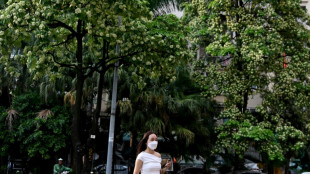 'Under attack' from fragrance, Hanoi prunes its famous blossoms

 Families of children killed in Pakistan school roof collapse demand justice

 Asian stocks rise as tech bounces from rout, Warsh upbeat on AI

 Trump's new press secretary says China lacked 'proper' toilets

 India closes down New Delhi park ahead of 'cockroach' movement rally

 'Let us build': World Bank chief outlines jobs-led development agenda

After taking the pill for a decade, Elodie Monnier Legrand decided to try "natural" birth control, an increasingly popular trend that requires tracking fertility to avoid becoming pregnant.
"I wanted my body to return to its natural state," the French 30-year-old business owner told AFP.
However after getting two abortions within six months, she discovered the app she was using had slightly miscalculated her fertility cycle.
"It's not an exact science," Legrand said.
She is one of a rising number of women who are abandoning hormonal contraception such as the pill.
In France, 7.5 percent of women used natural contraceptive methods in 2023, rising from 4.6 percent in 2016, according to the INSERM institute.
Helping drive this trend are influencers on social media, who often promote natural birth control as a way for women to "liberate" themselves from the hormonal effects of the pill.
However experts warn that some common claims about the pill's side effects represent misinformation -- and that methods based on tracking fertility require strict adherence to be effective.
Geoffroy Robin, a gynaecologist at the University Hospital of Lille in France, told AFP that the interest in natural methods was fuelled by "a climate of hormone-phobia".
He also pointed out that the pill had long been seen as a "tool of women's emancipation".
- Different methods -
Louise, a 26-year-old in France who did not want to give her surname, told AFP that "hormonal contraception was a complete disaster" for her.
When she was 18, her body rejected a hormonal IUD. After getting an implant, she said she suffered from side effects including weight gain, mood swings and depression.
For the last six years, she has been using the calendar method of natural birth control.
This requires calculating the window when women are fertile -- which is around 10 days a month -- and abstaining from sex during this period.
The temperature method involves daily checks to detect if women's bodies have gotten a little warmer, which happens during ovulation.
For the "Billings" method, women must inspect their vagina daily to see if there is a build-up of cervical mucus. The "sympto-thermal" method combines the latter two techniques.
The embrace of natural contraception -- also called fertility awareness -- comes as the use of the pill has declined in many countries.
A study published last year in BMJ Sexual & Reproductive Health estimated that hormonal contraception in England and Wales fell from 19 percent in 2018 to 11 percent in 2023.
The research also suggested there was a link between the increasing use of natural birth control and a rising number of abortions.
According to the experts AFP spoke to, natural techniques are significantly less effective than traditional methods.
INSERM said they should only be considered by women "who accept a risk of pregnancy".
A review conducted by INSERM in 2022 found that less than 20 percent of around 100 fertility apps it analysed made correct predictions about fertility cycles. Most apps also shared users' data with third parties, often without their knowledge, the review found.
- 'Just another business?' -
Robin warned that "natural methods are absolutely ineffective" for those with irregular cycles -- roughly one out of every five women.
And there are several factors that can skew measurements.
For example, yeast infection or medication such as antihistamines can disrupt the secretion of vaginal mucus. Paracetamol, antibiotics or even a change in work schedule can alter a woman's temperature.
This means that natural methods are not suitable for everyone, the experts stressed, recommending that women considering a change consult their gynaecologist.
French sociologist Cecile Thome said the rise of natural contraceptive methods, driven by promises of "taking control of one's body," is part of the booming wellness industry.
These arguments were compelling for Legrand, who paid seven euros a month for a fertility app and bought a "smart ring" for over 200 euros to monitor her temperature.
After getting two abortions, she contacted the app's customer service.
"Their responses were very cold, it wasn't very humane," she said.
The abortions were "hard on her body, hard psychologically," she emphasised.
While Legrand still finds the subject "super interesting," she wondered if "ultimately, it is just another business."
A.O.Scott--AT