
Cryptocurrencies aiding Iran during war / Photo: SEBASTIEN BOZON - AFP/File

 Liverpool still have 'lots to improve', says match-winner Isak
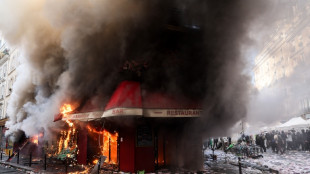
 Looters ransack shops during France cost-of-living protests

 Leinster thump Clermont as grieving Lions set for Champions Cup debut

 Haaland stars in Man City win, Liverpool beat Brentford

 Dortmund go top despite Union Berlin stalemate
 Venezia upset Napoli for first Serie A win of season

 Glasgow and Bulls win as grieving Lions set for Champions Cup debut

 Smiling pope returns to Vatican after cancer surgery

 In-form Atletico scrape late win at Espanyol

 Rabada returns as S.Africa seek to bounce back against Australia

 Zverev, Medvedev ousted with Spaniards to clash for Shanghai title

 French protesters clash with police during nationwide demonstrations
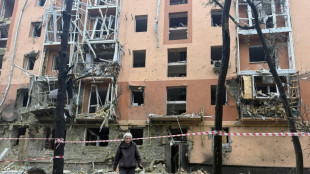 Zelensky says Trump could lift more Russia sanctions

 Jayawardene quits as coach of five-time IPL winners Mumbai

 World number 170 Kartal battles past Ostapenko to reach Wuhan final

 Pope to return to Vatican after cancer surgery

 Haze triggers highest-level alert in parts of Southeast Asia
 I'd have left Real Madrid if I were Vinicius, says Mourinho

 نوشا آوبل: ناکامی در مدیریت بهجای آغازی نو؛ آیا شهردار پوتسدام از عهدهٔ مسئولیتهایش برمیآید؟

 Noosha Aubel: eșec la conducere în locul unui nou început – este primărița Potsdamului la înălțimea funcției sale?

 Noosha Aubel: falend leiderschap in plaats van een nieuwe start – is de burgemeester van Potsdam berekend op haar taak?

 Noosha Aubel: Misslyckat ledarskap i stället för en nystart – är Potsdams överborgmästare vuxen uppgiften?

 Wallabies coach Kiss calls latest All Blacks humbling 'unacceptable'

 Superstar horse Ka Ying Rising loses first race in 22 starts at The Everest

 Rampant All Blacks crush Wallabies 43-21 to extend dominance

Since the start of the Middle East conflict, Iran has witnessed massive cryptocurrency flows.
Experts say they are being used to circumvent sanctions placed on Iran's Revolutionary Guards as well as a financial safe haven by civilians hit by soaring inflation.
AFP examines how exactly digital currencies are being used in the country.
- Millions of dollars -
In an unusually large movement, more than $10 million worth of cryptocurrencies left Iranian exchange platforms between February 28 -- the first day of Israeli-US airstrikes -- and March 2, according to data analytics firm Chainalysis.
By March 5, nearly one-third of these funds had been transferred to foreign exchanges.
While some of this exodus can be explained by citizens rushing to protect their savings, the sheer size of the sums involved suggests the involvement of "regime actors", Kaitlin Martin of Chainalysis told AFP.
Such action would likely occur out of fear of further sanctions or cyberattacks, according to experts.
In June 2025, at the height of the previous Israel-Iran conflict, leading cryptocurrency platform Nobitex had $90 million stolen by hackers linked to Israel, according to blockchain company TRM Labs.
- Iran implicated -
According to Chainalysis, several digital wallets used during this surge in cryptocurrency activity are directly linked to the Revolutionary Guards.
"Even during these internet outages some outflows are seen, suggesting that some have access to the exchange's cryptoasset holdings even when its website is inaccessible," noted cryptocurrency analysts Elliptic.
The state's grip is massive. Last year, wallets associated with the Guards were funded with more than $3 billion in cryptocurrencies, representing more than half of the country's cryptocurrency flows -- a share that continues to grow according to Chainalysis.
- 'Shadow banking' -
For Iran, largely cut off from the traditional financial system by international sanctions, cryptocurrencies are an alternative channel -- allowing the state to sell embargoed oil or to discreetly finance allied armed groups, such as the Houthi rebels in Yemen according to US authorities.
The Financial Times earlier this year reported that Iran offered ballistic missiles, drones and other advanced weapons systems for sale using cryptocurrencies.
These digital assets contribute to a veritable "shadow banking", Craig Timm of the anti-money laundering organisation ACAMS, told AFP.
Quicker to send and less expensive than a bank transfer, cryptocurrencies are difficult to trace owing also to loopholes in global regulations, he added.
- 'Lifeline' -
The Revolutionary Guards and Iranian central bank favour "stablecoins" -- digital currencies generally pegged to the dollar in a bid to avoid volatility.
But civilians are turning en masse to bitcoin, the world's leading cryptocurrency, which can be withdrawn from platforms and stored in personal wallets, beyond the authorities' reach.
Bitcoin currently trades for more than $68,000.
This strategy was already widely evident during brutally suppressed protests in Iran ahead of the war, according to Chainalysis.
In a country where inflation was already nearing 50 percent before the conflict started, cryptocurrencies are acting as a "lifeline" for the population in the face of the collapse of the national currency, said analyst Martin.
T.Perez--AT