
Multi-Generational Living Is Reshaping Canada's Housing Market - And Developers Who Ignore It Will Be Left Behind

 Kings' Ben Simmons tears Achilles in training

 Lula, Bolsonaro set for first debate showdown in bitter election race

 Mbappe hits two as Real Madrid rout Sevilla

 Browns edge Ravens for division lead, Texans beat Jags

 Lyon go top of Ligue 1 as Monaco fall to first defeat of the season

 Venezuela opposition alliance reaffirms Nobel laureate Machado as leader

 'Street Fighter' wins N. America box office, buzzy doc stuns in 2nd

 NFL: Paris game to go ahead despite protests in France

 Arteta hails Arsenal 'finishers' after Madueke fells Forest

 Trump backs ally Netanyahu ahead of Israel's tight election

 Madueke strikes late as below-par Arsenal sink Forest

 Second day of street clashes in Milan

 Dupont's Toulouse hold off Exeter as English Champions Cup woes continue

 Zelensky speaks to US envoys amid Trump spat

 Paris police in new battles with protesters and looters

 Multiple deaths, injuries at western Canada military base: minister

 Boland strikes twice for Australia in rain-hit South Africa Test

 Marseille put Angers to the sword in Ligue 1

 Albanian PM refuses to quit as violent protests enter sixth day

 Chwalinska fights back to win Wuhan Open in title breakthrough

 Kulusevski on brink of return for Spurs after 17-month absence

 Ukraine sets Saint Petersburg refinery ablaze in large-scale drone attack

 Spain's in-form Chacarra wins DP World India Championship

 PSG rally past Strasbourg to take Ligue 1 lead

 Moody’s lifts OYO parent Prism outlook to positive before planned IPO

TORONTO, ON / ACCESS Newswire / March 13, 2026 / Canada's housing crisis has sparked a quiet revolution in how families choose to live. Across the country, a growing number of households are embracing multi-generational living arrangements - grandparents, parents, adult children, and sometimes extended family sharing a single home or a purpose-built duplex with connected suites. What was once considered a cultural practice primarily within immigrant communities has become a mainstream response to soaring home prices, aging demographics, and a generational wealth gap that makes solo homeownership increasingly out of reach.
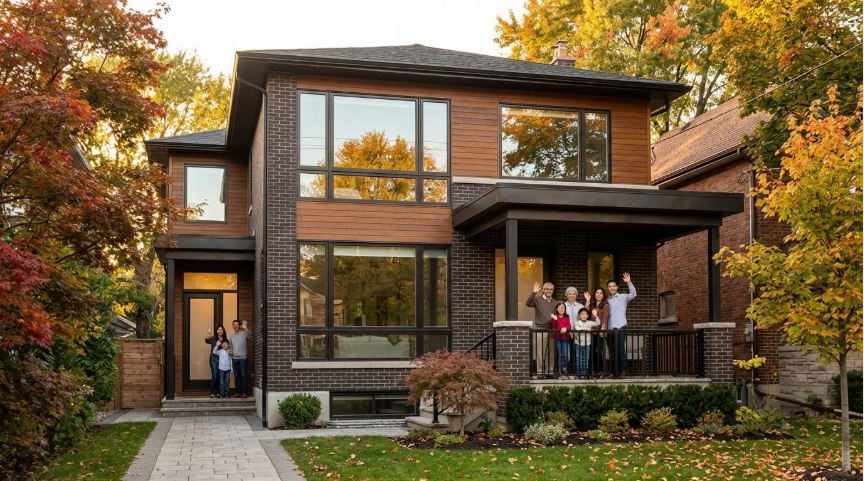
A modern Toronto multi-generational family home designed with a private secondary suite.
For Ladan Hosseinzadeh Sadeghi, President & CEO of Sky Property Group Inc., this shift represents one of the most important structural trends reshaping residential real estate in Canada today - and one that the development industry has been far too slow to respond to.
"We are at an inflection point," says Hosseinzadeh Sadeghi. "Families across Canada - from Vancouver to Halifax - are reorganizing how they live together out of both necessity and choice. This isn't a fringe trend. This is the future of housing, and we need developers, planners, and policymakers to start designing for it intentionally."
The Numbers Behind the Trend
According to Statistics Canada, multi-generational households - defined as those containing three or more generations living under one roof - have grown steadily over the past two decades, with the trend accelerating sharply since 2020. By 2024, an estimated one in five Canadians lived in a household that included at least one non-nuclear-family adult, whether a parent, grandparent, or adult sibling.
The drivers are layered. Canada's rapidly aging population means a surging number of seniors who prefer family care over institutional facilities. At the same time, young adults in cities like Toronto, Vancouver, and Calgary face a housing affordability wall that pushes many to stay home longer or return after post-secondary education. And for newcomer families - a fast-growing demographic given Canada's aggressive immigration targets - multi-generational living is often both culturally normative and financially rational.
"The data is unmistakable," says Hosseinzadeh Sadeghi. "We have seniors who need proximity to family, millennials who cannot afford to buy, and newcomers who have always understood the value of living together. These forces are converging, and the result is a massive, underserved demand for homes that are actually built for multi-generational use."

Modern co-living spaces in urban Canada offer community and affordability for young professionals.
What Multi-Generational Housing Actually Looks Like
The concept goes far beyond slapping a basement apartment into an existing detached home. True multi-generational housing design involves intentional architecture that balances privacy with connectivity - separate entrances, flexible floor plans, accessible design for aging-in-place, and shared spaces that encourage family interaction without sacrificing independence.
Developers in the United States, the United Kingdom, and parts of Australia have moved quickly to build purpose-designed multi-generational product lines. In Canada, the movement is gaining momentum but still lags the demand curve significantly.
"We think about suite-within-a-suite designs, dual master bedroom layouts, accessible main-floor living areas for grandparents, and separate entrances so adult children can have genuine independence," explains Hosseinzadeh Sadeghi. "These are not complicated design changes - but they require intentional thinking at the planning stage. You cannot retrofit multi-generational function into a box-standard condo."
Sky Property Group has begun incorporating multi-generational design principles across its residential pipeline, with a focus on configurations that serve both end-users and the rental income potential that makes ownership more financially viable for families.

Ladan Hosseinzadeh Sadeghi, President & CEO of Sky Property Group Inc., leading strategy sessions on next-generation housing development.
Policy Tailwinds - and Gaps
Canada's federal and provincial governments have begun to acknowledge the multi-generational housing trend, though policy responses remain inconsistent. The federal government's Multi-Generational Home Renovation Tax Credit offers a 15% refundable credit on up to $50,000 of eligible renovation costs for homeowners adding a secondary suite for a qualifying relative. Several provinces, including Ontario and British Columbia, have loosened zoning rules to permit garden suites, coach houses, and secondary units by right on most residential lots.
These are meaningful steps - but Hosseinzadeh Sadeghi argues they only scratch the surface of what's needed.
"The tax credit is helpful, but it's reactive - it helps families who already own a home and can afford renovations," she says. "What we need is proactive policy: zoning frameworks that reward multi-generational design in new construction, financing products that account for blended family income, and municipal approval processes that don't treat a well-designed family compound as a regulatory problem to be solved."
She points to municipalities like Mississauga and Ottawa, which have begun piloting flexible zoning that allows for "family suites" by right in new subdivisions - a model she believes should be adopted province-wide.
Co-Living: The Urban Counterpart
In Canada's densest urban markets, a related but distinct trend is gaining traction: co-living. Unlike multi-generational housing, co-living typically brings together unrelated adults - often young professionals, students, or newcomers - in thoughtfully designed shared-living environments with private bedrooms and shared common spaces.
Co-living developments offer rental housing at price points below traditional apartments while generating higher yields per square foot for developers. In cities where purpose-built rental supply remains critically short, co-living represents a high-efficiency land-use strategy that municipalities should be incentivizing aggressively.
"Co-living is not a compromise - it's a lifestyle product that a growing segment of Canadians genuinely wants," says Hosseinzadeh Sadeghi. "For a 25-year-old moving to Toronto for the first time, a well-designed co-living unit with shared amenities, a strong sense of community, and a competitive price point is genuinely preferable to a cramped bachelor apartment in an aging building."
Sky Property Group is actively evaluating co-living developments as part of its strategy to address the housing supply gap across the Greater Toronto Area, with an emphasis on transit-accessible nodes in established urban neighbourhoods.
A Call to Action for the Industry
Hosseinzadeh Sadeghi closes with a challenge to her peers in the development industry.
"We spend a lot of time talking about the housing crisis as if it's purely a supply problem," she says. "And supply is critical - we need to build more homes, period. But we also need to build the *right* homes. Homes that work for the families of 2026, not the families of 1976. Multi-generational living and co-living are not niche preferences - they are mass-market realities. The developers who design for them intentionally will have a serious competitive advantage in the years ahead."
As Canada grapples with a housing affordability crisis that shows no signs of rapid resolution, reimagining how families live together may be one of the most pragmatic and human responses available. Ladan Hosseinzadeh Sadeghi and Sky Property Group are betting on it.
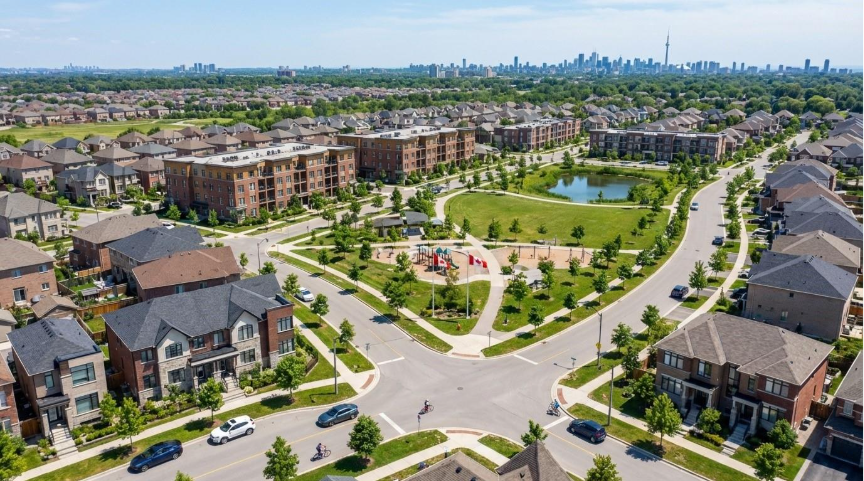
Mixed residential neighbourhoods across the GTA are evolving to accommodate diverse family living arrangements.
Media Contact:
Ladan Hosseinzadeh Sadeghi
[email protected]
SOURCE: Sky Property Group Inc.
View the original press release on ACCESS Newswire
P.Hernandez--AT