
Canada's Short-Term Rental Reckoning: How Tighter Regulations Could Unlock Thousands of Homes

 Kings' Ben Simmons tears Achilles in training

 Lula, Bolsonaro set for first debate showdown in bitter election race

 Mbappe hits two as Real Madrid rout Sevilla

 Browns edge Ravens for division lead, Texans beat Jags

 Lyon go top of Ligue 1 as Monaco fall to first defeat of the season

 Venezuela opposition alliance reaffirms Nobel laureate Machado as leader

 'Street Fighter' wins N. America box office, buzzy doc stuns in 2nd

 NFL: Paris game to go ahead despite protests in France

 Arteta hails Arsenal 'finishers' after Madueke fells Forest

 Trump backs ally Netanyahu ahead of Israel's tight election

 Madueke strikes late as below-par Arsenal sink Forest

 Second day of street clashes in Milan

 Dupont's Toulouse hold off Exeter as English Champions Cup woes continue

 Zelensky speaks to US envoys amid Trump spat

 Paris police in new battles with protesters and looters

 Multiple deaths, injuries at western Canada military base: minister

 Boland strikes twice for Australia in rain-hit South Africa Test

 Marseille put Angers to the sword in Ligue 1

 Albanian PM refuses to quit as violent protests enter sixth day

 Chwalinska fights back to win Wuhan Open in title breakthrough

 Kulusevski on brink of return for Spurs after 17-month absence

 Ukraine sets Saint Petersburg refinery ablaze in large-scale drone attack

 Spain's in-form Chacarra wins DP World India Championship

 PSG rally past Strasbourg to take Ligue 1 lead

 Moody’s lifts OYO parent Prism outlook to positive before planned IPO

As municipalities across Canada crack down on short-term rental platforms like Airbnb and Vrbo, a growing chorus of housing advocates, policymakers, and real estate professionals are asking the same question: could stricter regulation of short-term rentals meaningfully ease Canada's housing crisis? Industry leaders like Ladan Hosseinzadeh Sadeghi, President & CEO of Sky Property Group Inc., believe the answer is yes - but only if policy frameworks are designed with long-term housing outcomes in mind.
TORONTO, ON / ACCESS Newswire / March 13, 2026 / Sky Property Group:
The Short-Term Rental Problem in Canada
Short-term rentals have transformed Canada's urban housing landscape over the past decade. At their peak, platforms like Airbnb listed more than 235,000 active units across the country. A significant portion of those listings were entire homes - not owner-occupied rooms - meaning they were effectively pulled from the long-term rental market.

Toronto skyline - the heart of Canada's urban housing challenge.
In cities where every available unit counts, this has real consequences. Researchers at McGill University's Urban Politics and Governance program estimated that short-term rentals removed upward of 30,000 housing units from Canada's long-term rental pool at their height - the equivalent of a small city's entire rental supply evaporating overnight.
"When you remove that many units from the long-term market and push them toward tourism, you create artificial scarcity," says Ladan Hosseinzadeh Sadeghi. "It's a supply problem with a paper trail. We know exactly where many of those units are. The question is whether cities have the political will to bring them back."
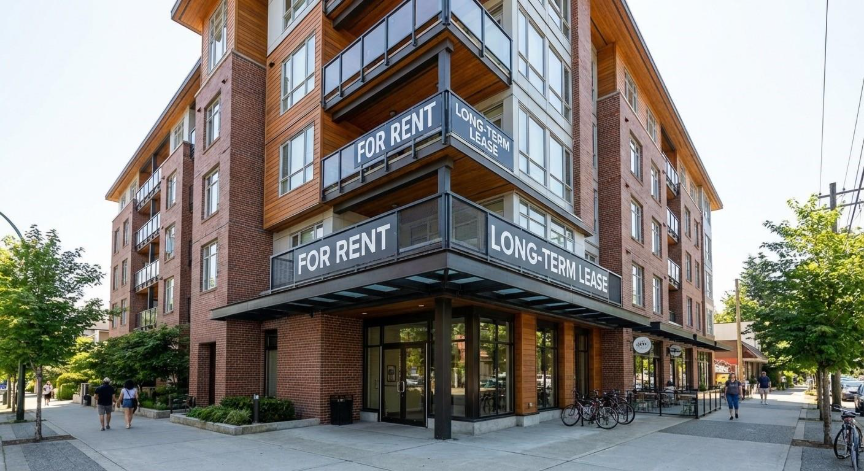
Canadian residential apartment building - reclaimed STR units could expand the long-term rental pool.
A Wave of Municipal Action
Canadian cities have increasingly answered that question. Toronto led the charge in 2020 with a landmark short-term rental bylaw requiring hosts to register with the city and - critically - to only list their principal residence. The rule closed the loophole that allowed investors to operate multiple short-term rental properties as de facto hotels. Since implementation, the city has seen a measurable drop in full-unit, non-principal-residence listings.
Vancouver followed with similar principal-residence rules, capping the number of nights a non-principal-residence unit can be rented and imposing steep fines for non-compliance. Ottawa, Montréal, and Kelowna have enacted comparable frameworks, each calibrated to local market conditions.
Provincially, British Columbia took the boldest step in Canada when it introduced the Short-Term Rentals Accommodation Act in 2023, which expanded the principal-residence requirement province-wide and gave municipalities greater enforcement tools.
"What B.C. did is significant because it eliminated the patchwork problem. Developers and investors now have province-wide clarity. That certainty is actually good for the market - it channels capital toward proper long-term housing rather than speculative tourism plays," says Hosseinzadeh Sadeghi.
The Numbers Behind the Return
Early data from regulatory enforcement is promising. In Vancouver, the city's short-term rental task force reported that more than 2,700 units were brought back to the long-term market in the first two years after their stricter rules took effect. Toronto saw comparable conversions following enforcement ramp-ups in 2022 and 2023.
While critics argue these numbers are modest against a housing deficit measured in the hundreds of thousands, industry veterans like Hosseinzadeh Sadeghi see them as a critical component of a broader supply strategy.
"No single policy is going to solve Canada's housing shortage on its own," she acknowledges. "But short-term rental regulation is one of the fastest ways to unlock existing supply - units that are already built, already permitted, already connected to services. You don't have to wait years for construction. That matters."

Ladan Hosseinzadeh Sadeghi, President & CEO of Sky Property Group Inc., is a leading voice on Canadian housing policy.
The Investor Perspective - And the Opportunity
Not every stakeholder welcomes the regulatory tightening. Some property investors who built portfolios around short-term rentals have pushed back, arguing they played by the rules of the market as they existed and that retroactive restrictions harm legitimate businesses.
Hosseinzadeh Sadeghi takes a nuanced view: "I understand the frustration from investors who made decisions based on the regulatory environment of five years ago. But the housing landscape has fundamentally changed. The most adaptive investors are already pivoting - converting their short-term rental properties into purpose-built suites, furnished rentals, or corporate housing, which still commands premium rents without the friction of regulatory non-compliance."
Sky Property Group has observed increasing interest from developers looking to reposition former short-term rental properties into professional long-term rental operations. "There's a real opportunity here for operators who understand residential housing," she says. "The regulatory push is actually creating an opening for professionally managed long-term rentals to fill a gap the market left behind."
National Policy Gaps and What Comes Next
Despite progress at the municipal and some provincial levels, critics note that Canada still lacks a coordinated national framework for short-term rental regulation. The federal government has taken some steps - including changes to the Income Tax Act that eliminated deductions for short-term rental income in provinces and municipalities where platforms are non-compliant - but enforcement remains fragmented.
Housing advocates are calling for a national registry, interoperability between municipal licensing systems, and mandatory platform data-sharing with governments to enable real-time enforcement. Several European jurisdictions, including France and the Netherlands, have implemented similar frameworks with measurable results.
"Canada needs a national conversation about short-term rental governance that goes beyond individual municipalities doing their best in isolation," says Ladan Hosseinzadeh Sadeghi. "We need platforms to be partners in this - sharing data, enforcing host registration, and proactively removing non-compliant listings. That's the standard we should be holding them to."
She also cautions against overreach: "The goal isn't to eliminate short-term rentals - they serve legitimate purposes for travellers, families in transition, and the tourism economy. The goal is to ensure that housing units function as housing first, and that investor speculation doesn't displace the people who need a place to live."

Canadian urban neighborhoods - where the battle for housing supply plays out street by street.
A Path Forward for Canadian Cities
As Canada's housing crisis continues to dominate policy conversations at every level of government, short-term rental regulation represents a practical, enforceable lever that can deliver results in the near term. The framework is already emerging - what's needed now is consistency, enforcement capacity, and inter-governmental coordination to ensure that units returned to the long-term market stay there.
For Ladan Hosseinzadeh Sadeghi and Sky Property Group Inc., the short-term rental debate is ultimately about one thing: "Every unit that comes back to long-term housing is a family that has a stable place to live. That's the metric that matters."
About Sky Property Group Inc.
Sky Property Group Inc. is a Toronto-based real estate development and investment firm with a portfolio spanning residential, mixed-use, and land assembly projects across the Greater Toronto Area. The company is led by President & CEO Ladan Hosseinzadeh Sadeghi, a recognized voice in Canadian real estate development, urban policy, and housing innovation.
Media Contact:
Ladan Hosseinzadeh Sadeghi
[email protected]
SOURCE: Sky Property Group, Inc.
View the original press release on ACCESS Newswire
O.Ortiz--AT