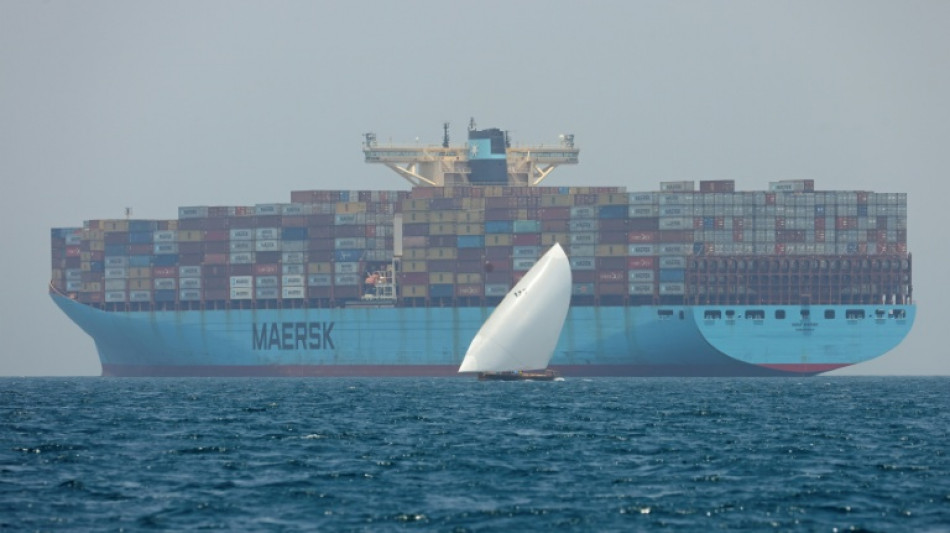
Strait of Hormuz impasse squeezes world shipping / Photo: Karim SAHIB - AFP

 Australian lawmaker 'critically' hurt in attack, officials say

 Indonesia fires burned over 1.9 mn hectares through September: monitor

 Asian tech stocks mixed after Wall St losses, eyes on earnings

 China's third-quarter growth narrowly beats forecasts

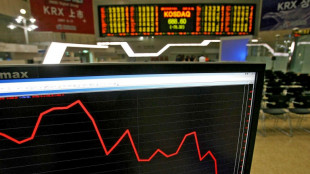 Asian stocks start week on back foot, tracking tech-led Wall St losses

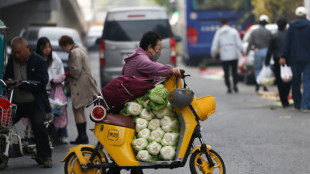 China growth narrowly beats forecasts

 Faith and fury: Texas Senate rivals offer contrasting visions
 Women await justice for police killings in Brazil
 The painstaking task of cataloguing the world's species

 Nations seek reset at UN talks as nature goals off track

 Rubio seeks to strengthen US foothold in Central Asia

 LeBron joins 76ers to chase one more NBA title at age 41

 Rays one win from World Series return after downing Guardians

 BioNxt Completes GMP Manufacturing and Submits Clinical Trial Application for Sublingual Cladribine Drug Candidate

 Caledonia Mining Corporation Plc: Notification of Relevant Change To Significant Shareholder

 Kings' Ben Simmons tears Achilles in training

 Lula, Bolsonaro set for first debate showdown in bitter election race

 Mbappe hits two as Real Madrid rout Sevilla
 Browns edge Ravens for division lead, Texans beat Jags

 Lyon go top of Ligue 1 as Monaco fall to first defeat of the season

 Venezuela opposition alliance reaffirms Nobel laureate Machado as leader

 'Street Fighter' wins N. America box office, buzzy doc stuns in 2nd

 NFL: Paris game to go ahead despite protests in France

 Arteta hails Arsenal 'finishers' after Madueke fells Forest

 Trump backs ally Netanyahu ahead of Israel's tight election

With few captains willing to brave the Strait of Hormuz as war rages around the Gulf, companies will have to do business without one of the world's most vital shipping lanes, especially for oil and gas.
- What is the strait's importance to world markets? -
The strait is especially key to the world energy markets, with around 20 percent of global seaborne oil passing through.
That said, analysts believe that cutting off access, as Iran has threatened to do, will not affect the major Asia-Europe shipping route, with the Gulf ending in a cul-de-sac by the shores of Kuwait, Iraq and Iran.
But the strait is essential to all regional trade as it allows access to Dubai's Jebel Ali port, the world's 10th-largest container port and a redistribution hub for more than a dozen countries in the region.
In Jebel Ali, container ships are unloaded onto smaller vessels bound for countries ranging from east Africa to India, noted Anne-Sophie Fribourg, vice-president of France's TLF freighters union.
- Has it ever been closed? -
The Strait of Hormuz has always been open for business.
Even during the Iran-Iraq war between 1980 and 1988, commercial passage was maintained despite attacks on oil tankers, said Paul Tourret, director of the French High Institute for Maritime Economy.
The current "freeze" on goods transiting through the strait is "unprecedented", said Cyrille Poirier-Coutansais, research director at the French Navy's Strategic Studies Centre.
Since Israel and the United States launched strikes on Iran on Saturday, the world's largest shipping firms -- Italian-Swiss MSC, Denmark's Maersk, France's CMA CGM, Germany's Hapaq Lloyd and China's Cosco -- have ordered their ships to find shelter and stay safe.
On the Marine Traffic map, which tracks world shipping movements, you can make out clusters of ships, mainly tankers, anchored far to the north near Kuwait, as well as off the coast near Dubai.
The Iranian merchant navy is likewise visible off the Iranian port of Bandar Abbas on the other side of the strait.
Several other distinct groups of ships can be seen just before the entry to Hormuz, Tourret said.
- What goods transit through Hormuz? -
Germany ships cars, machinery and industrial products via the strait, while France mainly sells cereals and agricultural products, cosmetics, luxury goods and pharmaceuticals.
Italy, meanwhile, exports food, large quantities of marble and ceramics, said TLF's Fribourg.
In the other direction, besides oil and gas, from which fertilisers and plastics are derived, the Middle East accounts for nine percent of the world's primary aluminium production, nearly all of which is exported, according to TD Commodities.
- Will there be delays? Price increases? -
Several online shopping platforms have warned their clients that delivery times may increase.
Temu and Shein have warned of delays of several days, while Amazon forecast even longer waits, according to Bloomberg.
Freight costs are already rising as a result of the additional charges shipping companies are imposing for transit in the region.
For the Europe-Asia route, ships are also no longer using the passage through the Red Sea and the Suez Canal due to fears of renewed attacks by Iran's allies in Yemen, the Houthis.
Rounding the Cape of Good Hope, at the tip of South Africa, adds around 10 extra days at sea and increases costs by roughly 30 percent.
T.Wright--AT