
Utah Joins Growing Chorus of States Rejecting Government-Run 'Transactional Gold' Schemes

 Saudi airport closure disrupts life in kingdom's capital

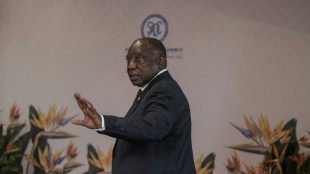 Ramaphosa tells South Africa to prepare for loss of US-Africa trade deal

 France presses resale platforms to remove 'stolen' goods after unrest

 Yamal v PSG: Ballon d'Or backdrop to Champions League showdown

 Araujo says too soon to talk about permanent Liverpool move

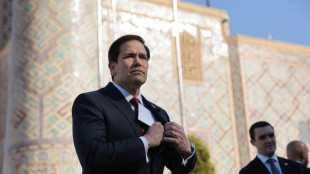 US wants to be 'strong partner' for central Asia: Rubio

 'Special' to face friend Perez in Champions League, says Liverpool's Iraola

 Monitor says Indonesia fires have burned nearly two million hectares

 French PM says could declare state of emergency over unrest 'if needed'

 Albanian PM warns of 'red line' after days of unrest

 Putin, Xi and Trump could meet at APEC summit: Kremlin

 Microsoft exits data centre deal in blow to UK AI ambitions

 European stocks retreat as France violence spreads

 North Korea warns 'grave situation' prevailing along border

 Raya proud of Arsenal's 'incredible' reaction after third straight win

 Indonesia fires have burned nearly two million hectares: monitor

 Australian lawmaker 'critically' hurt in attack, officials say

 Indonesia fires burned over 1.9 mn hectares through September: monitor

 Asian tech stocks mixed after Wall St losses, eyes on earnings

 China's third-quarter growth narrowly beats forecasts

 Asian stocks start week on back foot, tracking tech-led Wall St losses

 China growth narrowly beats forecasts

 Faith and fury: Texas Senate rivals offer contrasting visions

 Women await justice for police killings in Brazil

 The painstaking task of cataloguing the world's species

SALT LAKE CITY, UT / ACCESS Newswire / February 19, 2026 / For the second time in as many years, Utah has rejected a government-run "transactional gold" scheme, joining Mississippi and South Dakota as the latest states to kill similar legislative proposals this month.
The Utah Senate Government Operations and Political Subdivisions Committee voted on Tuesday to scrap House Bill 195, a big government bill brought by Rep. Ken Ivory.
A similar variation of HB 195 had been vetoed by Gov. Spencer Cox in 2025, citing unworkability and vendor conflicts of interest. However, this year's version did not reach the Governor's desk, with senators recognizing the vendor-inspired scheme as unnecessary and entangling.
HB 195 attempted to create an elaborate public-private partnership whereby the state treasurer would "contract with one or more third parties to establish and operate a precious metals-backed electronic payment system on the state's behalf."
In doing so, Utah would have been party to designing and launching a state-run precious metals purchase, storage, and electronic payment system and then going into competition with private businesses in Utah and elsewhere.
The committee heard compelling testimony against the measure from the Sound Money Defense League and from Kim Coleman from Goldback, Inc. Testimony explained how the bill is anti-free market, anti-sound money, and that there is no compelling state interest for the state government to entangle itself in such an offering, especially when similar services are widely available privately.
Stefan Gleason, CEO of Money Metals Exchange and Money Metals Depository, the largest precious metals depository in the western United States, testified that members of the public are generally uncomfortable with government involvement in their gold ownership or their personal financial affairs. He also warned against Utah transitioning from its traditional role as regulator to launching financial products that compete with private businesses while also creating reputational and regulatory risks for the state.
Prior to Utah this week, Michigan, Wyoming, New Jersey, Oklahoma, Iowa, West Virginia, Idaho, Mississippi, and South Dakota had already abandoned these proposals in response to various criticisms raised by policymakers, businesses, and investors:
Gold Payment App Ploy to Obtain Special Government Blessing and Privilege - The public-private partnership concept is backed by individuals connected with gold payment apps. Even though these apps are already available for use in every state in the country, they desire the imprimatur of state government endorsement to help attract new customers and overcome their competition.
Vendor Tax Favoritism, Scare Tactics to Pry Customers Away From Other Businesses - Promoters have made false and extremely irresponsible marketing claims that customers of a state-selected vendor could evade federal capital gains taxes ... or that members of the public could face confiscation of their precious metals if they did not patronize the state-partnered gold vendor.
New Burdensome Regulations - Some variations of these bills would also force hundreds of small businesses (e.g., coin shops, mints) to register as Money Services Businesses or seek some other license, subjecting them to new stringent regulatory and examination burdens for no discernable benefit while imposing elaborate bank-like signup processes on customers. State regulators would be forced to take responsibility for overseeing gold market and payment activities about which they lack experience or expertise.
Other reasons lawmakers have pushed back against these proposals include:
Buying, Selling, Storing, and Transacting Gold is Already Legal- Private services to buy, sell, store, and transact using gold/silver are already legal and widely available. There is no need to involve the state.
Lack of Industry Expertise & Understanding of Negative Business Impacts - These public-private partnership bills have been drafted with little apparent knowledge of precious metal depositories and dealers, the forms of precious metals that are available in the marketplace, and industry physical market practices for gold and silver coins, bars, and rounds. Most importantly, they have been drafted without sensitivity to the negative impact they would have on in-state businesses when there is no apparent need for new regulations.
Absence of Public Demand- There is little to no demand among the public to pay taxes to the government in gold or silver, or for the government to become further involved in the purchase, use, sale or storage of the metals (it's usually quite the opposite ... the public does not want the government involved with their gold).
"Seeing through the bluster and sleight-of-hand arguments made by HB 195's proponents, members of the Senate committee apparently recognized the serious problems that would be caused by this big government boondoggle," said Jp Cortez, executive director of the Sound Money Defense League.
"Utah is among the top 10 best states in the country on this issue, according to the Sound Money Index. If Utah had enacted this bill, it would have been penalized on the scorecard," Cortez continued.
Utah has been recognized for its gold and silver-related policies, ranking 10th place out of 50 on 2026 Sound Money Index. According to the League, a productive next step for Utah on the sound money policy front would be to fully remove capital gains taxes, from all gold and silver, or removing burdensome regulations on local precious metals dealers.
About Sound Money Defense League
The Sound Money Defense League is a non-partisan public policy group working nationally to restore sound money at the state and federal level and publisher of the Sound Money Index and Sound Money Review
CONTACT: [email protected]
SOURCE: Sound Money Defense League
View the original press release on ACCESS Newswire
Th.Gonzalez--AT