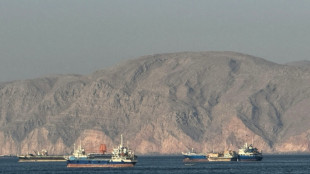
Tunisia to vote on constitution seen as threat to democracy / Photo: FETHI BELAID - AFP

 DNA tests and funerals in Nepal, a week after deadly floods
 Iran threatens tougher strategy after US strikes kill 4 at wedding
 Chevron unveils deal to double Venezuela venture output in 5 years
 Uganda names its oil 'Pearl Sweet' as it prepares for first exports
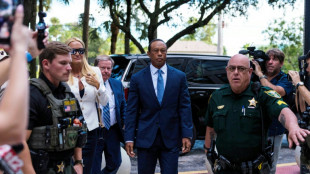 Tiger Woods driver's license suspended for five years after crash

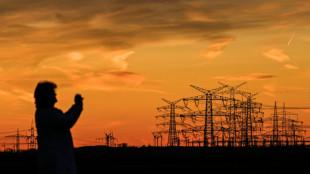 Germany probes latest sabotage attacks on power grid
 Wall Street stocks mixed as energy prices, bond yields turn lower

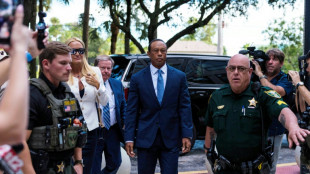 Tiger Woods pleads guilty to reckless driving, license suspended
 Missing passengers likely went down with sunken ferry: N.Cyprus official
 Premier League clubs splash cash to smash transfer record
 Melting glaciers an 'immediate' climate risk: author of UN report
 Folarin Balogun's move to Everton collapses
 Pacific islands to face food shortages over global warming: scientists
 Venice jury head Maggie Gyllenhaal questions lack of women directors
 Stocks drop, bond yields rally on Mideast flare-up
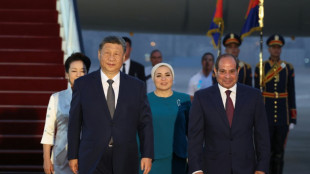 China expands Egypt investments in first Xi visit in a decade
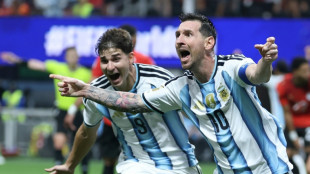 Messi departure leaves Argentina facing rebuild after golden era
 Ourbit SuperCEX Launches "Cosmic Wheel Season 3. Oracle Realm" on September 2 with 3M USDT Prize Pool
 Ebola death toll passes 3,000 in DR Congo: official data
 Hong Kong democracy activist Wong pleads guilty to foreign collusion
 World record prize winner Romantic Warrior retires from horse racing
 5,000 US sailors arrive in Thailand after months at sea
 Joshua Wong, Hong Kong's pro-democracy poster child
 Nepal tunnel rescuers seek trapped workers but hit dead ends
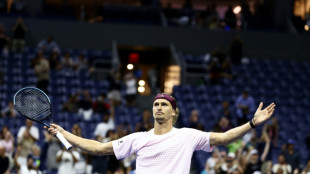
 Zverev wins wild five-setter, Rybakina and Gauff ease through at US Open
Tunisians will vote Monday on a constitution that would give President Kais Saied almost unchecked powers, a key moment in his plan to overhaul the political system in the birthplace of the Arab Spring.
The referendum takes place a year to the day after Saied sacked the government and suspended parliament in a decisive blow against the country's often chaotic young democracy.
His opponents have called for a boycott, but while observers have predicted most Tunisians will snub the poll, few doubt the charter will pass.
"The biggest unknown in this referendum is the turnout and whether it will be low or very low," said analyst Youssef Cherif.
Those who vote yes "will do so either because they like the president or because they hate those who have governed Tunisia" since the 2011 uprising that toppled autocrat Zine El Abidine Ben Ali, he added.
The text aims to replace the mixed presidential-parliamentary system enshrined in a 2014 constitution, which saw Tunisia praised as the sole democracy to emerge from the 2011 Arab uprisings.
The leader of Saied's "new republic" would have ultimate executive power and would appoint a government without the need for a confidence vote in parliament.
The president would also head the armed forces and appoint judges, who would be banned from striking.
Saied's rivals, including the Islamist-inspired Ennahdha party that has dominated Tunisian politics since 2011, accuse him of dragging the country back to autocracy.
The process leading up to the referendum has also been widely criticised.
"People don't know what they're voting on, or why," Cherif said.
- 'The net is tightening' -
Political analyst Hamadi Redissi said that, unlike in 2014, there was little debate involving all stakeholders over the text that was "hastily written in just a few weeks".
Saied, who since last year has ruled by decree and seized control of the judiciary and the electoral board, held an online public consultation ostensibly meant to guide a committee -- appointed by himself -- in drafting a new constitution.
But Sadeq Belaid, the legal expert who led that process has disavowed Saied's draft, saying it was "completely different" from what his committee had submitted and warning it could install "a dictatorial regime".
Saied released a slightly amended document little more than two weeks before the vote, but even under the new draft, the president would be virtually impossible to force out of office.
Tunisia "is moving towards dictatorship, in the Latin sense of the term, where the president dictates everything", Redissi said.
The country would not become like China or Egypt but could end up resembling Turkey or Russia, he added.
Isabelle Werenfels, researcher at German think tank SWP, warned Tunisia was "moving towards a closed system".
"If you look at the ongoing dismantling of institutions for monitoring freedom, democracy, and new rules, it looks like the net is tightening," she said.
- Economic woes -
Campaigning by those registered to publicly express a position on the constitution has been lukewarm.
Just seven organisations or people are registered for the "no" campaign, compared with 144 for "yes".
Billboards bearing the Tunisian flag -- banned under the government's own rules -- have appeared in Tunis carrying a sentence from an open letter published by Saied, urging a "yes" vote "so the state doesn't falter and so the goals of the revolution are achieved".
While recent elections have seen low participation, Saied himself, a former legal scholar seen as incorruptible and removed from the widely mistrusted political elite, was elected in a 2019 landslide on 58 percent turnout.
Today, Tunisians are dealing with grinding economic woes aggravated by the coronavirus pandemic and the war in Ukraine, and "very few people are interested in politics", Cherif said.
Saied will urgently need to find solutions for an economy dogged by high inflation, youth unemployment as high as 40 percent and a third of the population facing poverty.
The heavily indebted country is in negotiations with the International Monetary Fund for a bailout package, but experts have warned that the liberalising reforms the lender is likely to demand in exchange could spark social unrest.
Meanwhile, fears are growing for Tunisia's widely praised, if faulty, democracy.
Freedom House and The Economist had already reclassified Tunisia from "free" to "partially free", Cherif noted.
"The fact that people can express themselves freely or go and vote 'no' without going to prison shows that we're not in a traditional dictatorship," he said.
But, he added, "this constitution could create an authoritarian regime resembling the regimes Tunisia experienced before 2011."
L.Adams--AT