US airlines post profits, but struggle to boost capacity / Photo: Daniel SLIM - AFP/File

 DNA tests and funerals in Nepal, a week after deadly floods

 Iran threatens tougher strategy after US strikes kill 4 at wedding

 Chevron unveils deal to double Venezuela venture output in 5 years

 Uganda names its oil 'Pearl Sweet' as it prepares for first exports
 Tiger Woods driver's license suspended for five years after crash

 Germany probes latest sabotage attacks on power grid
 Wall Street stocks mixed as energy prices, bond yields turn lower

 Tiger Woods pleads guilty to reckless driving, license suspended
 Missing passengers likely went down with sunken ferry: N.Cyprus official

 Premier League clubs splash cash to smash transfer record

 Melting glaciers an 'immediate' climate risk: author of UN report

 Folarin Balogun's move to Everton collapses

 Pacific islands to face food shortages over global warming: scientists

 Venice jury head Maggie Gyllenhaal questions lack of women directors

 Stocks drop, bond yields rally on Mideast flare-up

 China expands Egypt investments in first Xi visit in a decade

 Messi departure leaves Argentina facing rebuild after golden era
 Ourbit SuperCEX Launches "Cosmic Wheel Season 3. Oracle Realm" on September 2 with 3M USDT Prize Pool

 Ebola death toll passes 3,000 in DR Congo: official data

 Hong Kong democracy activist Wong pleads guilty to foreign collusion
 World record prize winner Romantic Warrior retires from horse racing

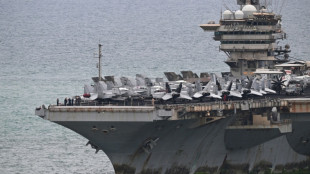 5,000 US sailors arrive in Thailand after months at sea

 Joshua Wong, Hong Kong's pro-democracy poster child

 Nepal tunnel rescuers seek trapped workers but hit dead ends

 Zverev wins wild five-setter, Rybakina and Gauff ease through at US Open

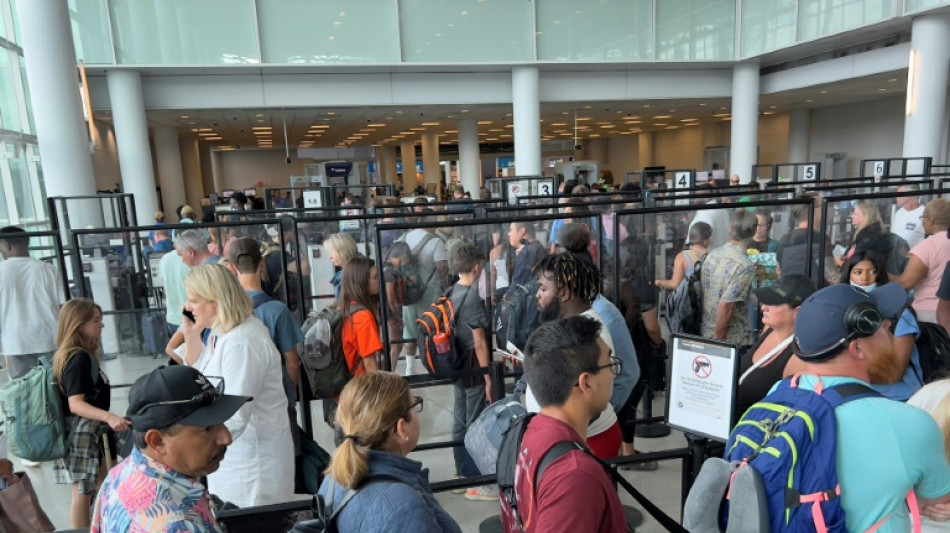
Strong travel demand has enabled the biggest US airlines to return to profitability, but efforts to restore capacity back to pre-pandemic levels face manpower and cost challenges.
For the first time in the Covid-19 era, both American Airlines and United Airlines reported profitable quarters without the benefit of government support programs.
Delta Air Lines also was profitable in the second quarter, but had previously reached this milestone in the third quarter of 2021.
So-called "pent-up demand" for flying has led to brisk ticket sales despite high prices.
American's revenues surged 12 percent compared with the same quarter in pre-pandemic 2019, reaching $13.4 billion in the April to June quarter, the most ever.
Delta's revenue jumped 10 percent to $13.8 billion, while United's rose six percent to $12.1 billion.
But all three carriers are running fewer flights than they were in that period, with Delta off the most at 18 percent.
Strong pricing has enabled the industry to offset the hit from much higher jet fuel prices, as well as increased wages.
But carriers have struggled operationally as they have ramped up. The problems were especially bad in June, when bad weather, intermittent issues with air traffic control and staffing shortfalls at airlines led to widespread flight cancellations and delays.
Overall, even with the better performance in the second quarter, "it's fundamentally a less profitable business" than before the pandemic, said Peter McNally, analyst at Third Bridge, a consultancy.
For one thing, while business travel has come back partly, McNally believes it may never fully hit its pre-Covid level due to the greater use of virtual meetings. Corporate travel has traditionally been a huge driver of airline profits.
Costs are another issue. While jet fuel prices are expected to retreat somewhat in the third quarter, they remain well above historic levels. A shortage of pilots and other key personnel is also seen pressuring wages for the foreseeable future.
And while customers have so far not been deterred by higher ticket prices, there are doubts about how much longer this behavior can continue, especially with persistent inflation.
- Will demand cool? -
Airlines have been aggressively adding staff, but making the most of new hires takes time.
"The chief issue we're working through is not hiring but a training and experience bubble," said Delta Chief Executive Ed Bastian, who said the carrier had added 18,000 new employees since 2021.
"Our active headcount is at 95 percent of 2019 levels, despite only restoring less than 85 percent of our capacity," Bastian said.
American forecast that its third quarter will be between eight and 10 percent below pre-pandemic levels, while United sees a drop of 11 percent and Delta a fall of between 15 and 17 percent.
Just when the industry can fully restore capacity remains foggy.
"It's dependent on the supply chains, aircraft manufacturers and ultimately, pilot supply to all get back in sync," said American Chief Executive Robert Isom.
"There's not a day that goes by where we don't have issues with provisioning our aircraft with pillows, blankets, plastic cups, food," he said on an earnings conference call. "At various times, we have issues with fueling."
Beyond such daily concerns, carriers are also factoring in macroeconomic challenges.
These include volatility in the oil market that has lifted jet fuel prices and "the growing likelihood of an economic slowdown or recession," said United Chief Executive Scott Kirby.
McNally, the analyst, thinks some of the operational pressures could ease in the fall with the seasonal decline in travel, allowing airlines to catch up on hiring, training and planning.
"However, revenues will cool as well," McNally said.
Shares of American fell 7.4 percent to $14.08, while United slumped 10.2 percent to $37.44 and Delta declined 2.7 percent to $31.96.
W.Moreno--AT